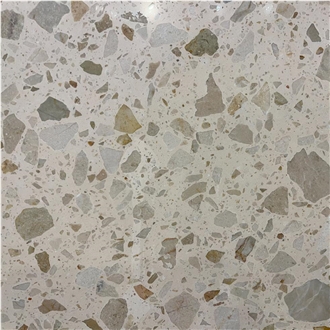
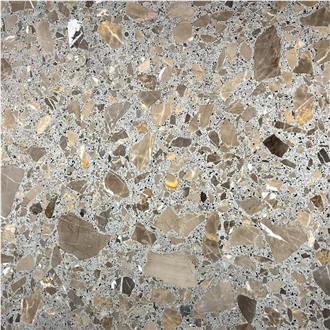
While Van Gogh Terrazzo can be used for exterior applications, its suitability in very dusty climates depends on several factors.
Terrazzo is a composite material made of chips of various stones, glass, or other aggregates that are bound together with a binder. Van Gogh Terrazzo, named after the famous artist due to its unique pattern resembling his paintings, usually features chips of different colors and sizes.
When it comes to dusty climates, there are a few considerations to keep in mind:
1. Binder: The binder used in the Terrazzo plays a crucial role in its durability and resistance to dust. If the binder is not specifically designed to withstand extreme dustiness, it may deteriorate over time and become more susceptible to damage.
2. Finishing: The finishing applied to the Terrazzo can greatly influence its ability to repel dust and other particles. A high-quality sealant applied as a finishing layer can enhance its protection against dust, making it easier to clean and maintain.
3. Maintenance: Regular maintenance is key, especially in dusty climates. If the Van Gogh Terrazzo is properly cleaned and maintained, it can be more resistant to the effects of dust. Routine cleaning with appropriate methods, such as sweeping or gentle pressure washing, can help prevent excessive dust buildup.
4. Location and Exposure: The specific location and exposure of the Terrazzo can also impact its performance in a dusty climate. If it is primarily used in areas with minimal dust exposure, such as covered or sheltered areas, it may be more suitable. However, if it is directly exposed to constant wind or blowing dust, additional precautions may be necessary.
Ultimately, it is best to consult with professionals or the manufacturer of the Van Gogh Terrazzo to determine its suitability for exterior use in very dusty climates. They can provide specific guidance based on the composition and characteristics of the particular Terrazzo product.