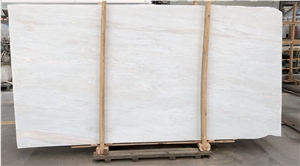
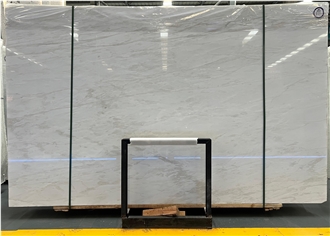
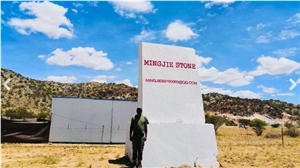
African White Marble

About
Item Details
- Material Type:
- Marble
- Origin:
Namibia (Karibib region) - Primary Color(s):
- White
- Recommended Usage:
- Building stone, sinks, monuments, pool coping, sills, ornamental stone, interior, exterior, wall, floor , paving
- Additional Names:
- Namibia Jade Marble, Namibia White Marble, in China stone market:非洲白(Fēizhōu bái), African White Marble
- Finished Surface:
- Polished, Sawn Cut, Sanded, Rockfaced, Sandblasted, Tumbled
Testing
- Water Absorption:
- 0.03 %
- Density:
- 2852 Kg/m3
- Flexural Strength:
- 16.6 MPa
- Compressive Strength:
- 205 MPa
Description
African White Marble is a kind of white marble quarried in Namibia. This stone is especially good for Building stone, sinks, monuments, pool coping, sills, ornamental stone, interior, exterior, wall, floor , paving and other design projects. It also called Namibia Jade Marble,Namibia White Marble,in China stone market:非洲白(Fēizhōu bái) . African White Marble can be processed into Polished, Sawn Cut, Sanded, Rockfaced, Sandblasted, Tumbled and so on.
FAQ
Yes, Namibias African White Marble can be used in a kitchen. Marble is a popular choice for kitchen countertops due to its natural beauty, durability, and heat resistance. However, it is important to note that marble is a porous stone and can be prone to staining and etching from spills and acidic substances. It requires regular sealing and maintenance to keep it in good condition. Additionally, marble countertops should be handled with care to avoid scratching or chipping.
Can Namibia's African White Marble be used exterior applications in cold climates?
Namibias African White Marble can generally be used for exterior applications in cold climates, although there are a few considerations to keep in mind.
Firstly, it is important to note that any natural stone, including marble, can be susceptible to weathering and damage due to extreme temperature changes. In cold climates, the expansion and contraction of the stone caused by freezing and thawing cycles can potentially lead to cracking or other issues over time.
To mitigate these risks, proper installation techniques and maintenance practices should be followed. It is recommended to engage experienced professionals who are knowledgeable about working with marble and have experience with installation in cold climates. They will be able to ensure the stone is properly installed, with appropriate drainage systems to prevent water infiltration and potential freeze-thaw damage.
Additionally, regular maintenance and sealing of the marble surface is essential to protect it from environmental elements. Sealants can help to prevent moisture absorption and reduce the risk of damage caused by freezing temperatures.
Overall, while Namibias African White Marble can be used for exterior applications in cold climates, it is important to carefully consider the specific conditions and take necessary precautions to ensure its longevity and performance.
Can Namibia's African White Marble be used outdoors?
Yes, Namibias African White Marble can be used outdoors. Marble is a natural stone that is known for its durability and resistance to weathering. African White Marble, specifically, is a type of marble that is quarried in Namibia and known for its white and grey color variations. It is commonly used in various outdoor applications such as paving, wall cladding, and outdoor furniture. However, it is important to note that even though marble is durable, it still requires regular maintenance and sealing to protect it from staining and erosion caused by weathering.
What is the coefficient of friction of Combed Namibia's African White Marble tiles?
The coefficient of friction of Combed Namibias African White Marble tiles is not provided in the question. To determine the coefficient of friction, it is necessary to conduct specific tests and measurements on the tiles.
Can Namibia's African White Marble be used in floor coverings?
Yes, Namibias African White Marble can be used in floor coverings. African White Marble is known for its elegant appearance and durability, making it a popular choice for both interior and exterior flooring. It is often used in residential and commercial spaces due to its natural beauty and ability to withstand heavy foot traffic. Additionally, African White Marble can be polished to achieve a glossy finish or honed for a more matte appearance, allowing for various design options when used as a floor covering.
How thick is Namibia's African White Marble slabs?
It is difficult to give an exact measurement for the thickness of Namibias African White Marble slabs as it can vary depending on the specific quarry and slab manufacturer. However, the typical thickness for marble slabs ranges from 2 centimeters (0.8 inches) to 3 centimeters (1.2 inches).
What grade is Namibia's African White Marble?
Namibias African White Marble is generally considered to be of high quality and is often used for luxury applications. It is commonly graded as Grade A or Premium Grade.
Are there color variations of Namibia's African White Marble?
Yes, there are color variations of Namibias African White Marble. While the base color is predominantly white, it can have slight variations in shade, ranging from pure white to off-white or light gray. The presence of small veins or specks of other minerals can also create subtle patterns and variations in the overall appearance of the marble. It is essential to note that natural stone, including marble, can have inherent variations due to geological factors, making each piece unique.
Is Namibia's African White Marble an expensive stone?
I do not have access to the current market prices of Namibias African White Marble. However, marble is generally considered a luxury and high-end material, so it is likely to be more expensive than other types of natural stones. Factors such as quality, availability, and location can also affect the price of the stone.


16YR