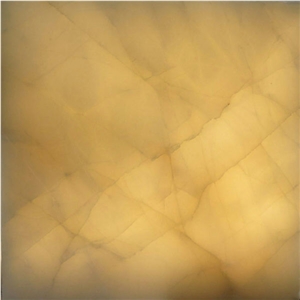
Alabastro del Circeo is a stunning and semi-translucent alabaster variety quarried in San Felice Circeo, Provincia di Latina, Lazio, Italy. It presents a distinct aesthetic characterized by warm beige, honey, and golden tones, interspersed with occasional reddish or brown veins and cloud-like patterns. This alabaster is often used for decorative purposes due to its natural beauty.
Physical and Mechanical Properties
- Water Absorption:Moderate; as alabaster is softer and more porous than marble or granite, it absorbs water more readily. Specific values vary, but typically around 1.5-5%.
- Density:Approximately 2.3 - 2.4 g/cm³. Alabaster is denser than some natural stones like sandstone, but less dense than granite or marble.
- Flexural Strength:Generally low compared to harder stones; around 2-5 MPa. Alabaster is more fragile and should be handled with care.
- Compressive Strength:Relatively low; ranges from 10-20 MPa. It is primarily suitable for decorative applications rather than structural uses.
- Hardness:Mohs hardness of about 2-3. Alabaster is softer and can be easily scratched or detailed, which allows for intricate carving.
- Porosity:High; due to its softer nature, it's more porous, requiring sealing to prevent staining.
- Slip Resistance:Generally low when polished; can be slippery when wet. It is not ideal for flooring in high-traffic areas without proper surface treatment.
Chemical and Mineral Composition
- Calcium Sulfate (CaSO4): Approximately 90-98%.
- Water (H2O): Crystal-bound, varying amount.
- Trace Minerals: Iron oxides and other inclusions contribute to its color and veining.
Usage
- Decorative Artworks:Ideal for sculptures, art pieces, and decorative elements due to its ability to be intricately carved.
- Interior Décor:Used for paneling, lamp bases, vases, boxes, and ornamental features.
- Backlit Features:Its translucency makes it perfect for illuminated interior installations.
- Furniture Accents:Used in tabletops and other decorative furniture elements.
Maintenance
-
Sealing:Essential to prevent staining and to protect from moisture absorption.
-
Cleaning:Clean with a soft, damp cloth and mild soap; avoid acidic or alkaline cleaners.
-
Handling:Handle with care to avoid scratches and chips due to its low hardness.
Surface Finish Options
- Polished:Offers a high-gloss finish that enhances colors and patterns but reduces slip resistance.
- Honed:A smooth, matte finish that is less reflective, highlighting natural textures.
- Brushed:Provides a soft texture with a slightly aged appearance.
- Sandblasted/Antiqued:Adds a weathered look while improving slip resistance.
Alabastro del Circeo’s properties and visual qualities make it a versatile material for art and luxury interior applications, with the caveat that it requires careful maintenance and handling due to its softness and porosity.


 Italy

 Egypt

 United States
 Iran


 Spain

