Post Your Needs

Aliveri Marble

Grey - Marble

Greece

About

Item Details

Material Type:
Marble
Origin:
Greece (Aliverion, Evvoia (Euboea))
Primary Color(s):
Grey
Recommended Usage:
Kitchen and bathroom countertops, wash basins, building stone, ornamental stone, stairs, interior, exterior wall and floor applications, mosaic, waterjet pattern, wall panels, table tops, balustrades, columns, wall and pool copings, pool pavers, sculptures, fireplaces
Additional Names:
Greek Gray Marble, Greek Grey Marble, Aliveri Grey Marble, Aliverion Marble, Alivery Silver-Gray Marble, Alivery Grey Marble, Evoia Grey Marble, Aliveriou Marble, Aliveri Black Marble, Alivery Marble, Aliveri Blue-grey Select Marble, Aliveri Blue-grey Marble, in China stone market:希腊灰(Xīlà huī), Aliveri Marble
Finished Surface:
Polished,Bush Hammered,Tumbled,Brushed,Honed,Split,Machine Cut,Natural Surface,Sandblasted,Combed,Leathered,Water Jet,Filled,Chiseled,Pickling

Testing

Water Absorption:
0.12 By weight %
Density:
2714 kg/m3
Flexural Strength:
19.3 MPa
Compressive Strength:
99.0 - 100.9 MPa
Stone texture:
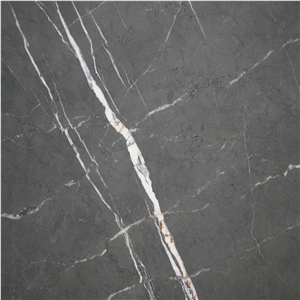
durable, fine-grained calcite marble, known for its distinctive dark grey background with light grey and white veins

Description

Aliveri Marble is a fine-grained calcite marble originating from the region of Aliverion in Evvoia (Euboea), Greece. This marble is renowned for its durability and distinctive aesthetic, characterized by a dark grey background highlighted by light grey and white veins.

Colors:

  • Dark grey background
  • Light grey and white veins

Physical and Mechanical Properties:

  • Water Absorption: 0.12% by weight
  • Density: 2714 kg/m³
  • Flexural Strength: 19.3 MPa
  • Compressive Strength: 99.0 - 100.9 MPa
  • Hardness: While specific values may vary, marble generally falls on the Mohs scale at around 3, indicating moderate susceptibility to scratching.
  • Porosity: Typically low in marble, contributing to its durability.
  • Slip Resistance: This can vary depending on the finish; polished surfaces have lower slip resistance compared to honed or textured finishes.

Usage:

  • Interior and exterior flooring
  • Wall cladding
  • Kitchen countertops
  • Bathroom vanities
  • Stairs and staircases
  • Architectural detailing
  • Monuments and sculptures

Maintenance:

  • Regular cleaning with neutral pH cleaners
  • Avoid acidic or abrasive cleaners
  • Periodic sealing may be required to enhance resistance to staining and moisture
  • Use coasters and mats to prevent scratches and etching on surfaces like countertops
  • Polish occasionally to maintain a glossy finish

Cutting Sizes (cm):

  • Commonly available in slabs of various sizes, typically around 2-3 cm in thickness
  • Custom sizes can be cut to order for specific projects

Available Surface Finish Options:

  • Polished: Provides a glossy, reflective surface highlighting the marble’s natural veins
  • Honed: Offers a matte finish with a smooth texture
  • Brushed: Produces a slightly textured surface with a natural appearance
  • Sandblasted: Gives a rough texture with a non-slip surface
  • Bush-hammered: Yields a rugged surface with small pits
  • Leathered: Features a subtle texture, providing a rustic look without significant gloss

This marble, due to its beauty and durability, remains a favored material for architects and designers seeking to imbue spaces with a sense of luxury and timeless elegance. Regularly maintaining Aliveri Marble will ensure its longevity and continued aesthetic appeal.

Physical & Mechanical Properties

  • Apparent Specific Density ​- ASTM C-97:2714 kg/m³
  • Water Absorption (% by weight) ​- ​ASTM C-97:0.12 %
  • Compressive Strength​ ​- ASTM C-170:99 MPa
  • Flexural Strength (Wet)​ ​- ASTM C-99:19 MPa
  • Abrasion Resistance​ ​- DIN 52108 (20 cycles):7.54 mm

Mineralogical Composition (% by weight)

  • Calcite:93.00 %
  • Dolomite:4.00 %
  • Quartz:2.00 %
  • Chlorite:1.00 %

Chemical Analysis (% by weight)

CaO:54.3 %

MgO:0.90 %

SiO₂:0.13 %

Fe₂O₃:0.28 %

Al₂O₃:0.6 %

K₂O:0.12 %

Na₂O:0.03 %

MnO:0.02 %

LOI4:3.00 %

FAQ

Can Greece's Aliveri Marble be used exterior applications in very humid climates?

Greeces Aliveri Marble is a high-quality marble that is often used in various interior and exterior applications. However, when it comes to using it in very humid climates, some considerations need to be taken into account. Marble is a natural stone, and while it is durable and resistant to many environmental factors, it can be affected by excessive moisture and humidity. In very humid climates, there is a higher risk of moisture absorption and the potential for damage or staining. To mitigate these risks, certain precautions can be taken: 1. Proper sealing: Applying a high-quality penetrating sealer specifically designed for marble can help in reducing water absorption and increasing resistance to moisture-related issues. 2. Regular maintenance: Regular cleaning and maintenance of the marble surface are essential in humid climates. This includes routine cleaning with a mild, non-acidic detergent and ensuring that accumulated moisture is promptly wiped away. 3. Adequate drainage: Proper installation, including providing adequate drainage systems, can help prevent standing water and reduce the amount of moisture contacting the marble. 4. Suitable installation locations: In very humid climates, it may be advisable to limit the use of Aliveri Marble in direct contact with water, such as in outdoor fountains or areas that are consistently exposed to excessive moisture. Despite considering these precautions, it is important to note that no material is entirely impervious to the effects of a very humid climate. It is recommended to consult with a professional installer or stone supplier familiar with local climate conditions to ensure the suitability and adequate care of Aliveri Marble in specific exterior applications.

Can Greece's Aliveri Marble be used in landscaping?

Yes, Greeces Aliveri Marble can be used in landscaping. Aliveri Marble is a type of white marble with distinctive grey veins that is quarried in Aliveri, a town in the island of Evia, Greece. It is a popular choice for various landscaping projects due to its elegant and luxurious appearance. Aliveri Marble can be used to create stunning features such as pathways, patios, garden walls, fountain surrounds, and outdoor sculptures. Its natural beauty and durability make it suitable for both residential and commercial landscaping applications.

What is the coefficient of friction of Leathered Greece's Aliveri Marble tiles?

The coefficient of friction for Leathered Greeces Aliveri Marble tiles is not a standard value and can vary depending on the specific tile and the surface it is compared to. To determine the coefficient of friction for a particular tile, it is recommended to consult the manufacturer or supplier of the product. They should have test results or specifications available that provide the coefficient of friction for the specific tile.

Can Greece's Aliveri Marble be used in a office?

Yes, Greeces Aliveri Marble can definitely be used in an office setting. Aliveri Marble is known for its high quality, durability, and aesthetic appeal. It has a classic white background with grey veins, making it a versatile material that can complement various office interior styles and designs. Aliveri Marble can be used for flooring in office reception areas, lobbies, or conference rooms, creating an elegant and sophisticated look. It can also be utilized for office countertops, desks, or tabletops, adding a touch of luxury and professionalism to the workspace. Furthermore, Aliveri Marbles resistance to wear, heat, and moisture makes it suitable for high-traffic areas and ensures longevity in an office environment.

Can Greece's Aliveri Marble be used outdoors?

Yes, Greeces Aliveri Marble can be used outdoors. Aliveri Marble is a natural stone that is known for its durability and resistance to weathering and outdoor elements. It can withstand UV radiation, extreme temperatures, and is not easily affected by normal wear and tear. This makes it a suitable choice for a wide range of outdoor applications such as flooring, paving, wall cladding, and even decorative elements like sculptures and fountains. However, it is important to note that regular maintenance and periodic sealing may be required to keep the marble in optimal condition when used outdoors.

How thick is Greece's Aliveri Marble slabs?

I do not have the current or specific information about the exact thickness of Aliveri Marble slabs in Greece. However, typically marble slabs can range in thickness depending on the intended use and customer specifications. It is best to contact a supplier or manufacturer for accurate information.

What grade is Greece's Aliveri Marble?

I dont have access to the latest grade of Aliveri marble, but traditionally, Greek Aliveri Marble is classified as Grade A marble due to its consistent color, clarity, and fine veins. It is widely regarded as a high-quality marble, suitable for decorative and architectural applications.

Are there color variations of Greece's Aliveri Marble?

Yes, there are color variations of Greeces Aliveri Marble. The most common colors are white, beige, and grey, but there are also variations that can be pink or yellow in tone. These variations depend on the percentage of impurities and other minerals found in the marble.

Is Greece's Aliveri Marble an expensive stone?

I do not have access to current market prices or specific pricing information, but generally, marble is a luxury material and can be expensive depending on the quality, color, and availability. Aliveri Marble is a rare and beautiful Greek marble that is highly sought after, which could contribute to its cost. However, the final price of the stone could vary depending on the supplier, location, and availability.

Products & Prices

View More

Hot Grey Marble

New Marble

Post Your Request

The request includes:
  1. surface finished, size
  2. quantity required