Post Your Needs

Arabescato Arni Marble

White - Marble

Italy

About

Item Details

Material Type:
Marble
Origin:
Italy (Arni, Provincia di Lucca, Toscana)
Primary Color(s):
White
Recommended Usage:
Kitchen and bathroom countertops, monuments, building stone, ornamental stone, building stone, stairs, interior wall and floor applications, mosaic, waterjet pattern, wall panels, table tops, columns, fireplace surround
Additional Names:
Arabescato Arni Classico Marble, Marmi Arabescato Arni, Arabescato Marble, Arabescato Arni
Finished Surface:
Polished,Bush Hammered,Tumbled,Brushed,Honed,Machine Cut,Natural Surface,Sandblasted,Combed,Leathered,Water Jet,Filled,Chiseled,Pickling

Testing

Water Absorption:
0.40 - 0.75 By volume%
Density:
2640 kg/m³
Flexural Strength:
19.8 MPa
Compressive Strength:
152.0 - 154.7 MPa

Description

Quarried in Arni, in the Provincia di Lucca, Tuscany (Toscana), Italy, Arabescato Arni Marble is a high-end, luxurious natural stone widely regarded for its classic elegance and distinctive character. This marble has been prized since antiquity and remains a popular choice in contemporary and traditional architecture alike.

Aesthetic Description

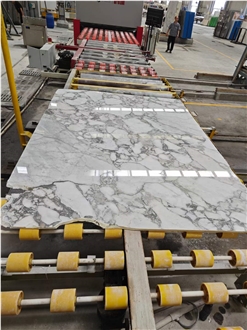
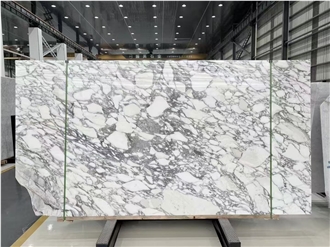
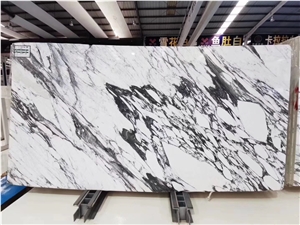
Color: A delicate white base is the defining feature, complemented by faint to medium grey veining that appears in fluid, cloud-like or linear patterns. The contrast is soft, giving the stone a subtle but expressive elegance.

Texture: Naturally smooth and fine-grained, with a refined and polished surface that enhances its veining and luminosity.

Pattern: Arabescato Arni displays classic veining patterns—not overly dense or bold—which allow it to adapt harmoniously to various color palettes and design finishes. The pattern ranges from delicate wisps to light arabesques, giving it timeless charm and design flexibility.

Physical and Mechanical Properties

  • Water Absorption : 0.40 – 0.75% by volume
  • Density : 2,640 kg/m³ (≈ 2.64 g/cm³)
  • Flexural Strength : 19.8 MPa
  • Compressive Strength : 152.0 – 154.7 MPa
  • Hardness (Mohs scale) : ~3
  • Porosity : Low to medium
  • Slip Resistance : Medium (can vary by finish; higher with honed or sandblasted finish)

Chemical Composition (% by weight)

  • CaCO3 (Calcium Carbonate) : ~95–98%
  • MgCO3 (Magnesium Carbonate) : ~1–2%
  • SiO2 (Silicon Dioxide) : <0.5%
  • Fe2O3 (Iron Oxide) : <0.2%
  • Al2O3 (Aluminum Oxide) : <0.2%

Mineral Composition

  • Calcite : ~95–98%
  • Dolomite : ~1–3%
  • Quartz, Mica : Trace elements

Available Surface Finishes

  • Polished – High gloss; emphasizes color and veining.
  • Honed – Smooth, matte surface; reduces glare and improves slip resistance.
  • Brushed / Leathered – Textured surface with subtle gloss and soft feel.
  • Sandblasted – Gritty finish; enhances slip resistance.
  • Bush-hammered – Rugged texture for outdoor or anti-slip applications.

Available Sizes (cm)

Cut-to-size tiles and slabs:

Tiles: 30x30, 40x40, 60x60, 30x60, and custom sizes.

Slabs: 2 cm and 3 cm thickness

Standard slab sizes: 280–300 cm x 140–180 cm

Typical Applications

  • Interior & exterior wall cladding
  • Flooring (residential, commercial, and hospitality spaces)
  • Bathroom vanities and kitchen countertops
  • Tabletops, fireplace surrounds, and decorative objects
  • Staircases, facades, and columns

Usage & Maintenance

Usage: Suitable for interior and exterior applications, although polished surfaces are best for interiors due to wear and weathering.

Maintenance: Requires regular sealing to prevent staining. Use pH-neutral cleaners and avoid acidic products.

Key Advantages

Elegant, soft appearance with timeless

Italian appeal

Easy to pair with bolder materials or subdued palettes

Adds value and sophistication to any space

FAQ

Why not to use marble for kitchen countertops?

While marble countertops can certainly add elegance and beauty to a kitchen, they may not be the most practical choice for all homeowners. Here are a few reasons why some people may choose not to use marble for kitchen countertops: 1. Porous Nature: Marble is a porous natural stone, which means it can absorb liquids and stains more easily compared to other countertop materials like granite or quartz. This makes it more prone to etching, discoloration, and damage from acidic substances like vinegar, lemon juice, or red wine. Regular sealing is required to minimize this, but it still requires caution and maintenance. 2. Scratches and Etching: Marble is relatively softer than other countertop materials, which means it is more susceptible to scratches, chips, and etching. Sharp knives, heavy pots or pans, and abrasive cleaning materials can leave permanent marks on the surface, detracting from its appearance. 3. High Maintenance: Marble countertops require regular maintenance to preserve their appearance. Sealing is needed every six months to a year to protect the stone and prevent staining. Proper care and cleaning are also necessary to avoid scratching or etching the surface. 4. Cost: Marble is generally more expensive than other countertop materials like granite, quartz, or laminate. Additionally, its high maintenance requirements can incur additional costs over time. 5. Limited Color Options: Marble, being a natural stone, is available in a relatively limited range of colors compared to other countertop materials. While the classic white or grey marble is widely popular, it may not fit with every kitchen style or color scheme. Ultimately, the decision to use marble for kitchen countertops depends on personal preferences, lifestyle, and willingness to invest time and effort in its maintenance.

Can Italy's Arabescato Arni Marble be used exterior applications in cold climates?

Arabescato Arni Marble is a type of marble that originates from Italy and is known for its white background with grey veining. While marble is generally considered suitable for exterior applications, its performance can vary based on several factors, including the specific type of marble, quality, and the climate conditions it will be exposed to. In the case of Arabescato Arni Marble, it is not recommended for exterior applications in cold climates. Marble is a porous material, and when exposed to freezing temperatures, water can seep into its pores. This can cause the marble to crack, spall, or develop other forms of damage due to the expansion of freezing water. In colder climates, it is advisable to choose a more durable and frost-resistant material specifically designed for outdoor use. There are various alternatives like granite or engineered stone that can provide similar aesthetics to marble while being more suitable for exterior applications in cold climates. It is always best to consult with a professional or supplier who can provide specific recommendations based on your climate and project requirements.

How thick is Italy's Arabescato Arni Marble slabs?

The thickness of Italys Arabescato Arni Marble slabs can vary depending on the specific quarry and supplier. However, standard thickness options for marble slabs often range from 2 centimeters (0.79 inches) to 3 centimeters (1.18 inches). It is recommended to contact the supplier or check their product specifications for the exact thickness of Arabescato Arni Marble slabs they offer.

Can Italy's Arabescato Arni Marble be used in landscaping?

Yes, Italys Arabescato Arni Marble can be used in landscaping. This type of marble is often used for outdoor decorative purposes such as paving, wall cladding, steps, and outdoor furniture. It can add elegance and a luxurious touch to gardens, patios, and other outdoor spaces.

Can Italy's Arabescato Arni Marble be used in a office?

Yes, Italys Arabescato Arni Marble can be used in an office. Marble is a popular choice for office spaces and can be used as flooring, wall cladding, countertops, and other architectural elements. Arabescato Arni Marble is known for its attractive veining patterns and elegant appearance, which can enhance the aesthetic appeal of an office environment. However, it is important to note that marble is a natural stone and may require regular maintenance and care to keep it looking its best.

Can Italy's Arabescato Arni Marble be used outdoors?

Arabescato Arni Marble is often used for interior applications such as flooring, countertops, and wall cladding due to its delicate veining and polished finish. However, it is not recommended for outdoor use. Marble is a natural stone that can be sensitive to weathering and outdoor elements. Exposing Arabescato Arni Marble to harsh weather conditions, UV radiation, and moisture can lead to fading, discoloration, and deterioration over time. It is best suited for indoor installations where it can be protected from these potential issues.

What grade is Italy's Arabescato Arni Marble?

There is no specific grade assigned to Italys Arabescato Arni marble. The grade of marble typically refers to the quality, color, and pattern variations present in the stone. Arabescato Arni marble is a unique and high-quality white marble with grey veins and patterns, but it does not have a specific grade categorization.

Are there color variations of Italy's Arabescato Arni Marble?

Yes, there are several color variations of Italys Arabescato Arni Marble including shades of white, gray, and beige with intricate veining patterns. The intensity and color of the veining can vary depending on the specific quarry and block of marble.

Is Italy's Arabescato Arni Marble an expensive stone?

I do not have access to current market rates for specific types of marble. However, it is generally considered a high-end and luxurious marble due to its rarity, unique veining patterns, and exceptional quality. The price of Arabescato Arni marble can vary based on factors such as the slab size, thickness, and quality, as well as the location and the supplier from where it is sourced.

Products & Prices

View More

Hot White Marble

New Marble

Post Your Request

The request includes:
  1. surface finished, size
  2. quantity required