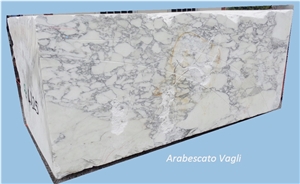
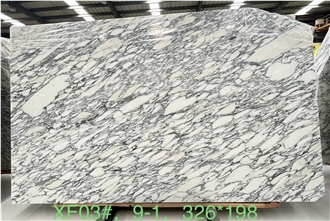
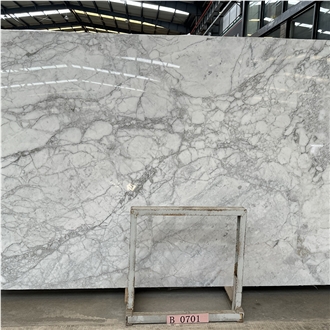
Arabescato Vagli Marble

About
Item Details
- Material Type:
- Marble
- Origin:
Italy (Vagli di Sotto, Provincia di Lucca, Toscana) - Primary Color(s):
- White
- Recommended Usage:
- Kitchen and bathroom countertops, wash basins, building stone, ornamental stone, stairs, interior, exterior wall and floor applications, mosaic, waterjet pattern, wall panels, table tops, balustrades, columns, wall and pool copings, pool pavers, sculptures, fireplaces
- Additional Names:
- Arabescato Apuano Marble, Arabescato Vagli Dorato Marble, Arabescato Vagli Oro Marble, Marmi Arabescato Vagli, in China stone market:瓦利大花白(Wǎ lì dà huābái), Arabescato Vagli Marble
- Finished Surface:
- Polished,Bush Hammered,Tumbled,Brushed,Honed,Split,Machine Cut,Natural Surface,Sandblasted,Acid Washing,Combed,Water Jet,Filled,Chiseled,Pickling
Testing
- Water Absorption:
- 0.25 By weight %
- Density:
- 2715 Kg/m3
- Flexural Strength:
- 11.9 MPa
- Compressive Strength:
- 133.0 - 144.0 MPa
Description
Arabescato Vagli Marble is a luxurious natural stone quarried in Vagli di Sotto, Provincia di Lucca, Toscana, Italy. It is renowned for its predominantly white background accented with distinct grey veining, which can sometimes appear strong and straight. Some variations may include subtle pinkish hues or rust-colored flecks, adding unique characteristics to each slab.
Physical and Mechanical Properties:
- Color Variations: Predominantly white with grey veining; may include pinkish hues or rust-colored flecks.
- Water Absorption: 0.25% by weight
- Density: 2715 Kg/m³
- Flexural Strength: 11.9 MPa
- Compressive Strength: 133.0 - 144.0 MPa
- Hardness: Comparable to other marble types, making it relatively softer than granite.
- Porosity: Low to moderate, typical of natural marble, which requires sealing.
- Slip Resistance: Generally low in polished form; better in honed or textured finishes.
Chemical and Mineral Compositions (% by Weight):
- Calcite: Dominant mineral
- Dolomite: Present in small quantities
- Quartz: Trace amounts
- Other Minerals: May include micas and iron oxide, accounting for variations in hue, such as rust-colored flecks.
Usage:
- Interior Applications: Ideal for countertops, flooring, wall cladding, and decorative features due to its aesthetic appeal.
- Exterior Applications: Limited due to susceptibility to weathering and staining unless sealed properly.
- Sculptural Use: Suitable for sculptures and art pieces, given its workability.
Maintenance:
- Sealing: Regular sealing is recommended to protect against stains and moisture.
- Cleaning: Use mild, pH-balanced cleaners; avoid acidic or abrasive cleaners to prevent etching.
- Repair: Professional polishing and repair could be necessary for scratches or etches over time.
Cutting Sizes (cm):
- Commonly available in slabs and tiles of varying dimensions, typically up to 300 x 200 cm for slabs.
- Custom sizes are possible for specific projects.
Available Common Surface Finish Options:
- Polished: High gloss, enhances the natural patterns and veins, commonly used for countertops and decorative walls.
- Honed: Smooth, matte finish, suitable for floors where slip resistance is needed.
- Brushed: Slightly textured, offering a rustic look with added slip resistance.
- Leathered: A textured finish that offers a unique aesthetic and adds slip resistance, often used in contemporary designs.
Arabescato Vagli Marble is cherished for its beauty and versatility in both classic and modern architectural applications, making it a sought-after material for high-end projects. Proper maintenance and handling are essential to preserve its elegance over time.
Physical–Mechanical Characteristics
- Unit Volume (Density): 2715 kg/m³
- Water Absorption: 0.25 %
- Compressive Strength: 144 MPa
- Compressive Strength after Freezing Cycles: 133 MPa
- Tangent Elastic Modulus: 82,500 MPa
- Flexural Strength (Indirect Tensile Strength): 11.9 MPa
- Coefficient of Abrasion (compared to Granite St. Fedelino): 0.44
- Impact Resistance (Minimum Drop Height): 41 cm
- Linear Thermal Expansion Coefficient: 4.6 × 10⁻⁵ °C⁻¹
- Knoop Microhardness: 1393 MPa
- Hardness Non-Uniformity Index: 1.17
Source: Università di Pisa – Politecnico di Torino
FAQ
There are several countries known for producing high-quality white marble. Some notable ones include:
1. Italy: Italy is renowned for its Carrara marble, which is famous for its white color and has been used for centuries in sculptures and architectural designs.
2. Greece: Greece is known for its Thassos marble, which is pure white in color and has a fine crystalline structure. It is often used for sculptures and high-end architectural projects.
3. India: India is one of the largest producers of white marble, with varieties like Makrana marble, which is famous for its use in the Taj Mahal. Indian white marble is known for its elegance and durability.
4. Turkey: Turkey is known for its white marble varieties like Marmara and Afyon White, which have been popular in construction and decoration for centuries.
5. Spain: Spain produces various types of high-quality white marble, and one of the most famous is the Macael marble, known for its white background and unique veining patterns.
The best quality white marble can vary depending on individual preferences and project requirements, so it is advisable to consider factors like color, grain, and veining patterns when choosing the most suitable option.
Which is better for kitchen white marble or quartz?
The choice between white marble and quartz for a kitchen depends on personal preferences, budget, and lifestyle factors. Here are some key points to consider:
1. Appearance: White marble offers a classic and elegant look with its unique veining patterns. It is highly sought after for its natural beauty and perceived luxury. On the other hand, quartz countertops can mimic the appearance of marble or have various colors and designs, including solid white options.
2. Durability: Quartz is known for its exceptional durability. It is harder and more resistant to scratches, stains, and heat compared to marble. Marble is a softer natural stone and can be more prone to etching, scratching, and staining.
3. Maintenance: Marble requires more maintenance compared to quartz. It is porous and can easily absorb liquids, which may lead to staining. It needs regular sealing to protect against stains and damage. Quartz, being non-porous, is highly resistant to staining and requires minimal maintenance.
4. Cost: Quartz tends to be more expensive than marble, primarily due to the manufacturing process involved in producing engineered stone. Marble can have a wide price range depending on the quality and availability of the specific type.
5. Longevity: Both marble and quartz can last for many years with proper care. However, quartz may generally have better long-term durability due to its higher resistance to various factors that can damage the surface.
Ultimately, the decision between white marble and quartz for a kitchen depends on individual priorities. If you prioritize the classic look of marble and are willing to invest time in maintenance, it can be a suitable choice. On the other hand, if you value durability, versatility, and low maintenance, quartz may be a better option.
What is the average hardness of Italy's Arabescato Vagli Marble?
The average hardness of Arabescato Vagli Marble, which is sourced from Italy, is between 2 and 3 on the Mohs scale of mineral hardness.
Can Italy's Arabescato Vagli Marble be used exterior applications in very dusty climates?
Arabescato Vagli Marble is a natural stone that is known for its elegance and beauty. While it is commonly used for both interior and exterior applications, it is important to consider its suitability for specific conditions.
In the case of very dusty climates, there are a few factors to consider:
1. Porosity: Arabescato Vagli Marble, like other natural stones, is porous to some extent. Dust particles may settle into the pores of the stone, potentially making it more difficult to clean and maintain. Sealing the marble can help reduce its porosity and improve resistance to dust penetration.
2. Cleaning and maintenance: Keep in mind that regular cleaning and maintenance will be required to keep the marble looking its best in dusty conditions. Dust accumulation on the surface should be removed regularly to prevent it from settling and potentially causing staining or discoloration.
3. Durability: Arabescato Vagli Marble is generally considered durable, but its specific performance in very dusty climates can vary. Fine dust particles can be abrasive, potentially wearing down and dulling the surface of the marble over time. It is advisable to consult with a local expert or supplier who can provide more information on how this particular marble performs in dusty environments.
Ultimately, while Arabescato Vagli Marble can be used for exterior applications in dusty climates, it is important to consider the potential challenges posed by dust accumulation and take appropriate steps to seal, clean, and maintain the stone to ensure its longevity and appearance.
Can Italy's Arabescato Vagli Marble be used in landscaping?
Yes, Italys Arabescato Vagli Marble can be used in landscaping. This type of marble is highly valued for its elegant white background and intricate gray veining, making it a popular choice for various landscaping applications. It can be used for pathways, patios, garden walls, decorative borders, water features, and other outdoor design elements. However, it is important to note that marble is a natural stone and can be susceptible to staining and weathering, so proper maintenance and sealing may be necessary to ensure its longevity in outdoor settings.
Can Italy's Arabescato Vagli Marble be used outdoors?
Yes, Italys Arabescato Vagli Marble can be used outdoors. However, it is important to note that exposure to weather conditions and natural elements may cause the marble to fade and lose its natural beauty over time. Therefore, proper installation and maintenance are crucial to ensure the longevity and durability of the marble.
How thick is Italy's Arabescato Vagli Marble slabs?
I dont have access to current stock information or stock of the marble. However, the thickness of the Italys Arabescato Vagli Marble slabs can vary based on the supplier and the buyers requirements. Standard thicknesses for marble slabs are usually 2cm or 3cm, but custom thicknesses can also be ordered.
What grade is Italy's Arabescato Vagli Marble?
I can say that grade is a term typically used for school or academic level attainment, not for categorizing types of marble. However, Arabescato Vagli Marble is classified as a First Choice marble.
What is the coefficient of friction of Chiseled Italy's Arabescato Vagli Marble tiles?
I do not have access to specific information that may not be available on the internet. It would be best to contact the manufacturer or supplier of the Arabescato Vagli Marble tiles to inquire about their coefficient of friction.
Can Italy's Arabescato Vagli Marble be used in a office?
Yes, Italys Arabescato Vagli Marble can be used in an office. It is a beautiful and elegant material that can add sophistication and luxury to any space. It is commonly used for flooring, walls, and countertops in commercial settings. However, it is important to note that marble is a porous material and requires regular maintenance and sealing to prevent staining and etching.


12YR