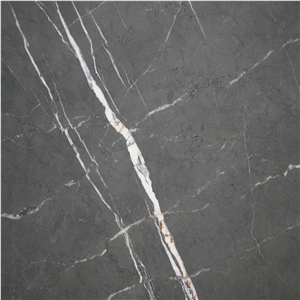
Argentato Carnico Marble is a distinctive and elegant material prized for its aesthetic beauty and physical qualities. The marble features a rich mid-to-dark grey background complemented by soft white and silvery veining, which flows across the surface and lends itself to various design applications. Below, you'll find a detailed description of its physical and mechanical properties, chemical and mineral compositions, as well as usage, maintenance, and other relevant information.
Physical and Mechanical Properties
- Water Absorption: 0.05 ~ 0.08%
- Density: 2680 Kg/m³
- Flexural Strength: 13.24 MPa
- Compressive Strength: 124.0 - 133.0 MPa
- Hardness: Medium hardness, suitable for interior applications
- Porosity: Low porosity, contributing to its durability
- Slip Resistance: Varies based on finish; polished surfaces have lower slip resistance compared to honed or brushed finishes
Chemical and Mineral Compositions (approximate % by weight)
- Calcium Carbonate (CaCO₃): Predominantly composed of calcite, around 90-95%
- Silicate Minerals: Minor inclusions including quartz and other silicates, approximately 5%
- Other Minerals: May contain small amounts of muscovite and pyrite
Usage
- Interior Design: Suitable for flooring, walls, and countertops
- Exterior Cladding: When properly sealed, can be used in exterior facades
- Decorative Elements: Used in decorative pieces such as sculptures, fireplaces, and furniture tops
- Common Application: Residential and commercial buildings, including bathrooms, kitchens, hallways, and reception areas
Maintenance
- Cleaning: Regular cleaning with neutral pH cleaners; avoid acidic or abrasive substances
- Sealing: Periodic sealing recommended to maintain its appearance and protect from stains
- Polishing: Can be repolished to restore shine if dulling occurs over time
Common Surface Finish Options
- Polished: High-gloss finish that highlights veining and color
- Honed: Smooth, matte finish for a more subtle look
- Brushed: Textured finish providing a rustic appearance with enhanced slip resistance
- Tumbled: Aged look with a softer surface, often used for a more traditional aesthetic
Argentato Carnico Marble’s aesthetics and versatility make it an attractive choice for both contemporary and classic design schemes. Its tonal variations and physical characteristics offer a wide range of applications, making it a favored material among architects and designers globally. Proper care and maintenance will ensure that this marble retains its beauty for years to come.
Test Result
- Petrographic Definition: Marble
- Mass per Unit Volume: 2690 kg/m³
- Water Absorption: 0.06%
- Compressive Breaking Load (Simple): 124 MPa
- Compressive Breaking Load (After Freezing): 133 MPa
- Tangent Elastic Modulus: 76,400 MPa
- Indirect Tensile Strength by Bending: 13.8 MPa
- Abrasion Coefficient (Referred to Granite St. Fedelino): 0.52
- Impact Resistance (Minimum Fall Height): 40 cm
- Coefficient of Linear Thermal Expansion: 4.0 x 10⁻⁵ °C⁻¹
* Source: Archivio Industria Marmifera Carnica Spa


 Italy

 9YR

 China


 United States


 Turkey


 Iran


 Myanmar


