Bardiglio Arabescato Marble: A Captivating Natural Stone
1. Appearance
Color
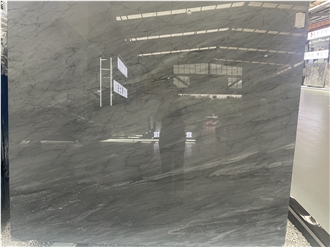
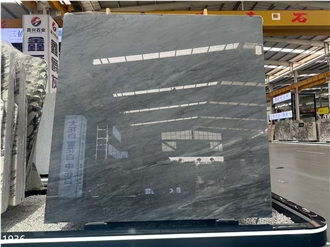
Bardiglio Arabescato Marble is predominantly a deep grey color. This base hue provides a sophisticated and elegant backdrop. The grey tone can vary from a medium - dark shade to an almost charcoal - like color, adding a sense of depth and richness to any application.
It also features silver - cloudy patterns. These cloudy areas give the marble a soft, almost ethereal quality, as if wisps of silver - grey smoke have been trapped within the stone. The silver accents catch the light in a unique way, creating a play of light and shadow that enhances its visual appeal.
Veining
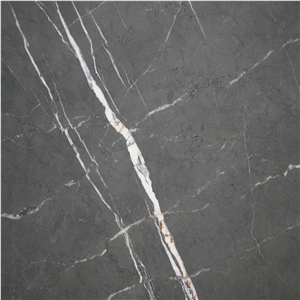
The veining in Bardiglio Arabescato Marble is one of its most distinctive characteristics. The veins range widely in both color and pattern. They can be thin and delicate, resembling fine brushstrokes, or thick and bold, creating a more dramatic look.
The color of the veins can vary from white to light grey, and sometimes they have a slightly off - white or creamy tint. These veins often meander across the surface of the marble in an arabesque - like pattern (hence the name "Arabescato"), which gives the stone a sense of movement and fluidity. The combination of the deep grey background and the contrasting veins makes it a highly sought - after material for decorative purposes.
2. Grain and Texture
Fine - Grained StructureThe fine - grained nature of this marble is a significant factor in its desirability. The small grains contribute to its smooth surface when polished. When you run your hand over a polished Bardiglio Arabescato Marble surface, it feels silky and luxurious, without any roughness or coarseness.
This fine - grained quality also means that the stone has a more uniform appearance than some coarser - grained marbles. It allows for a more precise and refined finish, whether it's in a highly polished state for a glossy look or a honed finish for a more matte effect.
3. Quarry Location and Significance
Geographical Origin
Bardiglio Arabescato Marble is quarried in the regions of Seravezza, Stazzema, Provincia di Lucca, Toscana, and Massa - Carrara. These areas in Italy have a long - standing reputation for producing high - quality marbles.
The quarries in this region have been a source of this beautiful marble for centuries. The local geology and mineralogical conditions have given rise to the unique characteristics of Bardiglio Arabescato Marble. The stone extracted from these quarries is prized for its consistent quality and aesthetic appeal.
The fact that it comes from this specific region also adds to its value and desirability in the international market. Designers and architects often seek out marbles from renowned quarrying regions like this, as it provides a sense of authenticity and quality assurance for their projects.
4. Applications
Interior Design
In interior design, Bardiglio Arabescato Marble is a popular choice for countertops. Its durability and resistance to heat (to a certain extent) make it suitable for kitchen countertops. The elegant appearance, with its deep grey color and beautiful veining, can enhance the overall aesthetic of a modern or traditional kitchen.
It is also used for bathroom vanities and wall claddings. In bathrooms, the marble's resistance to moisture (when properly sealed) and its luxurious look can transform the space into a spa - like environment. The silver - cloudy patterns and veining can add a touch of glamour to the bathroom walls and vanity tops.
Flooring
As a flooring material, Bardiglio Arabescato Marble can create a stunning visual impact. The large slabs can be used to cover floors in high - end residences, hotels, or commercial spaces. The wide range of veining and color variations ensure that each floor installation is unique. The smooth, polished surface (when used in a polished finish) is not only beautiful but also relatively easy to clean and maintain, making it a practical choice for flooring in areas with medium - to - high foot traffic.
Architectural Details
The marble's unique appearance makes it a great choice for architectural details such as columns, pilasters, and cornices. The arabesque - like veining can add a sense of grandeur and historical reference to buildings. It can also be used for decorative panels in lobbies, conference rooms, and other public spaces to create a focal point and a sense of luxury.
Petrographic definition: Marble
Unit Volume: 2700 Kg/m3
Water absorption: 0.12%
Compression breaking load Simple: 126 MPa
Compression breaking load after freezing: 120 MPa
Indirect Tensile Strength by bending: 12,8 MPa
Coefficient corresponding Abrasion (referred to Granite St. Fedelino): 0.28
Impact resistance: minimum fall height: 76 cm
Coefficient of linear thermal expansion: 4.1 x 10⁻⁵ 0C-1
Knoop microhardness: 1109 MPa
non-uniformity index of hardness: 1.09
Source: Università di Pisa - Politecnico di Torino
Mineralogical Composition of Bardiglio Arabescato Marble % wt:
- Calcite: 80-90%
- Dolomite: 5-15%
- Quartz: 2-5%
- Mica (such as muscovite or biotite): 1-3%
- Feldspar: <1%- Other minor minerals


 Italy

 9YR

 China




 Canada




 Turkey



 Iran

 India

 Greece


 Myanmar