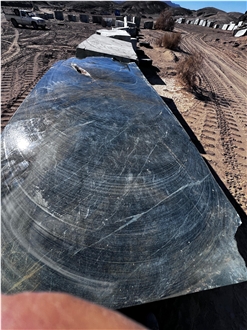
Birjand Forest Green Marble

About
Item Details
- Material Type:
- Marble
- Origin:
Iran (Birjand, Khorasan) - Primary Color(s):
- Green
- Recommended Usage:
- kitchen and bathroom countertops, wash basins, building stone, ornamental stone, stairs, interior, exterior wall and floor applications, mosaic, waterjet pattern, wall panels, table tops, balustrades, columns, wall and pool copings, pool pavers, sculptures, fireplaces, window sills
- Additional Names:
- MGT Stone Green Marble, Court Green Marble, Birjand Green Marble, Forest Green Marble, Verde Foresta Marble, Green Forest Marble, in China stone market:绿色森林(Lǜ sè sēn lín), Birjand Forest Green Marble
- Finished Surface:
- Polished,Bush Hammered,Tumbled,Brushed,Honed,Split,Machine Cut,Natural Surface,Sandblasted,Acid Washing,Combed,Leathered,Water Jet,Filled,Chiseled,Pickling
Testing
- Density:
- 2720 - 2760 kg/m³
- Flexural Strength:
- 10 - 14 MPa
- Compressive Strength:
- 140 - 160 MPa
Description
Birjand Forest Green Marble is a stunning natural stone known for its deep green coloration and vibrant veining in white, green, or black. This marble, originating from Birjand, Khorasan in Iran, is treasured for its rich appearance and unique pattern variations.
Physical and Mechanical Properties
- Water Absorption: Typically low, ensuring durability in various environments.
- Density: Approximately 2.72 - 2.76 g/cm³, indicative of its solid nature.
- Flexural Strength: Generally around 10-14 MPa, allowing for good resistance to bending forces.
- Compressive Strength: Typically in the range of 140-160 MPa, showcasing its capacity to withstand substantial weight.
- Hardness: On the Mohs scale, it usually falls around 3-4, providing moderate scratch resistance.
- Porosity: Low porosity, contributing to its resistance to stains and moisture.
- Slip Resistance: Can vary based on finish but generally provides moderate slip resistance; finishes like honing or polishing can affect this property.
Chemical and Mineral Composition
- Calcium Carbonate (CaCO3): Dominant component, typically over 90%.
- Magnesium Carbonate (MgCO3): Often present in small percentages.
- Silica (SiO2): Minor amounts, contributing to the structure's strength.
- Iron Oxides (Fe2O3): Contribute to coloration and veining.
- Aluminum Oxide (Al2O3): Present in trace amounts.
Common Uses
- Indoor Flooring: Its elegant appearance makes it ideal for luxurious indoor flooring.
- Wall Cladding: Used in both residential and commercial settings for an opulent look.
- Countertops: Offers a refined aesthetic for kitchens and bathrooms.
- Decorative Items: Vases, sculptures, and other decorative accessories.
- Fireplace Surrounds: Due to its heat resistance.
Maintenance
- Regular Cleaning: Use pH-balanced cleaners to maintain its appearance.
- Sealing: Periodic sealing recommended to enhance stain resistance.
- Avoid Abrasives: Use non-abrasive cloths and avoid acidic cleaners to prevent etching.
Cutting Sizes
- Slabs: Typically available in thicknesses of 2 cm and 3 cm.
- Tiles: Common sizes include 30x30 cm, 30x60 cm, and custom sizes upon request.
- Custom Pieces: Available based on project specifics.
Surface Finish Options
- Polished: Provides a glossy, reflective surface, enhancing the depth of the green color.
- Honed: Offers a matte finish, reducing shine while maintaining color richness.
- Brushed: Adds texture and slip resistance, ideal for flooring.
- Bush-Hammered: Produces a rough texture suitable for outdoor applications.
- Sandblasted: Gives a stippled surface, enhancing slip resistance.
In summary, Birjand Forest Green Marble is a versatile and visually striking material, appreciated for its durability and unique aesthetic qualities. Whether used in functional or decorative applications, it contributes significantly to the elegance and sophistication of a space.
FAQ
Yes, Irans Birjand Forest Green Marble can be used in an office. Green marble is widely used as a decorative and functional material in various interior design applications, including offices. It is often used for flooring, wall cladding, countertops, and other surfaces to add a touch of elegance and sophistication to the space. The natural veining and patterns of the Birjand Forest Green Marble can create a visually appealing and unique look in an office environment.
Can Iran's Birjand Forest Green Marble be used exterior applications in cold climates?
Yes, Irans Birjand Forest Green Marble can be used for exterior applications in cold climates. Forest Green Marble is known for its durability and resistance to external factors such as extreme temperatures and weather conditions. Its composition and structure make it suitable for outdoor use, including in cold climate regions. However, it is always recommended to consult with a professional architect or contractor for specific project requirements and to ensure proper installation methods are used.
What is the average hardness of Iran's Birjand Forest Green Marble?
There is no specific information available about the average hardness of Irans Birjand Forest Green Marble. Hardness can vary depending on the specific quarry and location within Iran. To determine the precise hardness of Birjand Forest Green Marble, it is advisable to consult with local marble suppliers or laboratories that specialize in testing stone hardness.
What is the coefficient of friction of Leathered Iran's Birjand Forest Green Marble tiles?
The coefficient of friction for a specific type of marble tile cannot be determined without testing. The coefficient of friction depends on various factors, including the roughness of the surface, the condition of the tile, and the type of shoe or material in contact with the tile.
Can Iran's Birjand Forest Green Marble be used outdoors?
Yes, Irans Birjand Forest Green Marble can be used outdoors. It is a durable and strong natural stone that can withstand outdoor elements such as weathering, UV radiation, and moisture. It is commonly used for various outdoor applications like flooring, cladding, paving, and landscaping. However, proper installation and regular maintenance are necessary to ensure its longevity and preserve its aesthetic appeal.
What grade is Iran's Birjand Forest Green Marble?
Irans Birjand Forest Green Marble is typically classified as a premium grade marble.
Can Iran's Birjand Forest Green Marble be used in landscaping?
Yes, Irans Birjand Forest Green Marble can be used in landscaping. It is a popular choice for paving, walls, and other outdoor structures due to its durability and natural beauty. The unique green color and distinctive veining patterns make it a sought-after material for adding a luxurious touch to outdoor spaces.
How thick is Iran's Birjand Forest Green Marble slabs?
I cannot access real-time information. However, based on the standard thickness available in the market, Irans Birjand Forest Green Marble slabs come in various thicknesses ranging from 2 cm to 20 cm. However, the most commonly used thickness for commercial purposes is 2 cm and 3 cm.
Are there color variations of Iran's Birjand Forest Green Marble?
Yes, there are various color variations of the Birjand Forest Green Marble found in Iran, including shades of green, white, and gold. Additionally, the amount of veining and patterning can vary in each slab of marble.
Is Iran's Birjand Forest Green Marble an expensive stone?
I dont have current market pricing or s, but in general, Birjand Forest Green Marble is considered a high-end and quality marble that has a unique look and pattern. Its rarity and demand can make it an expensive stone. The price of the stone can vary based on factors such as quality, finish, size, and origin.


15YR