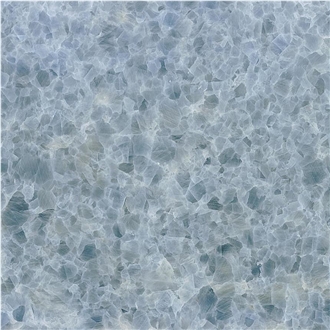
Blue Venato Marble is a striking natural stone renowned for its deep, rich blue-gray color, complemented with natural veining and streaks in lighter gray or white hues. This marble is quarried in the famous Carrara region of the Provincia di Massa Carrara, Toscana, Italy, known for its high-quality marble production.
Physical and Mechanical Properties
- Water Absorption: 0.21%
- Density: 2670 kg/m³
- Flexural Strength: 18.3 MPa
- Compressive Strength: 145.0 - 168.0 MPa
- Hardness: Medium to high; rated around 3-4 on the Mohs scale
- Porosity: Low
- Slip Resistance: Varies with finish; polished surfaces may be more slippery compared to honed or textured finishes
Chemical and Mineral Composition
- Calcite (CaCO3): Approximately 95-98%
- Quartz (SiO2): Up to 2-3%
- Other Minerals: Trace amounts of graphite, pyrite, and mica which contribute to its unique veining and color variations
- Chemical Additives or Impurities: May include minor quantities of iron oxides and other trace elements affecting coloration
Usage
Blue Venato Marble is versatile with a variety of applications, including:
- Interior Flooring and Wall Cladding: Suitable for both residential and commercial spaces
- Countertops and Vanity Tops: A luxurious option for kitchens and bathrooms
- Fireplace Surrounds: Creates a sophisticated look
- Statues and Sculptures: Due to its fine grain
- Decorative Features and Panels: Adds elegance to spaces
Maintenance
- Regularly clean with a pH-neutral cleaner or marble-specific cleaner to avoid etching
- Seal periodically to protect from staining, especially in areas subject to moisture or heavy use
- Use non-abrasive cloths and avoid acidic or alkaline cleaning agents
Surface Finish Options
- Polished: Enhances the color and veining, providing a reflective, glossy surface
- Honed: Offers a smooth, matte finish, reducing slip potential
- Brushed or Leathered: Provides texture while retaining color depth
- Sandblasted or Bush-hammered: For exterior use, providing excellent slip resistance
Summary
Blue Venato Marble from Italy is not only aesthetically pleasing but also offers significant durability and adaptability for various applications. Its unique combination of beauty, strength, and functionality makes it a preferred choice for architects and designers seeking to introduce elegance and natural beauty into their projects.
Technical Characteristics
- Petrographic Definition: Marble
- Unit Mass (Bulk Density): 2,670 kg/m³
- Water Absorption: 0.21 %
- Compressive Strength (Unfrozen): 168 MPa
- Compressive Strength After Freeze–Thaw Cycles: 145 MPa
- Tangent Elastic Modulus: 76,000 MPa
- Indirect Tensile Strength by Bending (Flexural Strength): 18.3 MPa
- Abrasion Coefficient (referenced to Granite St. Fedelino): 0.27
- Impact Resistance (Minimum Fall Height): 31 cm
- Coefficient of Linear Thermal Expansion: 3.9 × 10⁻⁵ °C⁻¹
- Knoop Microhardness: 1,207 MPa
- Hardness Non-Uniformity Index: 1.9
* Source: Università di Pisa – Politecnico di Torino


 Italy
 4YR


 China


 Brazil


 Turkey

 Argentina

 Australia

 France


