Post Your Needs

Botanic Green Marble

Marble

China

About

Item Details

Material Type:
Marble
Origin:
China
Recommended Usage:
kitchen and bathroom countertop, wash basins, building stone, ornamental stone, stairs, interior, exterior wall and floor applications, mosaic, water-jet pattern, wall panels, table tops, balustrades, columns, wall and pool copings, pool pavers, sculptures, fireplaces, window sills
Additional Names:
British Racing Green Marble, British Green Marble, in China stone market:英伦绿(Yīnglún Lǜ)
Finished Surface:
Polished,Bush Hammered,Tumbled,Brushed,Honed,Split,Machine Cut,Natural Surface,Sandblasted,Combed,Leathered,Water Jet,Chiseled,Pickling

Testing

Water Absorption:
0.25 - 0.30% by weight
Density:
2690 - 2730 kg/m³
Flexural Strength:
10 - 13 MPa
Compressive Strength:
90 - 110 MPa

Description

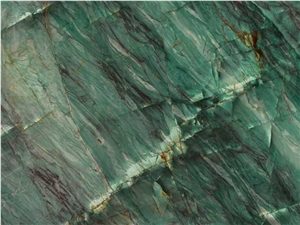
Botanic Green Marble features a deep, rich forest-green base with dark, moody undertones, characterized by dramatic diagonal bands in creamy yellow-beige, pale green, and white tones. These organic, layered streaks resemble moss, sediment, or natural landscape textures, complemented by scattered fine dark specks and occasional rust-toned accents, quarried in China.

Color & Appearance:

Botanic Green Marble features a deep, rich forest-green base with dark, moody undertones, accented by creamy yellow-beige, pale green, and white tones.

Texture & Structure:

Fine- to medium-grained crystalline texture with a dense, compact structure and a smooth, refined surface. Subtle mineral variations and fine dark specks add depth and natural character.

Pattern & Veining:

Dramatic diagonal banding and layered organic streaks resemble moss, sediment, or natural landscape textures. Scattered fine dark specks and occasional rust-toned accents provide additional contrast and visual movement.

Technical Characteristics (Indicative):

  • Water Absorption: 0.25–0.35% by weight
  • Density: 2690–2730 kg/m³
  • Flexural Strength: 10–13 MPa
  • Compressive Strength: 90–110 MPa
  • Open Porosity: 0.20–0.80%
  • Hardness: 3–4 Mohs

Mineral Composition (Indicative, % by weight):

  • Calcite: 85–94%
  • Dolomite: 2–7%
  • Quartz: 1–4%
  • Mica/Chlorite: 0–2%
  • Clay Minerals: 0–2%
  • Iron-bearing and Accessory Minerals: 0–2%

Chemical Composition (Indicative, % by weight):

  • CaCO₃: 83–92%
  • MgCO₃: 1–5%
  • SiO₂: 1–4%
  • Al₂O₃: 0.2–1.5%
  • Fe₂O₃: 0.2–1.5%
  • Other Oxides: 0–2%

Usage:

Suitable for interior flooring, wall cladding, feature walls, bathroom walls, vanity tops, countertops, backsplashes, fireplace surrounds, stairs, reception areas, tabletops, furniture, and decorative architectural applications.

Finishes:

Polished, honed, leathered, brushed, sanded, and custom finishes.

Maintenance:

Clean with a pH-neutral stone cleaner and a soft cloth or mop. Avoid vinegar, lemon, acidic cleaners, bleach, and abrasive products. Seal according to the stone's porosity and application, particularly for countertops and bathroom surfaces. Wipe spills promptly to minimize staining.

FAQ

Does Botanic Green Marble fade in sunlight?

Botanic Green Marble, like many natural stones, can experience some degree of color change or fading when exposed to direct sunlight over a long period. The ultraviolet (UV) rays in sunlight can cause certain minerals in the marble to react, potentially leading to a slight change in color. However, the impact varies depending on factors such as the intensity and duration of sun exposure, the specific mineral composition of the marble, and whether it has been treated or sealed with a UV-resistant sealant. To minimize fading, its advisable to use appropriate sealants and consider shading or protective coatings in areas exposed to direct sunlight.

Can bleach be used on Botanic Green Marble?

Using bleach on Botanic Green Marble, or any marble, is not recommended. Marble is a natural stone that is sensitive to acidic and harsh chemical cleaning agents like bleach. Using bleach can lead to discoloration, dullness, and damage to the marble surface. It can remove the protective sealant on the marble, making it more susceptible to stains and etching. For cleaning marble, it’s best to use a pH-neutral, non-abrasive cleaner specifically designed for natural stone. You can also use a mixture of mild dish soap and warm water. Always remember to use a soft cloth or sponge, and thoroughly rinse the surface with water after cleaning to remove any soap residue. To protect the marble, ensure it is regularly sealed according to the manufacturers recommendations.

Is sandblasted finish Botanic Green Marble suitable for interior flooring?

Yes, a sandblasted finish Botanic Green Marble can be suitable for interior flooring, but there are several factors you should consider. A sandblasted finish provides a slightly rough texture, which can offer better slip resistance compared to polished marble, making it suitable for areas where traction is important, such as bathrooms or kitchens. However, because of its textured surface, it may not have the same visual appeal or reflective quality as polished marble, which some people prefer for certain interior aesthetics. Additionally, while marble is a beautiful and durable natural stone, it is also porous and can be susceptible to staining and etching from acidic substances. Its essential to seal marble flooring and maintain it properly to preserve its appearance and durability over time. Lastly, consider the overall design, color scheme, and existing materials in your space to ensure that Botanic Green Marble complements the interior decor effectively.

Is Botanic Green Marble suitable for terrace patio paving?

Botanic Green Marble can be used for terrace patio paving, but there are several factors to consider before making a decision: 1. **Durability**: Marble is a metamorphic rock that can be durable, but it may not be as hard as some other options like granite or specialized outdoor tiles. If the terrace is in an area with heavy foot traffic or heavy furniture, you might need to ensure the marble’s durability against wear and tear. 2. **Porosity**: Marble is more porous than other stones, meaning it can absorb water and stain more easily. This could be an issue in outdoor settings where it’s exposed to rain or spills. Sealing the marble regularly can help mitigate this problem. 3. **Slip Resistance**: Polished marble can be quite slippery when wet, which might not be ideal for an outdoor patio. You might want to consider a honed or textured finish to improve traction. 4. **Weather Resistance**: Marble can be affected by exposure to the elements, especially in climates with freeze-thaw cycles. The stone may crack or become damaged over time in such conditions. 5. **Aesthetics**: Botanic Green Marble might offer a unique and attractive appearance for your terrace, which can enhance the visual appeal of your outdoor space. 6. **Maintenance**: Outdoor marble surfaces may require more maintenance to keep them looking pristine, including regular cleaning and periodic resealing. Overall, if you decide to use Botanic Green Marble, ensure that it is properly sealed and maintained, and consider using a finish that enhances its slip resistance. Consulting with a professional who can assess your specific situation and needs might also be beneficial.

Is Botanic Green Marble polished floor tiles resistant to scratching?

Botanic Green Marble, like many natural stones, has a certain level of resistance to scratching. However, marble is generally considered softer than materials such as granite or quartzite. While it is relatively durable for a natural stone, it can still be susceptible to scratching, especially in high-traffic areas or if heavy objects are dragged across its surface. Polishing the marble can enhance its appearance and add a protective layer, but it wont make it impervious to scratches. To minimize the risk of scratching, its advisable to use protective measures such as area rugs, floor mats, and felt pads under furniture. Regular maintenance, like cleaning with appropriate (non-acidic) products and occasional resealing, can also help protect the marble and keep it looking its best.

How should Botanic Green Marble kitchen countertop be cleaned?

Cleaning a Botanic Green Marble kitchen countertop requires care to maintain its natural beauty and prevent damage. Heres a step-by-step guide to cleaning it: 1. **Regular Dusting:** Use a dry, soft cloth or microfiber cloth to dust the countertop regularly. This helps prevent scratches from dust particles. 2. **Mild Soap and Water:** For routine cleaning, use warm water mixed with a few drops of mild dish soap. Avoid acidic or harsh cleaners as they can damage the marble. Dip a soft cloth or sponge in the soapy water, wring it out well, and gently wipe the surface. 3. **Rinse:** After cleaning with soapy water, rinse the countertop using a clean, damp cloth to remove any soapy residue. 4. **Dry Immediately:** Use a dry, absorbent cloth to dry the surface thoroughly. This prevents water spots and potential staining. 5. **Stain Treatment:** For stains, create a paste using baking soda and water. Apply it to the stain, cover it with plastic wrap, and let it sit for 24-48 hours before gently wiping away. Rinse and dry the area afterward. 6. **Avoid Abrasives:** Do not use abrasive pads or cleaners, as they can scratch the marble surface. 7. **Sealant Reapplication:** Marble is porous, so its important to reapply a marble sealant every 6-12 months, or as recommended by the manufacturer, to protect against stains and etching. 8. **Immediate Spill Cleanup:** Blot any spills immediately with a soft cloth to prevent staining. Avoid wiping, which can spread the spill. 9. **Use Coasters and Trivets:** Protect the surface from acidic substances and heat by using coasters, trivets, and mats. Following these steps will help ensure the durability and appearance of your Botanic Green Marble countertop.

Products & Prices

Hot Marble

New Marble

Post Your Request

The request includes:
  1. surface finished, size
  2. quantity required