Post Your Needs

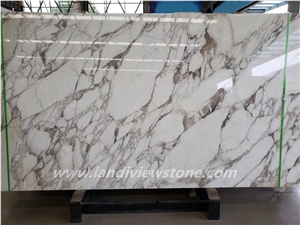
Calacutta White Marble

Marble

India

About

Item Details

Material Type:
Marble
Origin:
India (West Bengal)
Recommended Usage:
kitchen and bathroom countertops, wash basins, building stone, ornamental stone, stairs, interior, exterior wall and floor applications, mosaic, waterjet pattern, wall panels, table tops, balustrades, columns, wall and pool copings, pool pavers, sculptures, fireplaces, window sills
Additional Names:
Calacutta White Marble, Calcutta White Marble, Kolkata White Marble, Bengal White Marble, Indian Calacatta White Marble, Indian Calacatta Marble
Finished Surface:
Polished,Bush Hammered,Tumbled,Brushed,Honed,Split,Machine Cut,Natural Surface,Sandblasted,Combed,Leathered,Water Jet,Filled,Chiseled,Pickling

Testing

Water Absorption:
0.15–0.35%
Density:
2650–2700 kg/m³
Flexural Strength:
10–16 MPa
Compressive Strength:
85–115 MPa

Description

Color & Appearance: Calacutta White Marble features a soft, creamy white to pale off-white background that creates a bright, airy, and elegant appearance. The surface is enhanced by delicate, irregular veins in light gray, silver, or faint brown tones, offering a refined and understated aesthetic that varies slightly from slab to slab.

Texture & Structure: This marble has a fine- to medium-grained crystalline structure with a compact composition. The surface is smooth, capable of taking a high polish, while maintaining moderate porosity typical of calcitic marble.

Pattern: Characterized by fine, linear, and branching veins that resemble natural brushstrokes or subtle cracks. The veining is generally soft and evenly distributed, creating a calm, sophisticated, and semi-uniform visual effect.

Physical & Mechanical Properties (Approx.):

  • Density: 2,650–2,700 kg/m³
  • Water Absorption: 0.15–0.35%
  • Compressive Strength: 85–115 MPa
  • Flexural Strength: 10–16 MPa
  • Abrasion Resistance: Moderate
  • Mohs Hardness: 3–4

Chemical Composition (% by weight, approx.):

  • CaCO₃: 93–97%
  • MgCO₃: 1–2%
  • SiO₂: 0.5–1.5%
  • Fe₂O₃: 0.3–0.8%
  • Others: <1%

Mineralogical Composition (% by weight, approx.):

  • Calcite: 92–96%
  • Dolomite: 1–3%
  • Quartz: 0.5–1.5%
  • Trace minerals: <1%

Usage: Suitable for interior flooring, wall cladding, bathrooms, vanity tops, decorative wall panels, staircases, and low-traffic countertops. Ideal for residential and commercial spaces requiring a clean, elegant white marble look.

Maintenance: Requires periodic sealing due to natural porosity. Clean with pH-neutral cleaners; avoid acidic substances and harsh chemicals to prevent etching and staining. Regular maintenance preserves its polished appearance.

Surface Finish Options: Polished, honed, brushed, leathered, sandblasted, antique, and custom finishes depending on design requirements.

FAQ

Is Calacutta White Marble suitable for sculpture, and is it durable outdoors?

Calacatta White Marble is a type of marble renowned for its luxurious appearance, characterized by its white background and dramatic veining. It is a popular choice for interior design and high-end architectural applications. When considering it for sculpture, there are several factors to consider: 1. **Workability:** Marble, in general, is a favorable medium for sculptors due to its relative softness compared to stones like granite, allowing for intricate detailing. Calacatta marble is no exception and can be carved with great precision. 2. **Aesthetic Appeal:** The striking veining and coloration of Calacatta marble make it an attractive option for sculptural works that are intended to be visually striking and elegant. 3. **Durability Outdoors:** While marble can be used outdoors, there are considerations regarding its durability: - **Weathering:** Marble is prone to weathering when exposed to natural elements like rain, wind, and pollution over time. This can lead to surface erosion and a loss of detail. - **Acid Rain:** Marble is susceptible to acid rain, which can cause pitting and dulling of the surface. - **Staining and Discoloration:** Calacatta marble, being porous, can absorb moisture and stains, leading to potential discoloration if not properly sealed and maintained. If Calacatta White Marble is intended for outdoor sculpture, it would require proper sealing and ongoing maintenance to protect it from environmental factors. Even with these precautions, its long-term durability may be limited compared to other materials specifically designed for outdoor use, such as granite or bronze. In summary, while Calacatta White Marble is suitable for sculpture and offers significant aesthetic appeal, its use outdoors should be carefully considered with respect to maintenance and the potential impact of environmental exposure on its longevity and appearance.

Calacutta White Marble has its own natural veins. If I use it as stair steps, will it break along these veins?

Calacatta White Marble, like many natural stones, has veins and patterns that are formed through geological processes. While these veins are a natural characteristic of the marble and contribute to its aesthetic appeal, they can sometimes be areas of structural weakness compared to the rest of the stone. However, whether the marble will break along these veins when used as stair steps depends on several factors: 1. **Thickness**: Thicker slabs of marble are generally more resistant to cracking and breaking. Its important to choose an appropriate thickness for stair treads to ensure durability. 2. **Installation**: Proper installation is crucial to the longevity of marble steps. Ensuring that the marble is adequately supported and that the substructure is stable and level can help prevent stress points that might lead to cracking. 3. **Quality of the Stone**: The quality of the marble, including its density and how it has been quarried and processed, can affect its durability. Higher-quality, well-processed marble is less likely to break. 4. **Use and Maintenance**: Regular maintenance, such as sealing the marble to protect it from stains and moisture, can also help maintain its structural integrity. Additionally, being mindful of the weight and type of usage the stairs will undergo is important, as excessive weight or impact can increase the risk of damage. 5. **Vein Orientation**: If possible, when cutting and installing the marble, the orientation of the veins should be considered. Aligning the veins perpendicular to the main stress direction can sometimes help distribute the load more evenly. While Calacatta White Marble can be used for stair steps, being mindful of these factors and consulting with professionals who have experience with natural stone is advised to ensure a durable and aesthetically pleasing result.

The hot pan left a mark on my Calacutta White Marble kitchen countertop—how can I clean it?

Calacatta White Marble is a luxurious and delicate natural stone, so its important to be cautious when trying to remove marks or stains. If the hot pan left a mark on your marble countertop, it might be a scorch mark or etch. Heres how you can attempt to clean it: 1. **Assess the Damage**: First, determine if the mark is superficial or has etched into the surface. Light discoloration might be a surface issue, while changes in texture indicate etching. 2. **Gentle Cleaning**: - Use a soft cloth with warm water and a mild dish soap to gently clean the area. - Rinse and dry thoroughly to see if this improves the situation. 3. **Poultice for Stains**: - If the mark remains and is a stain (not an etch), you can try a poultice. - Make a paste using baking soda and water. Apply it over the mark, cover with plastic wrap, and let it sit for 12-24 hours. - Remove the poultice, rinse, and dry the area. 4. **Etch Marks**: - If the finish feels different (dull or rough), the marble might be etched. For etching, you may need a marble polishing powder. - Follow the product instructions carefully and use a soft cloth to restore the shine. 5. **Professional Help**: - If these methods dont work or if you’re unsure, its best to consult a professional. Marble restoration experts have specialized tools and knowledge to address deeper issues. 6. **Prevent Future Damage**: - Always use trivets or hot pads under hot cookware to prevent heat marks. - Use non-abrasive tools and cleaners specifically designed for marble surfaces. Always spot test any method in an inconspicuous area to ensure it doesnt damage the marble further.

Can Calacutta White Marble be used for kitchen countertop?

Calacatta White Marble can be used for kitchen countertops, but there are several considerations to keep in mind: 1. **Porosity**: Marble is a porous stone, which means it can absorb liquids and is susceptible to staining from substances like wine, juice, or oil. Using a good quality sealant can help reduce this risk, but it will need to be reapplied periodically. 2. **Durability**: While marble can add a luxurious and elegant look to a kitchen, it is softer than other countertop materials like granite or quartz. This makes it more prone to scratches and etching from acidic foods such as lemon juice or vinegar. 3. **Maintenance**: Marble countertops require regular maintenance to keep them looking their best. This includes sealing, cleaning with pH-neutral cleaners, and addressing stains or etching as soon as they occur. 4. **Aesthetic**: Calacatta marble is known for its distinctive and dramatic veining, which can create a stunning visual impact in a kitchen setting. It is often chosen for its beauty and the elegance it brings to a space. 5. **Cost**: Calacatta marble tends to be more expensive than other types of marble due to its rarity and unique appearance. If you choose to use Calacatta White Marble for your kitchen countertops, its important to be aware of these factors and be prepared for the necessary upkeep and maintenance to preserve its appearance.

How can I repair the scratched surface of the Calacutta White Marble steps?

Repairing scratched Calacatta White Marble steps involves a few steps to restore their appearance effectively. Heres a guide to help you through the process: 1. **Assessment:** - Inspect the scratches to determine their severity. Light surface scratches may require less work than deep gouges. 2. **Cleaning:** - Thoroughly clean the marble surface with a pH-neutral marble cleaner. Avoid acidic or abrasive cleaners that can damage the stone further. 3. **Sanding (if necessary):** - For light scratches, you can use a fine-grit sandpaper (around 400 to 600 grit) or a buffing pad. For deeper scratches, start with a coarser grit (around 120 to 150) and gradually move to finer grits. - Gently sand in a circular motion, applying consistent pressure over the scratched area only. Finish by sanding with a higher grit to smoothen the surface. 4. **Polishing:** - Apply a marble polishing powder or compound to the sanded surface according to the manufacturer’s instructions. Buff the area with a soft cloth or a low-speed polisher to restore the shine. - Work in small sections, focusing on blending the polished area with the rest of the surface. 5. **Sealing:** - It’s essential to seal marble after polishing to protect it from future scratches and stains. Use a high-quality marble sealer and apply it evenly across the entire step surface. - Follow the application instructions and curing times specified by the sealer manufacturer. 6. **Regular Maintenance:** - Protect the marble by placing mats or carpets over high-traffic areas. - Clean regularly with a mild, pH-neutral cleaner to prevent dirt and grit from scratching the surface. - Avoid placing heavy, sharp objects directly on the marble. By taking these steps, you can effectively repair and maintain the appearance of your Calacatta White Marble steps. If the scratches are particularly deep or you are unsure about the process, consider consulting with or hiring a professional who specializes in marble restoration.

Is Calacutta White Marble with a polished surface good for house flooring?

Calacatta White Marble is a luxurious and high-end choice for flooring, offering a classic and elegant aesthetic. Its polished surface enhances the natural veining and color variations, adding depth and sophistication to any space. However, there are several factors to consider before choosing Calacatta White Marble for house flooring: 1. **Aesthetic Appeal:** Calacatta marble is known for its striking white background and bold, dramatic veining, which can greatly enhance the look of a room. 2. **Durability:** Marble is a durable natural stone, but it is softer than granite and can be prone to scratching, chipping, and etching, especially in high-traffic areas. 3. **Maintenance:** Marble floors require regular maintenance to preserve their polished appearance. This includes sealing to protect against stains and periodic polishing to maintain shine. Acidic substances like wine, coffee, citrus, and vinegar can etch marble surfaces, so spills should be cleaned immediately. 4. **Cost:** Calacatta marble is one of the more expensive marble options due to its rarity and beauty, making it a significant investment. 5. **Slipperiness:** Polished marble can be very slippery when wet, which can be a safety concern in areas prone to moisture, such as bathrooms or kitchens. 6. **Temperature:** Marble is a natural stone and tends to stay cool, which can be a benefit in warm climates but might be uncomfortable in colder areas without underfloor heating. If you decide that the aesthetic and luxury of Calacatta marble outweigh its drawbacks, it can be an excellent choice for areas where it will be admired and less subject to heavy use. Consider consulting with a professional to ensure proper installation and care.

Products & Prices

View More

Hot Marble

New Marble

Post Your Request

The request includes:
  1. surface finished, size
  2. quantity required