Post Your Needs

Culli Gold Marble

Marble

Morocco

About

Item Details

Material Type:
Marble
Origin:
Morocco
Recommended Usage:
kitchen and bathroom countertop, wash basins, building stone, ornamental stone, stairs, interior, exterior wall and floor applications, mosaic, water-jet pattern, wall panels, table tops, balustrades, columns, wall and pool copings, pool pavers, sculptures, fireplaces, window sills
Additional Names:
Marbre Kuli Doré, Marbre Kuli Gold, Marbre Doré de Kuli, Marbre Kuli Jaune, Kuli Gold Marble, in China stone market:库里金(Kùlǐ Jīn)
Finished Surface:
Polished,Bush Hammered,Tumbled,Brushed,Honed,Split,Machine Cut,Natural Surface,Sandblasted,Combed,Leathered,Water Jet,Chiseled,Pickling

Testing

Water Absorption:
0.30 - 0.60%
Density:
2670 - 2720 kg/m³
Flexural Strength:
9 - 13 MPa
Compressive Strength:
90 - 120 MPa

Description

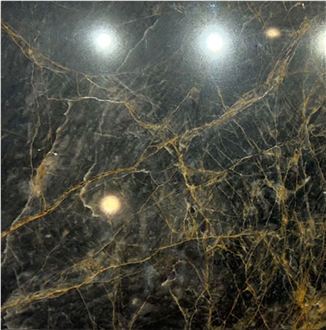
Culli Gold Marble is an exotic natural marble quarried in Morocco, distinguished by a deep dark grey-green to charcoal background with subtle brownish undertones. Its dramatic dark base is crossed by an intricate network of golden-brown, amber and rust-colored veins, creating a luxurious, organic appearance reminiscent of fossilized structures, roots or natural mineral formations.

Texture

  • Fine- to medium-grained crystalline texture
  • Compact natural stone structure
  • Smooth, dense surface
  • Natural mineral variation throughout the slab
  • Capable of achieving a high-gloss polished finish

Veining & Pattern

The defining feature of Culli Gold Marble is its complex web-like veining. Golden-brown, amber and rust-colored veins range from extremely fine lines to wider fractured strokes and spread irregularly across the surface. The strong contrast between the dark charcoal background and warm metallic-looking veins produces a dramatic and luxurious appearance. Vein density and direction can vary significantly between blocks and slabs.

Typical Technical Properties

Representative ranges for comparable Moroccan dark marble; actual quarry test results may vary. 

  • Apparent Density: 2,680–2,720 kg/m³
  • Water Absorption: 0.30–0.60%
  • Open Porosity: 0.3–1.2%
  • Compressive Strength, Dry: 90–120 MPa
  • Compressive Strength, Wet: 75–95 MPa
  • Flexural Strength, Dry: 9–13 MPa
  • Flexural Strength, Wet: 7–10 MPa
  • Mohs Hardness: 3–4

Chemical Composition - Component Approx. % by Weight

  • CaCO₃: 75–90%
  • MgCO₃: 3–12%
  • SiO₂: 2–7%
  • Fe₂O₃ + FeO: 0.5–4%
  • Al₂O₃: 0.2–2%
  • MgO: 1–4%
  • Other oxides: <2%
  • Loss on Ignition: 40–44%

Mineral Composition

  • Calcite: 70–85%
  • Dolomite: 5–15%
  • Quartz: 2–7%
  • Clay / Phyllosilicate Minerals: 1–5%
  • Iron-bearing Minerals: 1–4%
  • Other Accessory Minerals: <2%

The golden, amber and rust coloration is primarily associated with iron-bearing mineral phases, while the dark grey-green coloration can result from minor silicate, carbonaceous and other accessory minerals.

Recommended Uses

Culli Gold Marble is particularly suitable for premium interior applications:

Feature walls, Interior wall cladding, Luxury flooring, Bathroom walls, Vanity tops, Countertops, Fireplace surrounds, Hotel and hospitality interiors, Reception desks, Decorative panels, Tabletops and furniture, Columns and architectural features, Sculptural and artistic applications, etc.

For heavily trafficked flooring or exterior applications, project-specific testing is recommended.

Maintenance

Culli Gold Marble is a calcareous natural stone and requires appropriate care.

  • Clean with a pH-neutral stone cleaner.
  • Avoid vinegar, lemon, acidic detergents and descaling chemicals.
  • Wipe spills promptly to minimize staining.
  • Use a suitable penetrating sealer where appropriate.
  • Reseal periodically depending on the application and level of use.
  • Avoid abrasive powders and harsh cleaning pads.
  • Use cutting boards and protective mats on countertops.
  • Natural fissures and filled veins should be professionally evaluated before installation.

Note: The chemical, mineralogical and mechanical values above are representative ranges for comparable Moroccan marble and should be replaced with quarry-specific laboratory test results when used for formal architectural or engineering specifications.

FAQ

How can I remove rust stains from a Culli Gold Marble kitchen countertop?

Removing rust stains from a Culli Gold Marble countertop requires careful attention to avoid damaging the marble. Heres a step-by-step guide to help you: 1. **Materials Needed:** - Hydrogen peroxide (20% strength) - Baking soda - Plastic wrap - A plastic or wooden spatula - Soft cloths - Masking tape 2. **Prepare the Area:** - Clean the countertop with a soft cloth and mild dish soap to remove any surface dirt or debris. Rinse thoroughly with water and dry with a soft cloth. 3. **Make a Poultice:** - Mix hydrogen peroxide with baking soda to form a thick paste. The consistency should be similar to peanut butter. 4. **Apply the Poultice:** - Spread the paste over the rust stain generously. The layer of the poultice should be about 1/4 inch thick. 5. **Cover and Seal:** - Cover the poultice with plastic wrap and use masking tape to seal the edges. This will keep the poultice moist and effective. 6. **Let it Sit:** - Leave the poultice on the stain for at least 24 hours. The hydrogen peroxide will work to break down the rust, while the baking soda will help draw it out of the stone. 7. **Remove the Poultice:** - Carefully remove the plastic wrap and scrape off the dried poultice with a plastic or wooden spatula. Be gentle to avoid scratching the marble. 8. **Rinse and Dry:** - Wipe the area with a damp soft cloth to remove any residue. Then, dry the marble with a clean, dry cloth. 9. **Repeat if Necessary:** - If the stain is still visible, you may need to repeat the process. 10. **Polish and Protect:** - Once the stain is removed, consider applying a marble sealer to protect the countertop from future stains. Follow the manufacturers instructions for application. **Precautions:** - Always test the poultice on an inconspicuous area of the marble to ensure it does not cause damage or discoloration. - Avoid using acidic or abrasive cleaners on marble, as they can etch or scratch the surface. - Work in a well-ventilated area and use gloves when handling chemicals like hydrogen peroxide. If the stain persists despite multiple attempts, you may wish to consult a professional who specializes in marble restoration.
Can I mix cleaning vinegar and Dawn dish soap together to clean a Culli Gold Marble countertop?

Using a combination of cleaning vinegar and Dawn dish soap on a Culli Gold Marble countertop is not advisable. Marble is a natural stone that is sensitive to acidic substances, and vinegar is acidic. Using vinegar can etch or dull the surface of the marble over time. For cleaning marble countertops, its best to use a pH-neutral cleaner or a solution specifically designed for natural stone. Mild dish soap (such as Dawn) diluted in warm water can be used for regular cleaning of marble, but it should be rinsed thoroughly with clean water and dried to avoid any residue. If your Culli Gold Marble countertop requires more thorough cleaning, consider consulting the manufacturer or a professional for appropriate products and techniques.

Can the surface of Culli Gold Marble be finished with a glossy polish?

Yes, Culli Gold Marble can be finished with a glossy polish. Marble is a natural stone that is often polished to achieve a smooth and reflective surface, enhancing its color and veining patterns. A glossy polish is a common finish for marble, including Culli Gold Marble, to highlight its natural beauty and provide a luxurious appearance.

Can Culli Gold Marble columns be used as load-bearing elements in a building?

Culli Gold Marble, like other marbles, is a natural stone known for its aesthetic appeal rather than its structural properties. While marble is relatively strong in terms of compression and can support weight vertically, its not typically used as a primary load-bearing element in building construction for several reasons: 1. **Structural Limitations**: Marble is a brittle material with limited tensile and flexural strength compared to other structural materials like steel or reinforced concrete. This makes it less suitable for withstanding forces other than vertical compression. 2. **Durability**: Over time, natural elements and stresses can cause marble to crack or degrade, impacting its structural integrity. 3. **Cost and Practicality**: Marble is more expensive than many engineering materials like steel or concrete, and using it for load-bearing purposes is usually neither cost-effective nor practical. 4. **Engineering Standards**: Modern engineering standards typically require materials with predictable and reliable performance, such as steel and concrete, for primary structural roles. However, marble, including Culli Gold Marble, can be used decoratively around structural elements or as cladding to provide a visually appealing finish to columns that are constructed with other load-bearing materials. If the design specifically requires marble to be part of a load-bearing structure, it would have to be engineered in a way that mitigates the natural limitations of marble, likely involving a structural frame of another material that does the actual load-bearing work. Always consult with a structural engineer when considering the use of marble in a structural or decorative capacity to ensure safety and compliance with building codes and standards.

What is the minimum required height for a Culli Gold Marble handrail on a deck?

The minimum required height for a handrail on a deck is typically dictated by local building codes rather than the specific material of the handrail, such as Culli Gold Marble. Generally, building codes in the United States, for example, often require deck handrails to be at least 36 inches above the deck surface. However, this can vary based on jurisdiction, type of building, and specific regulations. Its essential to check with your local building authority or a professional contractor for the specific code requirements in your area to ensure compliance.

What is the standard height for a Culli Gold Marble balcony railing?

When it comes to balcony railings, including those made of materials like Culli Gold Marble, the height is generally influenced by local building codes rather than the material itself. In many regions, the standard height for balcony railings ranges from 36 inches (about 91 centimeters) to 42 inches (about 107 centimeters) above the balcony floor. These regulations are primarily concerned with safety and may vary slightly depending on local laws and regulations. Therefore, its essential to consult the specific building codes of your area or get in touch with a local architect or builder to ensure compliance with the relevant standards.

Products & Prices

Hot Marble

New Marble

Post Your Request

The request includes:
  1. surface finished, size
  2. quantity required

