Post Your Needs

Cullinan Brown Marble

Marble

China

About

Item Details

Material Type:
Marble
Origin:
China
Recommended Usage:
Kitchen and bathroom countertops, wash basins, building stone, ornamental stone, stairs, interior, exterior wall and floor applications, mosaic, waterjet pattern, wall panels, table tops, balustrades, columns, wall and pool copings, pool pavers, fireplaces
Additional Names:
Cullinan Marble, Kulinan Brown Marble, in China stone market:库里南棕(Kùlǐnán zōng)
Finished Surface:
Polished,Bush Hammered,Tumbled,Brushed,Honed,Split,Machine Cut,Natural Surface,Sandblasted,Combed,Leathered,Water Jet,Filled,Chiseled,Pickling

Testing

Water Absorption:
0.2-0.35 % by weight
Density:
2650-2700 kg/m³
Flexural Strength:
8-12 MPa
Compressive Strength:
90-120 MPa

Description

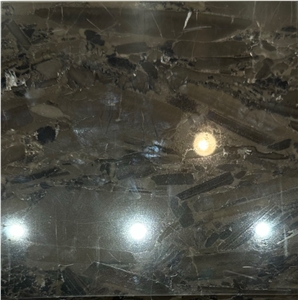
Cullinan Brown Marble is characterized by a deep, rich brown base color​ (ranging from deep chocolate to espresso brown) that provides a dramatic, luxurious foundation. The stone is overlaid with dramatic, irregular veins and patches​ in shades of black, charcoal grey, and subtle hints of blue. The polished surface enhances the stone's depth and luminosity, creating a striking contrast between the dark background and the lighter, flowing veining. The overall appearance is bold, luxurious, and visually dynamic, with large, organic, cloud-like formations that make it suitable for creating statement interiors in both residential and commercial spaces.

Technical Specifications

A. Physical & Mechanical Properties:

  • Water Absorption:​ 0.2-0.35% (by weight)
  • Density:​ 2,650-2,700 kg/m³
  • Compressive Strength:​ 90-120 MPa
  • Flexural Strength:​ 8-12 MPa
  • Hardness (Mohs Scale):​ 3-4
  • Frost Resistance:​ Suitable for interior use; limited exterior application
  • Abrasion Resistance:​ 20-28 Ha
  • Thermal Shock Resistance:​ Good for interior applications

B. Chemical & Mineral Composition:

  • Calcium Carbonate (Calcite, CaCO₃):​ 85-92%
  • Dolomite (MgCa(CO₃)₂):​ 5-10%
  • Iron Oxides (Fe₂O₃/Fe₃O₄):​ 2-5% (primary source of brown coloration)
  • Manganese Oxides (MnO₂):​ 1-3% (contributes to black/grey veining)
  • Silica (SiO₂) & Clay Minerals:​ 2-5%
  • Trace Minerals:​ < 1% (possible source of blue hints)

C. Visual & Textural Description:

  • Primary Color:​ Deep chocolate to espresso brown
  • Veining:​ Contrasting veins in black, grey, and occasional blue tones
  • Pattern:​ Large, organic, cloud-like formations
  • Texture:​ Fine to medium crystalline structure
  • Finish:​ High-gloss polished surface (standard)

Available Formats & Processing

A. Standard Cutting Sizes:

  • Slabs:​ Up to 280×160 cm (common); jumbo slabs available
  • Thickness:​ 2 cm, 3 cm (standard); 1.5 cm, 4 cm (custom)
  • Tiles:​ 30×30 cm, 30×60 cm, 60×60 cm, 60×120 cm
  • Custom Cuts:​ Countertops, vanity tops, wall panels, stair treads

B. Surface Finish Options:

  • Polished (Standard):​ High-gloss, mirror-like finish that maximizes color depth
  • Honed:​ Smooth matte finish for contemporary, low-reflection applications
  • Leathered/Brushed:​ Textured, low-sheen finish that enhances natural grain
  • Tumbled:​ Antiqued, softened-edge rustic appearance
  • Bush-hammered:​ Heavily textured surface for exterior applications
  • Waterjet:​ Custom-patterned or textured finish

Applications, Usage & Maintenance

A. Primary Applications:

  • Feature Walls:​ Dramatic accent walls in living rooms, lobbies, reception areas
  • Flooring:​ Luxury residential and commercial interiors
  • Countertops:​ Kitchen islands, bathroom vanities, bar tops
  • Commercial Spaces:​ Hotel lobbies, high-end retail stores, corporate offices
  • Decorative Elements:​ Fireplace surrounds, tabletops, reception desks
  • Bathrooms:​ Shower walls, bath surrounds, vanity backsplashes

B. Usage Guidelines:

  • Recommended for interior applications
  • Suitable for both residential and commercial projects
  • Ideal for creating bold, statement pieces
  • Compatible with underfloor heating systems
  • Best for moderate-traffic areas (consider honed finish for high-traffic floors)

Maintenance Guidelines:

  • Cleaning:​ Use pH-neutral stone cleaner with soft cloth
  • Sealing:​ Recommended for all surfaces, especially polished finishes
  • Stain Prevention:​ Wipe spills immediately; use coasters and trivets
  • Protection:​ Felt pads under furniture; avoid dragging heavy objects
  • Periodic Care:​ Professional polishing may be needed to maintain high gloss
  • Avoid:​ Acidic cleaners (vinegar, citrus), abrasive pads, harsh chemicals
  • Frequency:​ Re-seal every 12-18 months depending on use

Summary:

Cullinan Brown Marble is a luxurious Chinese marble​ prized for its deep brown base with dramatic contrasting veining. Its bold, sophisticated appearance makes it ideal for projects seeking to make a strong visual statement. While primarily recommended for interior applications, with proper finishing and installation it can be used in select exterior applications. The stone's versatility, dramatic aesthetic, and good technical properties make it suitable for a wide range of residential and commercial applications where luxury and visual impact are priorities.

FAQ

Is Cullinan Brown Marble floors easily scratched?

Cullinan Brown Marble, like other marble types, is relatively soft and can be prone to scratching compared to harder natural stones like granite or quartzite. Marble has a Mohs hardness rating of about 3-4, which means it is susceptible to scratches from harder materials. For this reason, its important to take care when using marble floors to prevent scratches: 1. **Use Mats and Rugs**: Place mats or rugs in high-traffic areas to protect the marble from dirt and debris that could cause scratches. 2. **Furniture Pads**: Use pads under furniture legs to prevent them from scratching the surface when moved. 3. **Regular Cleaning**: Keep the floors clean by using a soft broom or vacuum with a soft brush attachment to avoid grinding dirt into the surface. 4. **Sealing**: Regularly seal the marble to provide an additional layer of protection against scratches and stains. 5. **Avoid Harsh Cleaners**: Use pH-neutral cleaners specifically designed for marble to avoid etching and scratching. Even with careful maintenance, some wear and tear over time is expected, but these steps can help minimize and protect against scratches on your Cullinan Brown Marble floors.

Should I avoid cutting anything on Cullinan Brown Marble kitchen countertop?

Yes, you should avoid cutting directly on a Cullinan Brown Marble kitchen countertop. Marble is a relatively soft and porous natural stone, which makes it susceptible to scratches, staining, and etching, especially from acidic substances. To preserve the beauty and integrity of your marble countertop, its advisable to use cutting boards or chopping blocks to prevent any potential damage. Regular maintenance, including sealing the marble periodically, can also help protect the surface from stains and etching.

Can my Cullinan Brown Marble countertop surface be scratched with a knife?

Cullinan Brown Marble is a natural stone, and like most marbles, it is relatively soft compared to materials such as granite. While its not as delicate as some surfaces, it can still be scratched by a sharp object like a knife. Marble has a Mohs hardness rating of around 3 to 4, which means it is susceptible to scratching from materials that are harder than it, such as metal utensils. To protect your countertop, it is advisable to use cutting boards and avoid using knives or other sharp objects directly on the marble surface.

Does 2cm thick Cullinan Brown Marble countertop crack easily?

A 2cm thick Cullinan Brown Marble countertop can be prone to cracking under certain conditions, but it generally depends on several factors: 1. **Material Properties**: Marble is a natural stone, and while it is durable and strong, it is not as hard as granite or quartz. Marble is susceptible to scratching and can crack if subjected to significant impact or stress. 2. **Installation**: Proper installation is crucial. Ensuring that the countertop has adequate support and that the weight is evenly distributed can help prevent cracks. If there are any voids or uneven areas during installation, it could lead to stress points where cracks might develop over time. 3. **Sealing and Maintenance**: Marble should be sealed to protect against staining and to add a slight layer of protection. Regular maintenance can help preserve the integrity of the stone. 4. **Environmental Factors**: Extreme temperature changes or conditions that cause the stone to expand and contract can increase the risk of cracking. Sudden impacts or dropping heavy objects onto the surface can also lead to damage. 5. **Thickness**: A 2cm thickness is relatively standard for countertops, but it is slightly thinner than some other options (such as 3cm). While 2cm marble is generally adequate for many applications, it should be well-supported to prevent flexing and potential cracking. To reduce the risk of cracking, ensure professional installation, provide adequate support, use cutting boards and trivets, and avoid placing extremely heavy or hot objects directly on the countertop. Regular maintenance and cautious use will help prolong the life of your marble countertop.

Will Cullinan Brown Marble crack with heat?

Cullinan Brown Marble, like other marble types, is a natural stone that can be sensitive to extreme temperature changes. While marble is generally heat resistant, sudden or extreme heat exposure can potentially cause cracking or damage. For example, placing a hot pot or pan directly onto a marble countertop can cause thermal shock, leading to cracks or discoloration. To prevent cracking or other heat-related damage, its advisable to use trivets or heat pads when placing hot items on a marble surface. Consistent use of protective measures can help maintain the integrity and appearance of the marble over time.

Can I put a hot pan on Cullinan Brown Marble countertop?

Its generally not recommended to put a hot pan directly on any marble countertop, including Cullinan Brown Marble. Marble is a natural stone that can be sensitive to heat, and placing a hot pan on it might cause thermal shock, leading to cracks or discoloration. To protect your marble countertop, its best to use trivets or heat-resistant mats when dealing with hot cookware. This will help maintain the integrity and appearance of your marble surface over time.

Products & Prices

Hot Marble

New Marble

Post Your Request

The request includes:
  1. surface finished, size
  2. quantity required