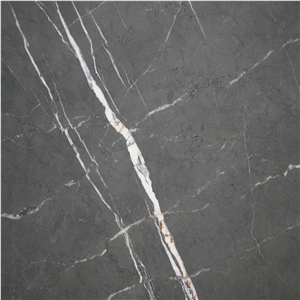
Earl Gray Marble, quarried in Guangxi, China, is known for its soft and elegant appearance. The marble features a grey base with delicate, flowing veining in shades of charcoal, silver, and pale grey, making it a popular choice for various architectural and design applications.
Physical and Mechanical Properties:
-
Water Absorption: Typically low, often less than 0.35%, indicating a good resistance to staining and weathering.
-
Density: Approximately 2.65 to 2.7 grams per cubic centimeter (g/cm³), depending on the specific quarrying site.
-
Flexural Strength: Ranges from 12 to 13 Megapascals (MPa), which denotes its ability to resist bending forces.
-
Compressive Strength: Generally between 120 to 160 MPa, reflecting its capability to withstand heavy loads.
-
Hardness: Measured at 3-4 on the Mohs scale, indicating a moderate ability to resist scratches.
-
Porosity: Low porosity, which contributes to the marble's durability and reduced maintenance needs.
-
Slip Resistance: Varies based on finish; typically a polished finish has lower slip resistance, while a honed or brushed finish offers better grip.
Chemical and Mineral Composition:
-
Calcite (CaCO₃): Predominantly made of calcite, constituting about 90-95% of its composition.
-
Dolomite (CaMg(CO₃)₂): May be present in smaller amounts, usually around 5-10%.
-
Other Minerals: Trace amounts of quartz, micas, and iron oxides might be present, affecting the veining and color variations.
Usage:
- Flooring: Ideal for indoor spaces such as living rooms or kitchens.
- Walls: Used in feature walls or as cladding to add elegance to interior spaces.
- Countertops and Vanities: Popular for its aesthetic appeal in bathrooms and kitchens.
- Fireplaces: Enhances the sophistication of a home’s central gathering area.
- Stairs: Adds beauty and durability to staircases.
Maintenance:
- Requires regular sealing to maintain its resistance to stains, especially in high-traffic or moisture-prone areas.
- Clean with a pH-neutral stone cleaner; avoid acidic or abrasive cleaners.
- Regular dusting or mopping to prevent surface scratching from dust and grit.
Cutting Sizes (cm):
- Tiles: Commonly available in 30x30, 30x60, 60x60, and 60x120.
- Slabs: Typically cut in large sizes, often 2 cm or 3 cm thick.
Surface Finish Options:
-
Polished: Provides a glossy shine that enhances the color and veining but may be slippery.
-
Honed: Offers a matte finish for a more understated look, providing better slip resistance than a polished finish.
-
Brushed: Textured surface improves slip resistance and imparts a rustic appearance.
-
Tumbled: Offers an aged, antique look, suitable for rustic or traditional settings.
Earl Gray Marble is versatile, offering a palette that complements many design themes while requiring manageable maintenance to preserve its beauty and functionality.


 China

 2YR


 Turkey


 Italy

 Iran


