Post Your Needs

Glacier Green Marble

Marble

China

About

Item Details

Material Type:
Marble
Origin:
China
Recommended Usage:
kitchen and bathroom countertop, wash basins, building stone, ornamental stone, stairs, interior, exterior wall and floor applications, mosaic, water-jet pattern, wall panels, table tops, balustrades, columns, wall and pool copings, pool paves, sculptures, fireplaces, window sills
Additional Names:
Glacier Jade Marble, Glacial Green Marble, Ice Jade Glacier Green Marble, Glacier Green Athens Jade Marble, Athens Jade Marble, in China stone market:冰川绿(Bīngchuān Lǜ), Glacier Green Marble
Finished Surface:
Polished,Bush Hammered,Tumbled,Brushed,Honed,Split,Machine Cut,Natural Surface,Sandblasted,Combed,Leathered,Water Jet,Chiseled,Pickling

Testing

Water Absorption:
0.10 - 0.30% by weight
Density:
2680 - 2730 kg/m³
Flexural Strength:
12 - 16 MPa
Compressive Strength:
105 - 130 MPa

Description

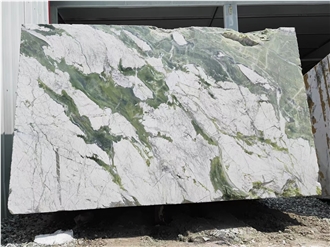
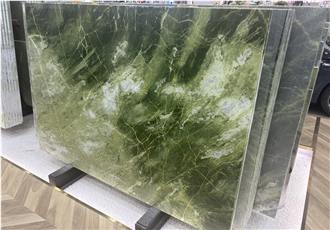
Glacier Green Marble is an exotic luxury natural stone highly valued for its serene and sophisticated appearance. This remarkable marble features a soft jade-green to misty green background reminiscent of glacial ice formations and tranquil alpine landscapes. The surface is enriched with an intricate network of crystalline white, light gray, and warm beige veins that flow dynamically across the stone, creating a sense of movement and natural artistry.

Its distinctive color palette and elegant veining make Glacier Green Marble a preferred material for high-end residential, hospitality, retail, and commercial projects seeking a refined and organic aesthetic.

Texture

  • Fine to medium-grained crystalline texture
  • Smooth and compact structure
  • Naturally polished appearance when finished
  • Dense metamorphic composition
  • Elegant reflective surface with excellent depth
  • Moderate translucency in selected areas

Pattern

  • Soft jade green to misty green background
  • Intricate web-like white crystalline veining
  • Light gray mineral streaks
  • Occasional beige and ivory mineral accents
  • Dynamic flowing patterns with natural movement
  • Each slab displays unique artistic characteristics

Physical & Mechanical Properties

(Values may vary slightly depending on quarry source and production batch.)

  • Apparent Density: 2,680–2,730 kg/m³
  • Water Absorption: 0.10–0.30% by weight
  • Open Porosity: 0.30–0.80%
  • Compressive Strength: 105–130 MPa
  • Flexural Strength: 12–16 MPa
  • Abrasion Resistance: Good
  • Impact Resistance: Moderate to Good
  • Frost Resistance: Suitable for most climates when properly installed
  • Mohs Hardness: 3.5–4.5

Mineralogical Composition (% by Weight)

  • Calcite: 65–80%
  • Dolomite: 8–18%
  • Quartz: 3–8%
  • Serpentine: 2–8%
  • Mica: 1–3%
  • Chlorite and Accessory Minerals: 1–3%

Chemical Composition (% by Weight)

  • CaCO₃ (Calcium Carbonate): 70–85%
  • MgCO₃ (Magnesium Carbonate): 5–12%
  • SiO₂ (Silicon Dioxide): 3–8%
  • Al₂O₃ (Aluminum Oxide): 0.5–2.0%
  • Fe₂O₃ (Iron Oxide): 0.1–1.0%
  • K₂O (Potassium Oxide): 0.1–0.8%
  • Na₂O (Sodium Oxide): 0.1–0.5%
  • Trace Minerals: <1%

Applications

Interior Applications

  • Luxury flooring
  • Feature walls
  • Bathroom wall cladding
  • Shower surrounds
  • Vanity tops
  • Fireplace surrounds
  • Reception counters
  • Hotel lobbies
  • Decorative panels
  • Furniture surfaces
  • Staircases

Commercial Applications

  • Luxury retail stores
  • Hospitality projects
  • Corporate headquarters
  • Restaurants
  • Boutique hotels, Spa and wellness facilities

Decorative Applications

  • Bookmatched wall installations
  • Artistic feature panels
  • Sculptural elements
  • Custom furniture
  • Interior accents

Maintenance

  • Clean routinely using pH-neutral stone cleaners.
  • Avoid acidic cleaners containing vinegar, lemon, or harsh chemicals.
  • Seal periodically to maintain stain resistance.
  • Wipe spills promptly, especially acidic liquids.
  • Use protective pads beneath heavy decorative items.
  • For polished surfaces, use non-abrasive cleaning materials.
  • Regular professional maintenance is recommended for high-traffic commercial installations.

Design Characteristics

Glacier Green Marble combines the calming beauty of natural green tones with dramatic crystalline veining, creating a luxurious surface that evokes the appearance of ancient glacial landscapes. Its distinctive visual depth, sophisticated color palette, and unique patterns make it an exceptional choice for premium architectural and interior design projects worldwide.

FAQ

Is Glacier Green Marble heat resistant? Is it suitable for use in fireplaces?

Glacier Green Marble, like other marbles, is generally resistant to heat. However, while it can withstand the heat typically associated with fireplaces, there are some important considerations to keep in mind: 1. **Thermal Shock**: Marble can crack or become damaged if subjected to rapid temperature changes, known as thermal shock. If using Glacier Green Marble near a fireplace, ensure there is a gradual increase and decrease in temperature. 2. **Surface Finish**: Polished marble surfaces can be more susceptible to scratching and may require additional maintenance compared to honed or textured finishes. Consider the finish when planning its use around a fireplace. 3. **Sealing and Maintenance**: Marble is porous and can stain if not properly sealed and maintained. Ensure regular sealing to protect it from soot, smoke, and other residues associated with fireplaces. 4. **Aesthetic Considerations**: Marble offers a distinct, elegant look that can be a desirable aesthetic choice for fireplaces, but ensure it matches the interior design and the intended visual effect. 5. **Installation**: Proper installation is crucial for ensuring safety and durability. It is recommended to consult with a professional who is experienced in working with marble. Overall, while Glacier Green Marble can be suitable for use around fireplaces, it is important to consider these factors and consult with professionals to ensure it meets your specific needs and conditions.

Does Glacier Green Marble contain any harmful radioactivity or chemicals when used as a kitchen countertop?

Glacier Green Marble, like many natural stones, may contain trace amounts of naturally occurring radioactive elements such as uranium, thorium, and potassium-40. However, the levels of radioactivity in natural stones used for countertops are generally very low and typically not considered harmful. The levels usually fall within the safety standards set by regulatory bodies like the Environmental Protection Agency (EPA). As for chemicals, natural stones like marble do not usually contain harmful chemicals. However, its essential to consider the sealants and adhesives used during installation, which might sometimes emit volatile organic compounds (VOCs). To minimize exposure, you can choose low-VOC or VOC-free products. If you have specific concerns about radioactivity or chemical exposure from your countertop, you might want to consult a professional who can test the material in question. They can provide accurate measurements and assure you of its safety based on established health guidelines.

Can Glacier Green Marble be used as a kitchen cutting board?

Using Glacier Green Marble as a kitchen cutting board is not recommended. Marble is a relatively soft and porous natural stone compared to other materials like granite or quartz. Here are some reasons why its not ideal for use as a cutting board: 1. **Susceptibility to Scratching:** Marble can easily be scratched by knives, which can damage both the stone and your knife blades. 2. **Porosity:** Marble is porous and can absorb liquids, leading to potential staining from food and ingredients like tomatoes, vinegar, or oils. 3. **Acid Sensitivity:** Marble is sensitive to acids found in many foods, such as citrus fruits, vinegar, and tomatoes. These can etch the surface, dulling its finish over time. 4. **Maintenance:** Keeping a marble cutting board in good condition requires regular sealing to protect it from stains and etching, which might be more maintenance than desired for a cutting surface. For these reasons, it is better to use materials that are harder and less porous, like wood, bamboo, or specialized cutting board plastics. These materials are more resilient to knife damage, easier to clean, and dont require the same level of maintenance as marble. If you do use Glacier Green Marble for aesthetic purposes, it might be better suited as a decorative element in your kitchen rather than a functional cutting board.

Is 3/4" thick enough for a Glacier Green Marble commercial countertop?

When considering marble thickness for a commercial countertop, several factors come into play, including durability, aesthetics, and the specific use of the countertop. Glacier Green Marble, like other types of marble, is a natural stone that can be susceptible to cracking and chipping if not properly supported, particularly in high-traffic or high-use areas like commercial environments. For commercial countertops, industry standards typically recommend using thicker slabs, such as 1? (approximately 3 cm) or even thicker, to ensure durability and longevity. A thickness of 3/4 (approximately 2 cm) is generally considered more suitable for residential settings or areas with lighter use due to its vulnerability under heavy use without adequate support. If you are set on using a 3/4 thick slab for aesthetic reasons or cost considerations, you would need to ensure additional structural support underneath the marble to prevent damage, such as a plywood substrate or other reinforcing materials. Consulting a professional fabricator or designer familiar with commercial applications is advisable to assess the specific needs and ensure the countertop can withstand the intended use.

What is the standard thickness of Glacier Green Marble stair steps and risers?

The standard thickness for marble stair steps and risers, including Glacier Green Marble, typically varies based on design preferences and structural requirements. However, a common thickness for marble treads (the horizontal part of the step) ranges from 20mm to 30mm (approximately 3/4 inch to 1 1/4 inches). The risers (the vertical part) are often thinner, usually around 15mm to 20mm (approximately 5/8 inch to 3/4 inch). Its essential to consult with a local supplier or a structural engineer for specific recommendations based on the project’s requirements and any applicable building codes.

My Glacier Green Marble kitchen countertop has been stained by soy sauce. How can I remove the stain?

Removing soy sauce stains from a Glacier Green Marble countertop can be a bit challenging due to marbles porous nature, which can absorb stains. However, with care and the right approach, you can try to remove the stain. Here’s a step-by-step guide: 1. **Blot the Spill**: If the soy sauce spill is recent, quickly blot (do not rub) the area with a clean, dry cloth or paper towel to absorb as much liquid as possible. 2. **Prepare a Cleaning Solution**: Mix a gentle pH-neutral dish soap with warm water. Avoid acidic or abrasive cleaners, as they can damage marble. 3. **Clean the Area**: Dampen a soft cloth or sponge with the soapy water solution and gently clean the stained area. Rinse the cloth or sponge frequently and continue cleaning until youve removed as much of the surface stain as possible. 4. **Rinse Thoroughly**: Use a clean, damp cloth to wipe the area and remove any soap residue. 5. **Make a Poultice**: If the stain persists, you may need to apply a poultice to draw out the soy sauce from the marble. You can make a simple poultice by mixing baking soda and water into a thick paste (the consistency of peanut butter). 6. **Apply the Poultice**: Spread the poultice over the stain, covering it completely with a plastic wrap. Tape down the edges of the plastic wrap to keep it in place, then allow the poultice to sit for 24-48 hours. 7. **Remove the Poultice**: After the poultice has dried, gently remove it using a soft cloth or plastic scraper. Rinse the area with clean water and dry it with a soft towel. 8. **Check the Stain**: If the stain is still visible, you might need to repeat the poulticing process. Stubborn stains might require several applications. 9. **Seal the Marble**: Once the stain is removed, consider sealing your marble countertop to protect against future stains. Use a marble-specific sealer and follow the manufacturers instructions. **Additional Tips**: - Always perform a spot test in an inconspicuous area before applying any cleaning solution or poultice. - Never use vinegar, lemon juice, or other acidic substances on marble, as they can etch the surface. - Regular cleaning and maintenance can help prevent staining and keep your countertop looking beautiful. If youre unable to remove the stain or if youre concerned about causing damage, its a good idea to consult a professional for advice or assistance.

Products & Prices

View More

Hot Marble

New Marble

Post Your Request

The request includes:
  1. surface finished, size
  2. quantity required