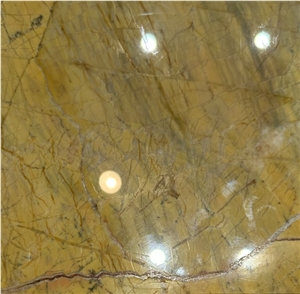
Higil Marble

About
Item Details
- Material Type:
- Marble
- Origin:
China - Recommended Usage:
- Kitchen and bathroom countertops, wash basins, building stone, ornamental stone, stairs, interior, exterior wall and floor applications, mosaic, waterjet pattern, wall panels, table tops, balustrades, columns, wall and pool copings, pool pavers, sculptures, fireplaces, window sills
- Additional Names:
- Higil Gold Marble, in China stone market:希吉尔(Xī Jí Ěr)
- Finished Surface:
- Polished,Bush Hammered,Tumbled,Brushed,Honed,Split,Machine Cut,Natural Surface,Sandblasted,Acid Washing,Combed,Leathered,Water Jet,Filled,Chiseled,Pickling
Testing
- Water Absorption:
- 0.15–0.40 % by weight
- Density:
- 2650–2700 kg/m³
- Flexural Strength:
- 12–16 MPa
- Compressive Strength:
- 85–115 MPa
Description
Appearance & Aesthetic Characteristics
Color & Pattern
Higil Marble features a warm golden yellow to amber base, enriched with rich, flowing veins in shades of brown, rust, and ochre. These veins move organically across the surface, creating a dynamic, painterly, and naturally artistic pattern. Each slab displays unique movement, ensuring exclusivity and visual depth.
Texture
- Fine- to medium-grained crystalline marble structure
- Smooth, compact surface when finished
- Polished surfaces exhibit a warm, reflective glow that enhances the golden tones
Overall Visual Effect
- Luxurious, warm, and expressive
- Ideal for statement interiors and feature applications
Physical & Mechanical Properties (Typical Values)
- Density: 2650–2700 kg/m³
- Water Absorption: 0.15–0.40 % by weight
- Compressive Strength: 85–115 MPa
- Flexural Strength: 12–16 MPa
- Mohs Hardness: 3–4
Values may vary slightly depending on quarry block and slab selection.
Chemical & Mineral Composition (% by Weight)
Mineralogical Composition
- Calcite (CaCO₃): 90–95%
- Dolomite: 2–4%
- Quartz: 1–3%
- Iron-bearing minerals (Hematite, Goethite): Trace amounts (responsible for golden and rust tones)
Chemical Oxide Composition
- CaO (Calcium Oxide): 52–56%
- SiO₂ (Silica): 18–25%
- MgO (Magnesium Oxide): 1–3%
- Fe₂O₃ (Iron Oxide): 0.3–1.2%
- Al₂O₃ (Alumina): 0.5–1.5%
- Na₂O + K₂O: <0.5%
- Other trace oxides: <0.2%
Applications & Usage
Recommended Applications
- Interior wall cladding
- Feature walls and statement panels
- Flooring in low- to medium-traffic areas
- Bathroom walls and vanity tops
- Fireplace surrounds
- Columns, stair risers, and decorative elements
Design Suitability
- Luxury residential interiors
- Boutique hotels, lobbies, and reception areas
- Classic, Mediterranean, Art Deco, and contemporary designs
Limitations
- Not recommended for heavy outdoor exposure or freeze–thaw environments
- Kitchen countertops require sealing and careful maintenance
Maintenance & Care
- Clean with neutral pH stone cleaners only
- Avoid acidic or abrasive cleaning agents
- Seal with a penetrating marble sealer every 6–12 months
- Wipe spills immediately to prevent staining or etching
- Use felt pads and protective mats in high-use areas
FAQ
No, it is not recommended to use vinegar on a Higil Marble countertop or any marble surface. Vinegar is acidic and can etch or dull the finish of marble. It is better to use a pH-neutral cleaner specifically formulated for use on natural stone to maintain the beauty and integrity of your countertop. Always check the manufacturers recommendations for cleaning and maintenance to ensure the longevity of your marble surface.
How can I permanently seal Higil Marble polished floor tiles?
Sealing marble floor tiles can help protect them from stains and etching. While you cannot make the seal permanent, regular reapplication can help maintain the protection. Heres a step-by-step guide to sealing polished marble floor tiles:
1. **Clean the Surface:**
- Thoroughly clean the marble tiles using a pH-neutral cleaner specifically designed for marble. Avoid acidic or abrasive cleaners that can damage the marble surface.
- Rinse the floor with clean water and allow it to dry completely before proceeding.
2. **Choose the Right Sealer:**
- Select a high-quality penetrating sealer suitable for polished marble. Penetrating sealers are absorbed by the stone and help protect from within, without altering the surface appearance.
3. **Prepare the Area:**
- Ensure the area is well-ventilated.
- Tape off any areas adjacent to the marble that you do not wish to seal, such as baseboards or walls.
4. **Apply the Sealer:**
- Carefully follow the manufacturers instructions on how to apply the sealer. Typically, youll use a clean, lint-free cloth or a paintbrush for application.
- Apply the sealer evenly over the marble tiles, ensuring complete coverage. Work in small sections to ensure that you dont miss any spots.
5. **Allow the Sealer to Penetrate:**
- Let the sealer penetrate the marble for the time specified by the manufacturer, usually around 10-15 minutes. Do not let the sealer dry on the surface.
6. **Wipe Off Excess Sealer:**
- Use a clean, dry cloth or a clean mop to wipe off any excess sealer from the surface. This step is crucial to avoid leaving a hazy residue.
7. **Buff the Floor (Optional):**
- Buff the surface lightly with a soft cloth to enhance the natural shine of the marble, if desired.
8. **Cure Time:**
- Allow the sealer to cure for the time recommended (usually 24-48 hours), during which the floor should be kept free from moisture and traffic.
9. **Routine Maintenance:**
- Regularly clean the floor with a pH-neutral cleaner and avoid water pooling on the surface.
- Reapply the sealer as indicated by the manufacturer, typically every 1-2 years, depending on the level of traffic and use.
Following these steps will help you maintain the appearance and longevity of your marble floors. Always test the sealer on a small, inconspicuous area first to ensure it achieves the desired effect.
How to make Higil Marble waterproof?
Making Higil Marble, or any natural stone, waterproof generally involves sealing the surface to prevent water penetration, staining, and other damage. Heres a step-by-step guide on how to seal marble to enhance its water resistance:
1. **Clean the Surface:**
- Use a pH-neutral stone cleaner to thoroughly clean the marble surface.
- Avoid acidic or abrasive cleaners, which can damage the marble.
- Rinse with water and dry completely with a clean, lint-free cloth. Ensure the marble is completely dry before sealing.
2. **Choose the Right Sealer:**
- Select a high-quality, penetrating or impregnating sealer specifically designed for marble. These sealers protect by sinking into the stone and forming a barrier without altering the marble’s natural appearance.
- Avoid topical sealers, which sit on the surface and can alter the stone’s finish or become yellow over time.
3. **Test the Sealer:**
- Conduct a spot test in an inconspicuous area to ensure the sealer does not alter the marble’s appearance or color.
4. **Apply the Sealer:**
- Follow the manufacturer’s instructions for application closely.
- Use a clean, soft cloth or a brush to evenly apply the sealer across the marble surface.
- Allow the sealer to absorb into the surface for the recommended time (usually 5-15 minutes).
5. **Wipe Off Excess Sealer:**
- After the sealer has absorbed, wipe off any excess with a clean, dry cloth.
- Buff the surface to ensure no residue is left, which could cause streaking or a dull finish.
6. **Cure Time:**
- Let the sealer cure for the time specified by the manufacturer, often 24-72 hours, before exposing the marble to water or heavy use.
7. **Reapply Regularly:**
- Depending on the product used and the marbles exposure to water, you may need to reseal every 6 months to 2 years. Monitor water absorption and re-apply as needed.
Each marble and installation environment can be different, so its always best to consult with a stone care professional or the marble supplier if you have specific concerns or questions regarding sealing Higil Marble.
Does water permanently stain Higil Marble kitchen countertop?
Higil Marble is a type of natural stone, and like other marbles, it is porous. This means it can be susceptible to staining if spills are not promptly addressed. Water itself typically does not permanently stain marble. However, if water is left on the surface for an extended period, it can cause temporary darkening due to absorption, which usually dries out and returns to normal.
That said, if the marble is not sealed properly, repeated exposure to water can lead to mineral deposits or etching over time, which might appear as stains or dull spots. To prevent any potential issues, its essential to:
1. **Seal the Marble:** Regularly apply a quality stone sealer to create a protective barrier against liquids and stains.
2. **Wipe Up Spills Promptly:** Clean up water and other spills as soon as possible to prevent absorption.
3. **Use Coasters and Trays:** To minimize direct contact with liquids, use coasters, trivets, and trays.
By taking these precautions, you can protect your Higil Marble countertop from water damage and maintain its appearance.
Is Higil Marble good for kitchen countertops?
Higil Marble can be a beautiful choice for kitchen countertops due to its elegant appearance and unique veining patterns. However, like other types of marble, it has certain characteristics that should be considered before choosing it for a kitchen setting:
1. **Porosity**: Marble is a porous material, meaning it can absorb liquids and be prone to staining from spills, especially acidic substances like wine, juice, or vinegar. Regular sealing can help mitigate this issue but doesnt completely eliminate the risk.
2. **Durability**: While marble is a durable stone, its softer than other countertop materials like granite and quartz. This means it can be prone to scratching and chipping with heavy use.
3. **Maintenance**: Marble countertops require regular maintenance, including sealing and gentle cleaning with pH-neutral cleansers. Avoid using acidic or abrasive cleaners that could damage the surface.
4. **Aesthetics**: The natural veining and color variations in marble like Higil can add a luxurious and sophisticated look to a kitchen, making it an attractive choice for many homeowners.
If youre considering Higil Marble for your kitchen countertops, its essential to weigh these factors and decide if the look and style justify the potential maintenance and care it requires. For those willing to commit to its upkeep, it remains a popular choice for its timeless beauty.
What is the typical thickness of Higil Marble kitchen countertop?
The typical thickness for a Higil Marble kitchen countertop can vary, but it is generally available in standard thicknesses similar to other natural stone countertops. The common thicknesses are:
- **2 centimeters (3/4 inch):** This provides a sleek, contemporary look and is often reinforced with a plywood substrate for additional support.
- **3 centimeters (1 1/4 inches):** This is the most popular thickness for kitchen countertops, offering a more substantial appearance and greater durability without requiring additional support.
Ultimately, the choice of thickness may depend on personal preference, design considerations, and structural requirements. Always consult with a professional fabricator or installer to determine the best option for your specific installation.
What is the typical edge type of Higil Marble kitchen countertop?
Higil Marble countertops, like many other types of natural stone countertops, often feature a variety of edge profiles to suit different design preferences. The typical edge types you may encounter include:
1. **Straight Edge (Eased Edge):** A simple, clean, and modern look with slightly rounded edges to prevent chipping.
2. **Beveled Edge:** An angled cut on the top edge, providing a polished and refined appearance.
3. **Bullnose Edge:** A fully rounded edge that offers a soft and classic look, often used to enhance the elegance of the stone.
4. **Half Bullnose (Demi Bullnose):** Only the top half is rounded, protecting the edges while maintaining a substantial look.
5. **Ogee Edge:** An intricate, S-shaped curve that adds an element of traditional sophistication to the countertop.
6. **Double Ogee Edge:** Similar to the ogee, but with two curves, offering a more detailed and luxurious appearance.
7. **Mitered Edge:** A technique that creates the illusion of a thicker slab by joining two pieces at a right angle.
The specific type of edge chosen typically depends on the desired aesthetic, the style of the kitchen, and personal preference.


15YR