Post Your Needs

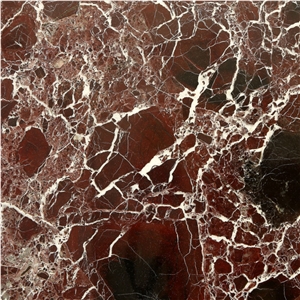
Imperial Peach Marble

Red - Marble

China

About

Item Details

Material Type:
Marble
Origin:
China
Primary Color(s):
Red
Recommended Usage:
Kitchen and bathroom countertops, wash basins, building stone, ornamental stone, stairs, interior, exterior wall and floor applications, mosaic, waterjet pattern, wall panels, table tops, balustrades, columns, wall and pool copings, pool pavers, sculptures, fireplaces
Additional Names:
Canton Red Cream Marble, Imperial Red Marble, Royal Red Marble, in China stone market:广红奶油 (Guǎng hóng nǎiyóu), Imperial Peach Marble
Finished Surface:
Polished,Bush Hammered,Tumbled,Brushed,Honed,Split,Machine Cut,Natural Surface,Sandblasted,Combed,Leathered,Water Jet,Filled,Chiseled,Pickling

Testing

Water Absorption:
0.2-0.4%
Density:
2700 Kg/m3
Flexural Strength:
10-15 MPa
Compressive Strength:
101-140 MPa
Stone texture:
a terracotta red base with darker veins and lighter orange red spots pattern red marble

Description

Description of Imperial Peach Marble

Imperial Peach Marble is an exquisite natural stone quarried in China, characterized by its distinctive terracotta red base. It showcases a dramatic contrast with darker veins running through and features lighter orange-red spots. This type of red marble is prominently used for its aesthetic appeal and durability.

Physical and Mechanical Properties

  • Water Absorption: Typically low, around 0.2-0.4%, making it suitable for interior applications where water resistance is needed.

  • Density: Approximately 2.7 grams per cubic centimeter, indicative of its robustness and suitability for both residential and commercial projects.

  • Flexural Strength: Approximately 10-15 MPa. This value is significant for determining the stone's ability to resist bending or breaking under stress.

  • Compressive Strength: Ranges from 101-140 MPa, showing its ability to withstand heavy loads without deforming.

  • Hardness: On the Mohs scale, Imperial Peach Marble rates around 3-4, classifying it as relatively soft compared to other stones like granite.

  • Porosity: Low porosity, generally around 0.5-1%, allowing for minimal moisture penetration and making it easier to maintain.

  • Slip Resistance: Slip resistance varies depending on the finish but can be enhanced by using a honed or brushed finish to improve traction.

Chemical and Mineral Composition

  • Calcite: Typically over 90% by weight, as it is a predominant mineral in marble.

  • Quartz: Typically below 5%, contributing to the texture and structural integrity.

  • Iron Oxides: Gives the marble its red and orange hues, present in trace amounts.

  • Other Minerals: Trace amounts of mica, clay minerals, and other carbonates.

Usage

  • Interior Flooring: Its aesthetic appeal and durability make it a popular choice for both residential and commercial flooring.

  • Wall Cladding: Often used in building facades or accent walls due to its striking color and pattern.

  • Countertops and Vanities: Utilized for countertops in kitchens and bathrooms, offering both beauty and functionality.

  • Staircases and Columns: Frequently employed in luxury projects to create statement pieces that combine functionality and style.

Maintenance

  • Regular Cleaning: Use a pH-neutral cleaner to maintain its shine and avoid harsh chemicals that can damage the surface.

  • Sealing: Regular sealing is recommended to enhance its resistance to stains and moisture.

  • Avoiding Scratches: Use felt pads under furniture and avoid dragging heavy objects across the surface.

Cutting Sizes

  • Standard slab sizes typically range around 120-180 cm x 240-300 cm.

  • Custom sizes can be made based on specific project requirements.

Surface Finish Options

  • Polished: Provides a shiny, reflective surface to enhance the material's color and patterns.

  • Honed: Offers a matte finish, giving a more understated and modern appeal.

  • Brushed: Creates a more tactile surface, suitable for areas where slip resistance is important.

  • Tumbled: Offers an aged, rustic appearance with slightly rounded edges.

Imperial Peach Marble is a tremendous choice for various architectural and design projects due to its striking appearance and excellent properties. Proper installation and maintenance can ensure that its beauty and function are preserved over time.

FAQ

Are there color variations of China's Imperial Peach Marble?

Yes, there can be slight color variations in Chinas Imperial Peach Marble. The base color of the marble is typically a soft peach or salmon shade, but it can also have lighter or darker tones, with some variations leaning more towards a beige or pink hue. Additionally, the marble may feature veins or patterns in different shades of peach, brown, or white, adding to its overall variation. It is important to note that natural stone, including marble, often exhibits slight color and pattern variations due to its formation process and composition.

Can China's Imperial Peach Marble be used exterior applications in very dusty climates?

Chinas Imperial Peach Marble can be used for exterior applications in dusty climates, but it may require extra care and maintenance. Marble is a natural stone and is more porous compared to other materials like granite or quartzite. This means it can absorb moisture, dust, and other particles more easily. In dusty environments, the marbles surface may become dirty or discolored over time due to the accumulation of dust and dirt. Therefore, regular cleaning and maintenance will be necessary to keep the marble looking its best. To prevent excessive buildup of dust and dirt, it is recommended to regularly clean the marble surfaces using a soft cloth or mop, mild soap, and water. Avoid using abrasive cleaners or harsh chemicals, as they can damage the marbles surface. Additionally, it is advisable to seal the marble to provide an extra layer of protection against moisture and dirt absorption. Sealants create a barrier on the surface of the marble, making it less susceptible to damage. The frequency of resealing will depend on the specific conditions of the dusty climate and the level of traffic the marble experiences. Overall, while Chinas Imperial Peach Marble can be used in exterior applications in dusty climates, it will require proper care and maintenance to ensure its longevity and aesthetic appeal.

Can China's Imperial Peach Marble be used in wall coverings?

Yes, Chinas Imperial Peach Marble can certainly be used in wall coverings. Marble is a popular choice for wall coverings due to its natural beauty and elegance. The unique coloration and veining of Imperial Peach Marble can create a stunning visual effect when used as a wall covering, adding a touch of sophistication to any space. Additionally, marble is durable and long-lasting, making it a suitable material for wall applications.

Can China's Imperial Peach Marble be used outdoors?

Yes, Chinas Imperial Peach Marble can be used outdoors. Marble is a natural stone that is known for its durability, making it suitable for various applications, including outdoor use. However, it is important to note that marble is susceptible to weathering and may require regular maintenance to keep its appearance and integrity intact when used outdoors. Proper sealing and maintenance can help protect the marble from the elements and ensure its longevity in an outdoor setting.

Can China's Imperial Peach Marble be used in a office?

Yes, Chinas Imperial Peach Marble can be used in an office. Marble is a highly durable and elegant material commonly used in the construction and interior design of commercial buildings, including offices. Chinas Imperial Peach Marble, with its distinctive peach color and striking veining patterns, can add a touch of luxury and sophistication to an office space. It is often used for flooring, walls, countertops, reception desks, conference tables, and other interior surfaces. However, it should be noted that the use of marble in an office may require regular maintenance to keep it looking its best, as it is susceptible to staining and etching.

How thick is China's Imperial Peach Marble slabs?

The thickness of Chinas Imperial Peach Marble slabs can vary depending on customer specifications and the specific quarry from which they are sourced. However, in general, the standard thickness for marble slabs is typically between 2 cm (0.78 inches) and 3 cm (1.18 inches).

What grade is China's Imperial Peach Marble?

There is no specific grading system for Chinas Imperial Peach Marble. The grading of marble primarily depends on factors such as color, veining, and overall quality. Different suppliers or distributors may use their own grading systems, but there is no universally recognized grade for Chinas Imperial Peach Marble.

Is China's Imperial Peach Marble an expensive stone?

I do not have access to current market prices for materials such as Chinas Imperial Peach Marble. However, it is widely regarded as one of the more luxurious and high-end types of marble available on the market and is often used in high-end residential and commercial projects. Therefore, it is safe to assume that it could be quite expensive.

Products & Prices

View More

Hot Red Marble

New Marble

Post Your Request

The request includes:
  1. surface finished, size
  2. quantity required