Post Your Needs

India Panda White Marble

White - Marble

India

About

Item Details

Material Type:
Marble
Origin:
India
Primary Color(s):
White
Recommended Usage:
Kitchen and bathroom countertops, wash basins, building stone, ornamental stone, stairs, interior, exterior wall and floor applications, mosaic, waterjet pattern, wall panels, table tops, balustrades, columns, wall and pool copings, pool pavers, sculptures, fireplaces, window sills
Additional Names:
Sonal White Marble, Panda White Marble, Black & White Marble, Copacabana Marble, in China stone market:熊猫白(Xióngmāo Bái), 江山如画(Jiāngshān Rú Huà), India Panda White Marble
Finished Surface:
Polished,Bush Hammered,Tumbled,Brushed,Honed,Split,Machine Cut,Natural Surface,Sandblasted,Combed,Water Jet,Chiseled,Pickling

Testing

Water Absorption:
0.15 - 0.25%
Density:
2680 - 2720 kg/m³
Flexural Strength:
8 - 12 MPa
Compressive Strength:
85 - 120 MPa

Description

Color & Appearance:

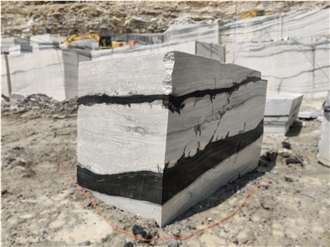
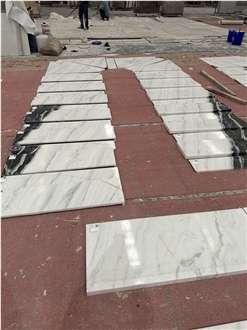
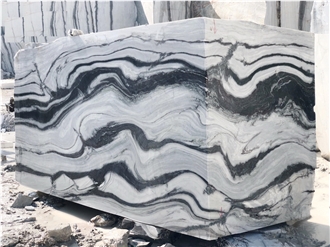
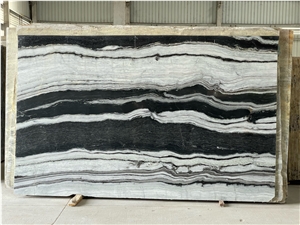
India Panda White Marble is a visually striking natural stone characterized by a bright, clean white base dramatically contrasted with bold, irregular black veining. The veins vary in thickness and intensity, forming organic, free-flowing patterns that resemble the iconic black-and-white markings of a panda. This high-contrast appearance gives the stone a luxurious, modern, and artistic aesthetic, with each slab presenting a unique visual composition.

Texture & Structure:

This marble features a fine- to medium-grained crystalline texture with a dense and compact metamorphic structure. The surface is smooth and uniform when processed, while the veining remains naturally irregular and dynamic, creating depth and movement across the stone. The structure is generally homogeneous with strong interlocking calcite crystals, ensuring good cohesion.

Pattern:

  • Bold, irregular, and high-contrast veining
  • Non-directional to slightly directional flow depending on slab cut
  • Each slab is unique with dramatic visual variation

Physical & Mechanical Properties:

  • Bulk Density: 2.68–2.72 g/cm³
  • Water Absorption: 0.15–0.25%
  • Compressive Strength: 85–120 MPa
  • Flexural Strength: 8–12 MPa
  • Abrasion Resistance: Moderate
  • Mohs Hardness: 3–4

Chemical & Mineral Composition (% by weight):

  • Calcite (CaCO₃): 94–98%
  • Dolomite: 0–2%
  • Quartz: 1–3%
  • Graphite / Carbonaceous Minerals: trace (responsible for black veining)
  • Iron Oxides & Other Minerals: minor traces

Usage:

  • Interior wall cladding and feature walls
  • Flooring in residential and light commercial spaces
  • Countertops and vanity tops (sealed)
  • Staircases, window sills, and decorative elements
  • Bookmatched panels for luxury interiors

Maintenance:

  • Clean regularly using neutral pH stone cleaners
  • Avoid acidic or abrasive cleaning agents
  • Periodic sealing recommended to prevent staining and moisture penetration
  • Immediate cleaning of spills (especially oils, wine, or acidic liquids)
  • Use protective pads under heavy objects to prevent scratching

Surface Finish Options:

  • Polished (enhances contrast and gloss, most popular)
  • Honed (smooth matte finish for a softer look)
  • Leathered (textured, low sheen surface)
  • Brushed (slightly textured, aged effect)
  • Sandblasted (rough, anti-slip surface for specific applications)
  • Waterjet / CNC cut (for customized designs and patterns)

FAQ

Can I use bleach when cleaning a India Panda White Marble kitchen countertop?

Using bleach on India Panda White Marble countertops is not recommended. Marble is a natural stone that is sensitive to acidic and harsh chemical cleaners, and bleach can cause discoloration, etching, or dulling of the surface. Instead, its best to clean marble countertops with a mild pH-balanced cleaner specifically designed for natural stone or simply use warm water and a gentle dish soap. Always dry the surface thoroughly after cleaning to prevent water spots. If youre dealing with stains or require deeper cleaning, consider using a poultice or consulting a professional stone care specialist.

Can India Panda White Marble be used for kitchen countertop?

India Panda White Marble can be used for kitchen countertops, but there are some considerations to keep in mind. Marble is a beautiful and luxurious material, but it is softer and more porous than other countertop materials like granite or quartz. This means it can be more prone to scratching, staining, and etching from acidic substances. Here are some points to consider: 1. **Aesthetic Appeal**: India Panda White Marble has a striking and unique appearance with its white background and black or grey veining, which can add a luxurious look to any kitchen. 2. **Maintenance**: Marble requires regular sealing to help protect against staining. Even with sealing, care should be taken to wipe up spills quickly, especially from acidic substances like lemon juice, vinegar, and wine. 3. **Durability**: While suitable for use as a countertop, marble can scratch more easily than harder stones. Using cutting boards and trivets is recommended to protect the surface. 4. **Heat Resistance**: Marble is heat resistant, but you should still use trivets or hot pads under hot pots and pans to avoid potential thermal shock or damage. 5. **Cost**: Marble can be more expensive than other materials, and the cost might vary depending on the quality and thickness of the slab. If you choose to use India Panda White Marble for your kitchen countertop, be prepared for the additional maintenance it requires to keep it looking its best.

How can I repair the scratched surface of the India Panda White Marble steps?

Repairing scratched India Panda White Marble steps involves a few meticulous steps to restore their appearance. Here’s a detailed guide: 1. **Assess the Damage**: - Determine the depth of the scratches. Superficial scratches may require lighter treatment, while deep scratches might need more extensive work. 2. **Clean the Surface**: - Wipe down the steps using a soft, damp cloth with warm water to remove any dust or debris. - Use a mild pH-neutral cleaner specifically designed for marble to avoid any damage to the stone’s surface. 3. **Buff Out Light Scratches**: - For minor scratches, use a marble polishing powder. Apply a small amount onto the scratch. - Use a damp, soft cloth or pad to gently buff the area in a circular motion. Consistently keep the surface wet to avoid further scratching. 4. **Sand Deeper Scratches**: - For more noticeable scratches, use a fine-grit sandpaper (400 to 600 grit). Moisten the sandpaper slightly, then gently sand over the scratch in a circular motion. - Progress to finer grit sandpaper (800 to 1000) as you smooth out the scratch. Keep the area and sandpaper wet during this process. 5. **Polish the Marble**: - After sanding, polish the area using a high-quality marble polish. Apply with a soft cloth in circular motions to restore the marble’s shine. - Use an electric polisher for larger areas if necessary, but be careful to control the speed and force to avoid uneven polishing. 6. **Seal the Marble**: - Once polished, and the desired finish is achieved, apply a marble sealer. This will help protect the surface from future scratches and stains. - Follow the sealer’s instructions carefully regarding application and drying times. 7. **Regular Maintenance**: - Regularly clean the marble steps with a soft, damp cloth and a mild cleaning solution. - Avoid using abrasive cleaners or pads that might scratch the surface again. **Note**: If the scratches are too deep or extensive, or if you are not confident in handling the repair on your own, it may be best to hire a professional marble restoration specialist to restore the steps to their original beauty.

Is India Panda White Marble durable enough for use as walkway pavers?

India Panda White Marble is a beautiful stone that is often used for various interior applications like flooring, countertops, and decorative wall cladding. However, when it comes to using it as walkway pavers, there are several factors to consider regarding its durability and suitability: 1. **Hardness and Durability**: Marble is a relatively soft stone compared to granite or other natural stones commonly used outdoors. It is more prone to scratching, chipping, and staining, especially in high-traffic areas like walkways. 2. **Weather Resistance**: Marble is sensitive to acidic substances and can be easily stained or eroded by acid rain and other environmental factors. In regions with harsh weather conditions, such as freeze-thaw cycles, marble can suffer from cracks and deterioration over time. 3. **Maintenance**: Marble requires regular maintenance to retain its appearance and prevent damage. This includes sealing, cleaning, and occasional polishing, which might be more challenging and costly for outdoor applications. 4. **Slip Resistance**: Polished marble can be quite slippery when wet, posing a safety hazard. If using marble for walkways, opting for a honed or textured finish might be necessary to improve slip resistance, but this can affect the stones aesthetic. 5. **Cost**: Marble tends to be more expensive than other materials typically used for pavers, such as concrete or granite. Considering the potential for damage and the level of care required, it may not be the most cost-effective choice for outdoor use. In summary, while India Panda White Marble can technically be used as walkway pavers, it might not be the most practical or durable option, especially in outdoor settings with heavy use or adverse weather conditions. For optimal durability and lower maintenance, other materials like granite or specifically designed outdoor pavers might be more suitable for walkways.

Does the surface of India Panda White Marble kitchen countertop scratch easily?

India Panda White Marble is a type of marble known for its distinctive black and white veining. Like other types of marble, it is relatively soft compared to materials like granite and quartz, which means it can be prone to scratching and etching. Marble is composed primarily of calcium carbonate, which is vulnerable to acids and can be scratched by sharp objects. To minimize the risk of scratching: 1. **Use Cutting Boards**: Avoid cutting directly on the marble surface. Always use a cutting board to protect the countertop. 2. **Avoid Abrasive Cleaners**: Use a soft cloth or sponge and a pH-neutral cleaner specifically designed for natural stone. 3. **Seal the Surface**: Regularly sealing the marble can help protect it against stains and minor scratches. The frequency of sealing depends on the specific usage and marble type. 4. **Use Mats and Trivets**: Placing mats or trivets under dishes, especially hot or sharp-edged items, can provide additional protection. 5. **Clean Spills Promptly**: Clean up spills quickly, especially acidic substances like lemon juice or vinegar, to prevent etching. Taking these precautions can help maintain the beauty of India Panda White Marble in a kitchen setting.

Can 18 mm thick polished India Panda White Marble be used for pool coping?

Using 18 mm thick polished India Panda White Marble for pool coping is not typically recommended. Pool coping requires materials that can withstand exposure to water, pool chemicals, sunlight, and potential physical impacts. Here are a few considerations: 1. **Durability and Thickness**: At 18 mm thickness, the marble might be too thin for coping in high-traffic areas as it could be prone to cracking or breaking under pressure or impact. 2. **Slip Resistance**: Polished marble can be very slippery, especially when wet, posing a safety risk near a pool. For pool areas, a honed or textured finish is often preferred to provide better traction. 3. **Chemical Resistance**: Marble can be sensitive to pool chemicals, which can cause etching, staining, or discoloration over time. 4. **Maintenance**: Marble requires frequent sealing and maintenance, especially in outdoor environments where its exposed to the elements. 5. **Thermal Conductivity**: Marble can absorb and retain heat, making it uncomfortable to walk on barefoot in hot weather. If you decide to use marble for aesthetic reasons, consider using a thicker cut and a honed finish. Additionally, ensure adequate sealing and regular maintenance. It may be worthwhile to consult a professional to ensure the material is suitable for your specific project requirements.

Products & Prices

View More

Hot White Marble

New Marble

Post Your Request

The request includes:
  1. surface finished, size
  2. quantity required