Post Your Needs

Indian Red Jasper Marble

Marble

India

About

Item Details

Material Type:
Marble
Origin:
India
Recommended Usage:
kitchen and bathroom countertops, wash basins, building stone, ornamental stone, stairs, interior, exterior wall and floor applications, mosaic, waterjet pattern, wall panels, table tops, balustrades, columns, wall and pool copings, pool pavers, sculptures, fireplaces, window sills
Additional Names:
Red Jasper Marble, Jasper Red Marble, Red Jaspe Marble, India Red Jasper Marble
Finished Surface:
Polished,Bush Hammered,Tumbled,Brushed,Honed,Split,Machine Cut,Natural Surface,Sandblasted,Acid Washing,Combed,Leathered,Water Jet,Filled,Chiseled,Pickling

Testing

Water Absorption:
0.2–0.36%
Density:
2660–2700 kg/m³
Flexural Strength:
13–15 MPa
Compressive Strength:
110–120 MPa

Description

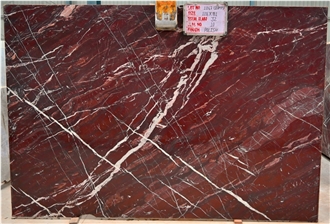
Indian Red Jasper Marble is a striking natural stone quarried in India, characterized by a deep, intense red base color ranging from rich burgundy to terracotta and reddish-brown tones, creating a bold and luxurious visual foundation. The surface is enhanced by intricate, irregular veining in white, cream, light gold, and occasionally darker brown or grey, forming organic, web-like or crystalline patterns that vary in thickness and direction, giving each slab a unique and dynamic appearance. Formed from limestone subjected to intense heat and pressure, this marble undergoes recrystallization, while the presence of iron oxides imparts its distinctive red coloration and complex veining.

Texture & Pattern: Fine- to medium-grained crystalline structure with a smooth, compact surface; highly decorative with irregular, intersecting veins creating a natural artistic pattern.

Technical Test Results (approx.):

  • Bulk density: 2.66–2.70 g/cm³
  • Water absorption: 0.2–0.36%
  • Compressive strength: 110–120 MPa
  • Flexural strength: 13–15 MPa
  • Abrasion resistance: Moderate
  • Mohs hardness: 3–4

Chemical & Mineral Composition (approx. % by weight):

  • Calcite (CaCO₃): 85–95%
  • Iron oxides: 2–8%
  • Silica & quartz: 1–5%
  • Other minerals: trace amounts

Performance & Properties: Offers good workability and aesthetic appeal, though softer than granite; suitable for interior applications with moderate wear conditions.

Usage: Interior flooring, wall cladding, feature walls, staircases, countertops (light use), vanity tops, columns, decorative elements, and luxury architectural projects.

Maintenance: Requires regular sealing to prevent staining due to its calcite composition; clean with pH-neutral cleaners and avoid acidic substances to maintain polish and durability.

Surface Finish Options: Polished (high gloss, enhances color depth), honed (smooth matte), brushed (soft textured), leathered (natural feel), and antiqued finishes for decorative applications.

FAQ

Can I use bleach when cleaning a Indian Red Jasper Marble kitchen countertop?

Using bleach on Indian Red Jasper Marble is not recommended. Marble is a porous and relatively soft stone, and harsh chemicals like bleach can cause damage, discoloration, and etching. Here are some safer alternatives to clean and maintain your marble countertop: 1. **Mild Soap and Warm Water**: Use a solution of warm water and a few drops of mild dish soap. Apply it with a soft cloth or sponge to gently clean the surface. 2. **Marble-Specific Cleaners**: There are cleaners specifically designed for marble that are pH-neutral and safe to use. These can be found in most home improvement or stone care stores. 3. **Avoid Abrasive Tools**: Do not use abrasive pads or cleaners, as they can scratch the surface. 4. **Regular Sealing**: Consider sealing your marble countertop regularly to help protect it from staining and etching. 5. **Quick Spill Management**: Clean up spills immediately to prevent absorption and potential staining. Always test any cleaner on a small, inconspicuous area first to ensure it does not harm the marble before using it on the entire surface.

If I cut meat directly on my Indian Red Jasper Marble kitchen countertop, will it damage the surface?

Cutting meat directly on your Indian Red Jasper Marble countertop is not advisable. Marble is a relatively soft and porous natural stone, which makes it susceptible to scratches, stains, and damage from acidic substances. Using a sharp knife directly on the surface can cause scratches or dull the finish over time. Additionally, any juices from the meat could potentially seep into the stone and stain it if not cleaned immediately. To protect your countertop, always use a cutting board when preparing food. This will help preserve the beauty and durability of your marble surface while also maintaining hygiene in your kitchen.

My Indian Red Jasper Marble kitchen countertop edge is broken. How can I glue it back, and will it look like before?

Repairing a broken edge on an Indian Red Jasper Marble kitchen countertop can be done effectively, but achieving a seamless look requires careful attention and precision. Heres a step-by-step guide: 1. **Clean the Surface**: Thoroughly clean both the broken piece and the area where it will be reattached. Use a mild detergent and water to remove any dust, grease, or debris. Allow the surface to dry completely. 2. **Dry Fit**: Before applying any adhesive, dry fit the broken piece to ensure it aligns perfectly. This step is crucial to ensure that when you glue it, it will look as seamless as possible. 3. **Choose the Right Adhesive**: Use an adhesive specifically designed for stone and marble. Epoxy is often recommended for this purpose because of its strong bonding capabilities. 4. **Mix the Epoxy**: If youre using a two-part epoxy, mix it according to the manufacturers instructions. Be sure to work in a well-ventilated area. 5. **Apply the Adhesive**: Carefully apply a thin layer of the epoxy to both the broken piece and the countertop edge. Be cautious not to use too much adhesive, as excess will squeeze out and create a mess. 6. **Position and Bond**: Gently press the broken piece back into place. Make sure it aligns perfectly with the rest of the countertop. 7. **Clamp the Piece**: Use clamps to hold the piece in place while the adhesive cures. Be sure to protect the surface of the marble with a soft cloth or padding under the clamps to avoid scratches. 8. **Clean Excess Adhesive**: Immediately wipe away any excess adhesive that squeezes out during the clamping process with a soft cloth and a bit of acetone or warm soapy water (check the adhesive instructions, as some substances can weaken the bond if removed while wet). 9. **Allow to Cure**: Let the adhesive cure for the full time recommended by the manufacturer. This can often be at least 24-48 hours. 10. **Polishing**: Once the adhesive has fully cured, you may need to lightly polish the repaired area to blend it with the rest of the countertop. You can use a marble polishing compound or call in a professional if youre not comfortable doing this. **Will It Look Like Before?** The repair can be quite effective, but the seam might still be slightly visible depending on the precision of the repair and the pattern of the marble. Professional repair services might be able to achieve a better aesthetic result, especially if they can precisely match the color and polish of the stone. For the best result, consider reaching out to a professional stone restoration service. They will have the skill and tools necessary to make the repair as invisible as possible.

If I use 1.2 cm thick Indian Red Jasper Marble as a table top, will it be strong enough? Will it break easily?

Using a 1.2 cm (approximately 0.47 inches) thick Indian Red Jasper Marble as a tabletop can be feasible, but there are several factors to consider to ensure its durability and strength: 1. **Support Structure**: The support frame underneath the marble is crucial. A well-supported frame with adequate reinforcement can distribute weight evenly and reduce stress on the stone. The frame should prevent any significant flexing or bending of the marble. 2. **Span and Size**: If the tabletop spans a large area without sufficient support, it may be more prone to cracking under pressure. For larger tables, intermediate support or thicker stone might be necessary. 3. **Usage**: Consider what the table will be used for. If its going to hold heavy objects or be subjected to high impact or stress, a thicker marble may be advisable. Light to moderate usage can potentially be supported by 1.2 cm of marble. 4. **Material Properties**: Indian Red Jasper Marble is a natural stone, and while it can be resilient, it also has natural veins and variances that may affect its strength. Marble is generally softer than granite, which makes it more susceptible to scratching and chipping. 5. **Installation Quality**: Proper installation is key. Ensure that the marble is installed by professionals who can accurately assess the necessary support and handling procedures to prevent damage. 6. **Sealing and Maintenance**: Marble needs to be properly sealed to protect against stains and damage. Regular maintenance will help in preserving the marbles appearance and longevity. In summary, while a 1.2 cm thick Indian Red Jasper Marble could function as a tabletop, ensure that there is a solid supporting structure and limit the span between supports. For high-traffic or heavy-duty use, consider using a thicker slab for increased durability.

Can Indian Red Jasper Marble be used as terrace pavers in areas with heavy snowfall in winter? Is it frost-resistant?

Indian Red Jasper Marble, like other types of marble, is generally not the best choice for terrace pavers in areas with heavy snowfall and freezing temperatures. Marble is a softer stone compared to granite or other more durable materials, and it is prone to absorbing water. In freezing conditions, this absorbed water can freeze and expand, leading to cracking or spalling of the marble. In addition, marble is not as slip-resistant as other materials, which can be a concern in snowy or icy conditions. For areas with heavy snowfall and freeze-thaw cycles, its better to use materials that are specifically designed to be frost-resistant and have a rougher surface for better traction. Materials such as granite, concrete pavers, or certain frost-resistant tiles are more suitable for such conditions because they have lower water absorption rates and can handle the freeze-thaw cycle more effectively. If you are set on using Indian Red Jasper Marble for aesthetic reasons, it would be crucial to ensure proper sealing and maintenance, but even then, the risk of damage in such harsh weather conditions remains higher compared to more suitable materials.

Can Indian Red Jasper Marble be used for commercial kitchen countertop?

Indian Red Jasper Marble, while visually appealing due to its rich red and intricate patterns, may not be the most suitable choice for a commercial kitchen countertop. Here are a few reasons why: 1. **Porosity and Staining**: Marble is a porous stone, meaning it can absorb liquids and stain easily. In a bustling commercial kitchen, spills and acidic substances like vinegar, citrus, and tomato sauce are common, making it difficult to maintain the marbles pristine appearance without frequent sealing and maintenance. 2. **Durability**: Marble is softer than other natural stones like granite or engineered materials like quartz. It is more prone to scratching, chipping, and etching, which can easily occur in a high-traffic commercial kitchen environment. 3. **Maintenance**: To preserve its appearance, marble requires regular sealing and careful maintenance. In a commercial setting, this can be impractical and costly in terms of both materials and labor. 4. **Heat Resistance**: While marble can withstand some heat, it is susceptible to thermal shock, which can cause cracking if a hot pan is placed directly on its surface. Commercial kitchens often deal with high temperatures that could pose a risk to marble countertops. In commercial kitchens, materials like stainless steel, quartz, or granite are generally preferred due to their durability, resistance to staining and heat, and lower maintenance requirements. If aesthetics are a major concern, using Indian Red Jasper Marble for decorative elements or in areas with less wear could be a useful compromise.

Products & Prices

Hot Marble

New Marble

Post Your Request

The request includes:
  1. surface finished, size
  2. quantity required