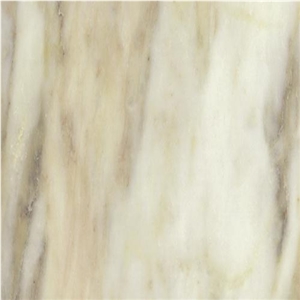
Kuros Dore Marble is a rare and historical French marble quarried in the village of Saint-Pons de Thomières, located in the Languedoc-Roussillon region in the South-West of France. This marble stands out due to its elegant creamy white background interlaced with striking golden-yellow, peach-colored veins, and varying shades of pink, offering a luxurious and sophisticated appearance.
Physical and Mechanical Properties:
- Water Absorption:Typically low, indicating good resistance to moisture penetration.
- Density:Approximately 2,700 kg/m³, indicating a medium to high mass per unit volume.
- Flexural Strength:Kuros Dore Marble has a moderate flexural strength, ensuring it can withstand bending stresses effectively.
- Compressive Strength:71.6 N/mm² (71.6 MPa), providing a measure of its ability to sustain heavy loads.
- Hardness:Generally ranks moderately on the Mohs scale, making it susceptible to scratching by harder materials.
- Porosity:Low porosity, which contributes to its durability and reduces deterioration due to environmental factors.
- Slip Resistance:Varies by finish but typically provides decent slip resistance, especially when honed or textured.
Chemical and Mineral Composition (% by weight):
-
Calcite:The major component, accounting for the marble's characteristic veined appearance and light color.
-
Other Minerals:Includes traces of quartz, feldspar, and iron oxides, contributing to the unique coloration and texture.
-
Impurities:Elements like magnesium, carbonates, and silicates may be present in minor quantities, influencing its texture and finish capabilities.
Usage, Maintenance, and Surface Finish Options:
Uses:Ideal for high-end applications such as countertops, flooring, wall cladding, bathroom vanities, and decorative architectural elements.
Maintenance:
- Requires regular sealing to maintain its resistance against staining and moisture.
- Gentle cleaning with pH-neutral cleaners is advisable to preserve its surface.
Cutting Sizes (cm):
Typically available in slabs and tiles of varying dimensions, customized to project requirements, commonly ranging from 30x30 cm to large format slabs over 180x120 cm.
Common Surface Finish Options:
- Polished: Offers a glossy and highly reflective surface, enhancing color and veining.
- Honed: Provides a smooth, matte finish that is less slippery and offers a more subdued look.
- Brushed/Antiqued: Provides a textured surface for a rustic appearance.
- Sandblasted: Softens the colors and veins, enhancing slip resistance.
Special Considerations:
- When used outdoors, finishes like honed or brushed are recommended for slip resistance.
- Indoor installations benefit from polished finishes for their ability to enhance space aesthetics and allow easy cleaning.
Kuros Dore Marble embodies luxurious elegance while requiring mindful care and installation to maintain its superior aesthetic and physical properties.


 France



 Portugal

 Greece

 Turkey

 China

 Norway

 United States

 Myanmar


