Post Your Needs

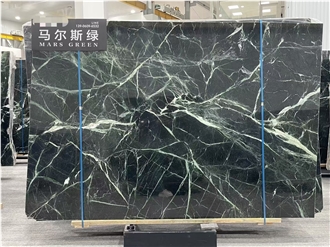
Mars Green Marble

Green - Marble

China

About

Item Details

Material Type:
Marble
Origin:
China (Taiwan)
Primary Color(s):
Green
Recommended Usage:
Kitchen and bathroom countertops, wash basins, building stone, ornamental stone, stairs, interior, exterior wall and floor applications, mosaic, waterjet pattern, wall panels, table tops, balustrades, columns, wall and pool copings, pool pavers, sculptures, fireplaces
Additional Names:
Dark Green Jadeite Marble, Empress Green Marble, Peacock Green Marble, in China stone market:马尔斯绿( Mǎ ěr sī lǜ), Mars Green Marble
Finished Surface:
Polished,Bush Hammered,Tumbled,Brushed,Honed,Split,Machine Cut,Natural Surface,Sandblasted,Combed,Leathered,Water Jet,Chiseled,Pickling

Testing

Water Absorption:
≤ 0.25%
Density:
2700 Kg/m³
Flexural Strength:
15–18 MPa
Compressive Strength:
120–150 MPa

Description

Mars Green Marble is a dark green serpentine marble quarried in Taiwan, China, known for its rich and varied green color palette. The stone exhibits a dynamic combination of deep forest green tones interwoven with lighter green and jade hues, creating a natural contrast that feels both earthy and luxurious.

Its surface features deep and shallow twill-like lines, forming irregular, wavy, and sometimes chaotic patterns that give the marble a wild and untamed visual character. This intricate veining movement reflects the geological activity that shaped the stone, resulting in a uniquely organic aesthetic.

The texture of Mars Green Marble is fine to medium-grained, with a smooth serpentine luster that enhances its depth and vibrancy. The material’s crystalline structure gives it a subtle sheen when polished, highlighting the green tonal variations and natural mineral inclusions.

In terms of composition, Mars Green Marble is primarily made up of serpentine minerals with significant amounts of magnesium silicate, iron oxide, and trace amounts of calcium carbonate. Its Mohs hardness ranges from 3.5 to 4, making it a durable stone suitable for interior applications such as flooring, wall cladding, and decorative surfaces.

This marble’s natural patterning and tonal richness evoke a sense of wilderness and elegance, making Mars Green Marble a distinctive material choice for projects seeking a bold yet harmonious connection to nature.

Texture and Pattern

Mars Green Marble displays a fine to medium crystalline texture, with subtle serpentine luster and intricate wave-like veining. The interplay between dark and light greens enhances its visual depth, making it ideal for luxurious and nature-inspired interior designs.

Technical Properties & Test Results

  • Density: ~2.70 g/cm³
  • Water Absorption: ≤ 0.25%
  • Compressive Strength: 120–150 MPa
  • Flexural Strength: 15–18 MPa
  • Mohs Hardness: 3.5–4
  • Bulk Specific Gravity: 2.68–2.72

Chemical Composition (% by weight)

  • SiO₂ (Silica): 40–45%
  • MgO (Magnesium Oxide): 30–35%
  • Fe₂O₃ (Iron Oxide): 5–7%
  • CaO (Calcium Oxide): 8–10%
  • Al₂O₃ (Alumina): 1–2%
  • Loss on Ignition: 1–3%

Recommended Usage

Mars Green Marble is ideal for both interior and exterior applications, including:

  • Flooring and wall cladding
  • Bathroom and spa interiors
  • Countertops and vanity tops
  • Fireplace surrounds and feature walls
  • Decorative accents and mosaics

Maintenance

Clean with mild, pH-neutral stone cleaners. Avoid acidic substances that may etch or dull the surface. Periodic sealing is recommended to preserve color vibrancy and prevent staining.

FAQ

Does the surface of Mars Green Marble scratch easily?

The term Mars Green Marble is not widely recognized as a geological or commercial term, and it does not appear to relate to any known type of marble specifically from Mars. If Mars Green Marble is a brand or product name for a type of green marble or stone used in flooring, countertops, or other design applications, its susceptibility to scratching would depend on the specific materials properties. Generally, marble is a metamorphic rock composed primarily of calcite and is softer than other natural stones like granite. This means it can scratch more easily than harder materials. However, the specific characteristics, including scratch resistance, depend on the exact composition and treatment of the marble: 1. **Composition**: The mineral content and quality of the marble can affect its hardness. Marble typically rates around 3-4 on the Mohs hardness scale. 2. **Finish**: Polishing can enhance the marbles scratch resistance to some extent. However, other finishes like honed matte are more prone to showing scratches. 3. **Sealant**: Sealing the marble can offer some protection against scratches by preventing substances that cause scratching or etching from penetrating the surface. 4. **Usage**: Areas subject to heavy use and traffic will likely see more scratching regardless of the surfaces treatment. For specific concerns about a product branded as Mars Green Marble, it would be best to consult with the manufacturer or distributor to understand its properties and care requirements.

Can polished finish surface Mars Green Marble be used for pool coping?

Using polished Mars Green Marble for pool coping is not generally recommended. While marble can provide an elegant and luxurious appearance, it has several drawbacks in a pool environment: 1. **Slip Resistance**: Polished marble surfaces can be very slippery when wet, increasing the risk of accidents around the pool area. 2. **Durability**: Marble is a relatively soft and porous stone compared to other natural stones like granite. It can be prone to chipping, scratching, and weathering, especially in outdoor environments where it is exposed to water, chemicals, and fluctuating temperatures. 3. **Staining and Etching**: Marble is susceptible to staining from pool chemicals and other substances. It can also etch when in contact with acidic materials, which can damage the polished finish over time. 4. **Maintenance**: Marble requires regular sealing and maintenance to protect it from water absorption and damage, which can add to long-term upkeep costs. For pool coping, materials that are more slip-resistant, durable, and low-maintenance, such as travertine, granite, or specialized pool coping materials, are typically recommended. If you prefer the aesthetic of marble, consider using it in areas that are less exposed to moisture and where slip resistance is not a primary concern.

How can I give Mars Green Marble tiles an antique look?

To give Mars Green Marble tiles an antique look, you can follow these steps, keeping in mind that authentic aging involves delicate techniques that may require professional skills and equipment: 1. **Clean the Surface**: Start by thoroughly cleaning the tiles to remove any dirt, grime, or sealants. Use a pH-neutral cleaner to avoid damaging the stone. 2. **Apply a Chemical Antiquing Solution**: There are commercial antiquing solutions available that are specifically designed for stone. These solutions react with the stone surface to give it a weathered appearance. Follow the manufacturers instructions carefully, and test an inconspicuous area first. 3. **Mechanical Distressing**: Use tools like wire brushes, sanders, or diamond pads to manually wear down the edges or the surface. This step simulates wear and gives the tiles a more natural, aged feel. 4. **Acid Washing**: For a more pronounced effect, you can apply a diluted acid wash to etch the surface slightly. This should be done cautiously, as it can damage the stone if not done properly. Protective equipment and proper ventilation are essential. 5. **Finish with Antiquing Wax or Polish**: Apply a tinted wax or polish designed for stone to give the surface a patinated appearance. This can bring out variations in the stone and add depth to the color. 6. **Seal the Stone**: After achieving the desired look, apply a high-quality stone sealer to protect the antique finish. Make sure the sealer is compatible with marble and will not alter the aged appearance. 7. **Careful Maintenance**: To maintain the antique look, use gentle cleaning methods and products specifically designed for natural stone. Avoid harsh chemicals that could strip the sealer or the antiquing patina. If you are not confident in executing these techniques yourself, consider hiring a professional who specializes in stone restoration and finishing to achieve the best results.

How can I restore the appearance of a Mars Green Marble tabletop to make it look new again?

Restoring the appearance of a Mars Green Marble tabletop involves a few careful steps to clean, polish, and protect the marble. Heres a guide to help you achieve a like-new finish: 1. **Initial Cleaning:** - **Dust and Debris Removal:** Begin by wiping the surface with a soft, dry microfiber cloth to remove any dust or loose debris. - **Mild Cleaning Solution:** Use a mixture of warm water and a few drops of a pH-neutral dish soap. Avoid acidic or alkaline cleaners as they can damage the marble. - **Wipe the Surface:** Dampen a microfiber cloth with the cleaning solution and gently wipe the marble. Rinse the cloth frequently with clean water. 2. **Stain Removal:** - **Identify Stains:** Check for any stains and note their type (e.g., oil-based, organic, etc.). - **Poultice Application:** For stubborn stains, a poultice specifically designed for marble can be used. Apply it according to the manufacturers instructions, covering the stain with plastic wrap to let it work overnight before removing it. 3. **Polishing:** - **Marble Polish:** Once clean, apply a marble polish or a specialized marble polishing compound. Follow the instructions, usually requiring you to buff it onto the surface using a clean, dry cloth or a buffing pad. - **Buffing:** Use circular motions to gently work the polish into the marble. For larger surfaces, using an electric polisher can provide a more consistent finish. 4. **Sealing:** - **Select a Sealer:** Choose a penetrating sealer suitable for marble, which will help prevent future staining and enhance the shine. - **Apply the Sealer:** Follow the product instructions. Generally, you need to apply the sealer to a clean, dry surface, let it soak in, and then buff any excess off the surface. 5. **Regular Maintenance:** - **Avoid Harsh Chemicals:** Always use pH-neutral cleaners for regular cleaning. - **Use Coasters and Placemats:** To prevent future scratches and stains, use coasters under glasses and placemats under dishes. - **Immediate Cleanup:** Wipe up spills immediately to prevent staining. 6. **Professional Help:** - If the marble is severely damaged or if youre unsure about handling certain products, it might be best to consult with or hire a professional stone restorer. By following these steps, your Mars Green Marble tabletop can be restored to a shiny, damage-free condition, maintaining its natural beauty for years to come.

Can 2cm thickness Mars Green Marble be used for stair steps?

Yes, 2 cm thickness Mars Green Marble can be used for stair steps, but there are several factors to consider before proceeding: 1. **Strength and Durability**: Marble is a strong but relatively brittle material compared to other stones like granite. While 2 cm thickness can be suitable for residential stair use, it might not be ideal for high-traffic areas or commercial use unless reinforced properly. 2. **Support**: Proper support is crucial. The marble slabs must be adequately supported along the entire span of each step to avoid cracking or breaking under pressure. 3. **Surface Finish**: Marble can be slippery, especially when polished. For stair steps, it might be advisable to opt for a honed finish or add anti-slip treatments to improve safety. 4. **Installation**: Professional installation is highly recommended to ensure stability, as improper installation can lead to shifting and other structural issues over time. 5. **Maintenance**: Marble requires regular maintenance to keep it looking its best, and it is susceptible to staining and scratching. Sealing the marble can help protect it from damage. Consulting with a professional contractor or a stone specialist would be wise to ensure that the chosen marble meets the necessary safety and durability requirements for your specific project.

Is Mars Green Marble suitable to use for sculpturing?

Mars Green Marble can be suitable for sculpting, depending on the specific requirements of your project. Here are some considerations to keep in mind: 1. **Material Characteristics**: Mars Green Marble is known for its unique green coloration and veining, which can add aesthetic value to sculptures. However, its workability is similar to other marbles, so it should respond well to sculpting tools. 2. **Density and Hardness**: As a marble, it is generally softer than granite but tougher than materials like soapstone or alabaster, offering a balance that can be amenable to detailed work while retaining durability. 3. **Finish and Detailing**: Marble is capable of achieving a smooth, polished finish, which can highlight details well. This can be advantageous for sculptures where refinement is desired. 4. **Durability**: If the sculpture is intended for outdoor installation, consider that marble can be susceptible to weathering over time. You may need to seal it or place it in a protected environment. 5. **Availability and Cost**: Depending on your location, Mars Green Marble might be more difficult to source than more common marbles, and the cost can reflect its rarity and transport needs. Before deciding, its a good idea to source a small sample and test it for your intended techniques, considering the specific characteristics of the marble you obtain. Additionally, consulting with experienced sculptors who have worked with similar materials could provide invaluable insights.

Does coffee stain the surface of Mars Green Marble?

Yes, coffee can stain the surface of Mars Green Marble, just as it can stain many other types of natural stone surfaces. Although marble is relatively durable, it is also porous, which means it can absorb liquids that come into contact with it. Coffee, being a dark-colored liquid with tannins, can penetrate the pores of the marble and cause staining if it is not promptly cleaned up. To protect marble surfaces, it is advisable to wipe up spills immediately and periodically seal the marble to reduce its porosity and susceptibility to stains.

Do fruit juices stain the surface of Mars Green Marble?

Mars Green Marble, like many natural stones, can be prone to staining if not properly sealed. Fruit juices contain acids and pigments that can potentially etch the surface or cause discoloration. It is advisable to wipe up spills promptly and ensure the marble is sealed to provide some protection against staining. Regular maintenance and using coasters or placemats can also help preserve the appearance of Mars Green Marble.

Does the surface of Mars Green Marble scratch easily?

The term Mars Green Marble is not widely recognized in the context of geological studies or commercial products, so it might not be referring to a standard or well-known material. If Mars Green Marble is a specific type of marble marketed under a trade name, it would be best to consult with the supplier or manufacturer for accurate information about its properties. In general, marble is a relatively soft stone due to its composition, primarily of calcite, which can be scratched more easily compared to harder materials like granite or quartz. The susceptibility to scratching would depend on the specific mineral composition and finish of the marble. If you have concerns about scratching, consider using gentle cleaning methods and employing protective measures to maintain the surface.

Can Mars Green Marble be used for pool coping?

Yes, Mars Green Marble can potentially be used for pool coping, but there are several factors to consider. Marble is a natural stone and is appreciated for its aesthetic appeal, but it is generally softer and more porous than other stones such as granite. This can make it more susceptible to staining, scratching, and weathering, especially in an outdoor pool environment that may expose it to chemicals, water, and temperature fluctuations. If you decide to use Mars Green Marble for pool coping, it is crucial to ensure it is properly sealed and maintained to protect it from water absorption and damage from pool chemicals. Its also a good idea to consult with a professional to assess whether this material is suitable for your specific pool setting and climate conditions. They can provide advice on sealing, cleaning, and general maintenance to extend the lifespan and appearance of the marble.

Products & Prices

Hot Green Marble

New Marble

Post Your Request

The request includes:
  1. surface finished, size
  2. quantity required