Post Your Needs

Misty Green Marble

Marble

China

About

Item Details

Material Type:
Marble
Origin:
China
Recommended Usage:
kitchen and bathroom countertops, wash basins, building stone, ornamental stone, stairs, interior, exterior wall and floor applications, mosaic, waterjet pattern, wall panels, table tops, balustrades, columns, wall and pool copings, pool pavers, sculptures, fireplaces, window sills
Additional Names:
Verias Green Marble, Green Island Marble, Emerald Veil Marble, Floating Cloud Dream Marble, Dream Shadow Cloud Marble, Floating Cloud Dream Shadow Marble, Green Island Cloud Marble, Green Island Flowing Clouds Marble, in China stone market:浮云梦影(Fú yún mèng yǐng), 绿岛行云 (Lǜdǎo Xíngyún), Misty Green Marble
Finished Surface:
Polished,Bush Hammered,Brushed,Honed,Split,Machine Cut,Natural Surface,Sandblasted,Combed,Leathered,Water Jet,Chiseled,Pickling

Testing

Water Absorption:
0.20 - 0.40 %
Density:
2670 - 2730 kg/m³
Flexural Strength:
12 - 16 MPa
Compressive Strength:
100 - 120 MPa

Description

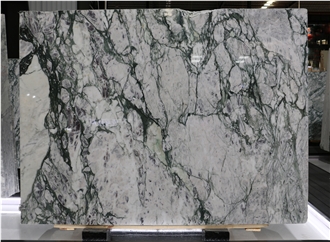
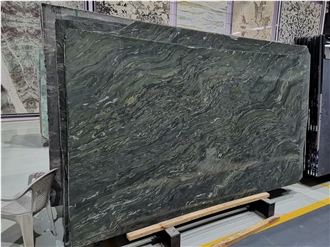
Misty Green Marble is an elegant Chinese natural marble featuring a deep forest green background enhanced by striking high-contrast white and dark veining. The rich green base creates a luxurious and dramatic appearance, while the flowing veins provide natural movement and visual depth.

The stone combines a bold color palette with sophisticated patterns, making it suitable for premium interior applications where a strong natural stone statement is desired. Each slab has unique veining variations, ranging from elegant linear movements to cloud-like formations, creating a distinctive artistic appearance.

Texture & Pattern

Texture:

  • Compact crystalline marble structure
  • Fine to medium-grained texture
  • Smooth, dense surface with natural crystalline reflection after polishing
  • Uniform stone body with occasional mineral variations

Pattern:

  • High-contrast flowing veining
  • White veins crossing through deep green background
  • Dark green to black mineral movements creating depth
  • Linear, wave-like, and cloud-pattern formations

Visual Character:

  • Luxurious and dramatic
  • Deep natural green tone with elegant contrast
  • Suitable for modern, classic, and high-end architectural designs

Technical Properties (Typical Values)

(Values may vary depending on quarry block selection and testing laboratory results.)

  • Density: Approx. 2,670–2,730 kg/m³
  • Water Absorption: Approx. 0.20–0.40 %
  • Compressive Strength (Dry): Approx. 100–120 MPa
  • Flexural Strength: Approx. 12–16 MPa
  • Abrasion Resistance: Good resistance suitable for interior flooring and wall applications
  • Mohs Hardness: Approx. 3–4

Chemical & Mineral Composition (Typical % by Weight)

  • Main Minerals: Calcite: 85–95%
  • Dolomite: 2–8%
  • Quartz: 0–3%
  • Other accessory minerals: 1–5%

Chemical Composition (Approx.):

  • Calcium Carbonate (CaCO₃): 85–95%
  • Magnesium Carbonate (MgCO₃): 1–5%
  • Silicon Dioxide (SiO₂): 0–3%
  • Iron Oxides and trace minerals: <2%

(Green coloration is generally caused by trace mineral inclusions and metamorphic mineral variations.)

Recommended Applications

Interior Applications:

  • Luxury kitchen countertops
  • Bathroom vanity tops
  • Feature walls
  • Fireplace surrounds
  • Hotel and villa interiors
  • Reception counters
  • Decorative furniture tops
  • Coffee tables
  • Wall panels
  • Flooring (low to medium traffic areas)

Commercial Applications:

  • Luxury hotels
  • Shopping centers
  • High-end residential projects
  • Boutique interiors

Not Recommended For:

  • Heavy exterior paving
  • Areas exposed to severe weather conditions
  • High-traffic outdoor applications without proper testing

Maintenance

  • Clean regularly with a soft cloth and neutral pH stone cleaner.
  • Avoid acidic cleaners such as vinegar, lemon-based products, and strong chemicals.
  • Apply a quality penetrating sealer before installation and reseal periodically depending on usage.
  • Wipe spills quickly, especially oils and colored liquids.
  • Use protective pads under heavy objects and avoid abrasive cleaning materials.

FAQ

Is Misty Green Marble suitable for sculpture, and is it durable outdoors?

Misty Green Marble can indeed be used for sculpture, but there are a few considerations to keep in mind. Marble, in general, is a popular material for sculptors due to its workability and ability to hold fine details, and Misty Green Marble is no exception. Its unique color can enhance the aesthetic appeal of a sculpture. However, when it comes to outdoor durability, marble is not the most resilient choice. Marble is more susceptible to weathering and erosion than harder stones like granite. It is porous, which makes it vulnerable to moisture absorption, and its surface can deteriorate when exposed to acid rain or harsh environmental conditions. Over time, outdoor sculptures made from marble can develop a worn appearance due to these factors. If you choose to use Misty Green Marble for an outdoor sculpture, it is important to consider protective treatments. Sealants can be applied to reduce porosity and mitigate some weathering effects. However, regular maintenance would still be necessary to preserve the sculpture in outdoor environments. For ultimate durability outdoors, other stone materials like granite might be better options.

If I use Misty Green Marble as a bar countertop, will alcoholic drinks damage its surface over time?

Yes, using Misty Green Marble as a bar countertop can be susceptible to damage from alcoholic drinks over time. Marble is a natural stone composed mostly of calcite, which is sensitive to acidic substances. Alcoholic beverages, especially those containing citrus or other acidic ingredients, can etch the surface of the marble, creating dull spots and losing its polished finish. Even non-acidic alcoholic drinks can cause staining if spills are not cleaned promptly, as marble is also a porous material. To protect the marble surface, you can: 1. **Seal the Marble**: Apply a high-quality sealant on the marble periodically to provide a protective barrier against spills and stains. 2. **Clean Spills Immediately**: Wipe up any spills as soon as they occur to minimize potential damage. 3. **Use Coasters and Mats**: Place coasters under glasses and use mats to prevent direct contact between beverages and the marble. 4. **Regular Maintenance**: Clean the countertop with pH-neutral cleaners appropriate for marble to maintain its finish and minimize damage. With proper care and maintenance, you can enjoy the aesthetic appeal of Misty Green Marble while minimizing the risk of damage from alcoholic drinks.

Misty Green Marble has its own natural veins. If I use it as stair steps, will it break along these veins?

Using Misty Green Marble, or any natural stone with veins, for stair steps requires careful consideration. The veins in marble are natural patterns formed by mineral deposits, and while they add aesthetic appeal, they can also present natural points of weakness. Here are a few factors to consider: 1. **Quality of the Marble**: Higher quality marble, with fewer and less pronounced veins, may reduce the risk of it breaking along these lines. 2. **Direction of Veins**: The placement and orientation of the veins can influence the strength of the marble. Its generally advised to place marble so that the veins run perpendicular to the length of the step, reducing the chances of the marble breaking under pressure. 3. **Thickness**: Thicker slabs of marble will generally be more durable and better able to withstand stress and weight. 4. **Installation**: Professional installation is crucial. An experienced contractor will ensure that the marble is properly supported and that any potential weak spots are reinforced. 5. **Usage**: The amount of traffic and the type of usage the staircase will receive can also impact durability. For high-traffic areas, additional care might be needed. 6. **Regular Maintenance**: Regular maintenance can also help maintain the integrity of marble stairs, preventing small issues from becoming larger problems. While Misty Green Marble can be used for stair steps, consulting with a professional to assess the specific characteristics of your marble and the intended application is highly recommended.

How can I repair the scratched surface of the Misty Green Marble steps?

Repairing the scratched surface of Misty Green Marble steps involves a few careful steps to restore the stones natural beauty. Heres a guide to help you with the process: 1. **Assess the Damage**: Determine the severity of the scratches. Shallow scratches might be easier to fix with polishing, while deeper scratches might require more extensive work. 2. **Gather Materials**: - Marble cleaner or a mild soap solution - Soft cloths or sponges - Marble polishing powder or compound - Variable speed angle grinder or a hand polisher with a felt pad - Sandpaper (if needed, starting from fine grit like 1200, up to 3000 grit) - Sealant suitable for marble 3. **Clean the Surface**: - Use a marble cleaner or mild soap and water to thoroughly clean the marble surface. Remove all dirt and debris to prevent further scratching during the repair process. Rinse well and dry with a soft cloth. 4. **Sanding (for deeper scratches)**: - For deeper scratches, lightly sand the area using wet sandpaper, starting with the finest grit necessary to remove the scratch. Progress to finer grits for a smoother finish. Ensure the surface stays wet while sanding to reduce friction and prevent additional scratches. 5. **Polishing**: - Apply a marble polishing powder or compound to the scratched area. - Use a variable speed angle grinder or hand polisher with a felt pad, and gently buff the surface in a circular motion. Keep the pad moving over the surface to avoid creating heat spots. - If using a power tool, work slowly and at a low speed, periodically checking the scratch removal progress. 6. **Rinse and Dry**: - After polishing, thoroughly rinse the marble to remove all polishing compounds. Dry the surface with a soft cloth. 7. **Seal the Marble**: - Once the marble is clean and dry, apply a marble sealant to protect the surface from future staining and scratching. Follow the manufacturer’s instructions for proper application. 8. **Buffing**: - After the sealant has dried, buff the surface with a clean, dry cloth for added shine. 9. **Maintenance**: - Regularly clean and polish the marble to maintain its appearance. Use non-abrasive cleaners specifically designed for marble. If the damage is extensive or if youre unsure about performing the repair yourself, you might want to consider hiring a professional marble restoration service. They can properly address deep scratches and provide a uniform finish to the entire surface.

Is Misty Green Marble with a polished surface good for commercial building flooring?

Using Misty Green Marble with a polished surface for commercial building flooring can be a good choice, but there are several factors to consider: 1. **Aesthetics**: Misty Green Marble is known for its unique and elegant appearance, which can create a luxurious atmosphere in a commercial setting. Its sophisticated look can enhance the aesthetic appeal of lobbies, reception areas, and other prominent spaces. 2. **Durability**: Marble is a relatively durable material, but it is softer and more porous compared to some other natural stones like granite. In high-traffic areas, polished marble can show signs of wear and scratches over time. Regular maintenance and sealing can help mitigate this issue. 3. **Maintenance**: Polished marble requires regular cleaning and maintenance to keep its shine. It is prone to etching and staining, especially when exposed to acidic substances. For commercial applications, a consistent maintenance schedule is essential to maintain its appearance. 4. **Slip Resistance**: Polished marble surfaces can be slippery, particularly when wet. This could be a concern for safety in commercial spaces. If choosing polished marble, consider using rugs or mats in areas prone to moisture, or opt for honed or textured finishes in high-traffic walkways. 5. **Cost**: Marble can be expensive, both in terms of initial installation and ongoing maintenance. Budget constraints should be considered when deciding on using marble flooring in a commercial building. If these factors align with the practical considerations and design goals of the project, Misty Green Marble with a polished finish can make a great visual statement in a commercial building. Otherwise, you may want to consider other materials that better suit the specific needs of the space.

How can I remove mold from Misty Green Marble wall tiles?

Removing mold from Misty Green Marble wall tiles requires careful cleaning to avoid damaging the delicate surface of the marble. Here’s how you can safely remove the mold: 1. **Materials Needed:** - Mild dish soap - Water - Soft cloth or sponge - Soft-bristle brush or toothbrush - Marble cleaner (optional) - Baking soda (optional) - Hydrogen peroxide (optional, for persistent mold) - Spray bottle 2. **Preparation:** - Ensure the area is well-ventilated by opening windows or using a fan, as this can help to dry the mold and reduce its spread. - Wear gloves and a mask to protect yourself from mold spores. 3. **Cleaning Steps:** - **Step 1: Make a Cleaning Solution** - Mix a few drops of mild dish soap with warm water in a spray bottle. Alternatively, use a commercial marble cleaner specifically designed for natural stone surfaces. - **Step 2: Initial Cleaning** - Spray the solution onto the moldy area and let it sit for a few minutes to penetrate the mold. - Gently scrub the area with a soft cloth or sponge. Avoid using excessive pressure, as marble can scratch easily. - **Step 3: Scrubbing Tough Spots** - For stubborn mold spots, use a soft-bristle brush or an old toothbrush to gently scrub the mold. Avoid using a wire brush or anything abrasive. - **Step 4: Rinse and Dry** - Rinse the area with clean water to remove any soapy residue. - Dry the surface thoroughly with a clean, soft towel to prevent water spots and reduce the risk of mold returning. 4. **Dealing with Persistent Mold:** - If mold persists, create a paste by mixing baking soda with a small amount of water. Apply the paste to the moldy areas, let it sit for about 15 minutes, then gently scrub and rinse off. - For more persistent mold issues, you can use hydrogen peroxide. Apply it with a soft cloth, leave it on the mold for a few minutes, then rinse thoroughly. Be cautious, as hydrogen peroxide can sometimes lighten marble. 5. **Preventive Measures:** - Keep the area well-ventilated to prevent future mold growth. - Use a squeegee or towel to dry the walls after showers or exposure to moisture. - Consider using a marble sealant periodically to protect the surface. Always test any cleaning solution on a small, inconspicuous area first to ensure it doesn’t damage the marble.

Products & Prices

Hot Marble

New Marble

Post Your Request

The request includes:
  1. surface finished, size
  2. quantity required