Post Your Needs

Moldavite Crystal Quartzite

Green - Quartzite

Brazil

About

Item Details

Material Type:
Quartzite
Origin:
Brazil
Primary Color(s):
Green
Recommended Usage:
kitchen and bathroom countertops, monuments, stairs, building stone, ornamental stone, interior, exterior wall and floor applications, mosaic, waterjet pattern
Additional Names:
Moldavite Renoir Quartzite, Moldavite Quartzite, Moldavite Green Quartzite, Renoir Cristal Quartzite, Moldavite Crystal Quartzite
Finished Surface:
Polished,Bush Hammered,Tumbled,Brushed,Honed,Split,Machine Cut,Natural Surface,Sandblasted,Acid Washing,Combed,Leathered,Water Jet,Filled,Chiseled,Pickling

Testing

Water Absorption:
0.1 - 0.35%
Density:
2690 - 2750 Kg/m³
Flexural Strength:
11 - 14 MPa
Compressive Strength:
110 - 140 MPa
Stone texture:
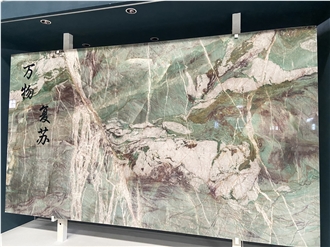
an exceptional natural stone quarried in Brazil, characterized by its striking extraterrestrial-inspired appearance​ featuring a central luminous white to golden-yellow band​ flowing through a matrix of varying shades of gray-green and olive-green tones. Named for its resemblance to moldavite (a rare tektite formed by meteorite impacts), this quartzite displays cosmic, fluid patterns that create a sense of dynamic movement and geological storytelling. The combination of brilliant light bands with deep, earthy greens results in a stone of remarkable artistic and architectural presence.

Description

Moldavite Crystal Quartzite is a stunning natural stone primarily quarried in Brazil. This stone is renowned for its extraterrestrial-inspired aesthetic, resulting from its resemblance to moldavite, a form of rare tektite. It features a dynamic and fluid pattern with a central luminous white to golden-yellow band flowing through various shades of gray-green and olive-green tones. Such a combination imparts an artistic and architectural presence, making it suitable for multiple design applications.

Physical and Mechanical Properties

  • Water Absorption:Typically low, often around 0.1% to 0.35%
  • Density:Approximately 2.69 to 2.75 g/cm³
  • Flexural Strength:Typically ranges from 11 to 14 MPa
  • Compressive Strength:Generally between 110 - 140 MPa
  • Hardness:Measures around 6 to 7 on the Mohs scale
  • Porosity:Low porosity, often less than 1%
  • Slip Resistance:Moderate, with slip resistance depending on the finish

Chemical and Mineral Composition (Approximate % by Weight)

  • Quartz (SiO₂): 90-95%
  • Mica: 2-5%
  • Feldspar: 1-3%
  • Other Minerals (including trace amounts of iron oxides and others): 1-2%

Usage

  • Countertops: Due to its striking appearance and durability.
  • Flooring and Wall Cladding: For both residential and commercial spaces.
  • Decorative Pieces: Such as tabletops and artistic installations.
  • Facades: Suitable for exterior use due to its strength and weather resistance.

Maintenance

  • Regular Cleaning: Use a mild detergent and warm water with a soft cloth.
  • Sealing: Periodic sealing recommended to enhance stain resistance.
  • Avoid Harsh Chemicals: Prevent using acidic or abrasive cleaners.

Cutting Sizes (Common Sizes in cm)

  • Slabs: Typically 2 cm and 3 cm thickness
  • Tiles: Commonly 30x30 cm, 30x60 cm, 60x60 cm

Available Surface Finish Options

  • Polished: Enhances the color and pattern with a glossy finish.
  • Honed: Offers a smooth, matte look without reflection.
  • Leathered: Provides a textured finish that is both aesthetic and tactile.
  • Brushed: Slightly textured finish creating a rustic appearance.

In summary, Moldavite Crystal Quartzite is a versatile and exquisite natural stone possessing both aesthetic appeal and resilient properties, making it a favorable choice for various architectural and design applications. Proper maintenance will ensure the longevity and continued beauty of this remarkable stone.

FAQ

Does red wine stain the surface of a Moldavite Crystal Quartzite kitchen countertop?

Moldavite and quartzite are both distinct materials, and its worth noting that Moldavite is not typically used for kitchen countertops. Instead, quartzite, known for its durability and resistance to staining, is more common for such applications. If your countertop is actually quartzite, it is generally resistant to staining. However, no natural stone is completely impervious. Red wine is acidic and can potentially stain if left on the surface for a prolonged period, especially if the quartzite is not properly sealed or if the sealant has worn off. It’s best to clean up spills promptly to prevent any potential staining. To maintain a quartzite countertop, ensure its properly sealed, and clean up any spills immediately. For specific care recommendations, you should consult with the manufacturer or installer of your countertop.

Is Moldavite Crystal Quartzite mosaic flooring slippery for bathroom use?

Moldavite is a unique type of tektite, not a quartzite, and is typically used for jewelry and decorative purposes rather than flooring. However, if you are considering a mosaic flooring option that incorporates moldavite-like coloring or actual moldavite pieces set in a base material, several factors can affect slipperiness: 1. **Surface Texture**: Mosaic flooring can vary in texture. Polished surfaces tend to be more slippery when wet, while textured finishes offer more grip. 2. **Grout**: The grout in a mosaic can provide additional traction. Thicker grout lines with a rough finish can help prevent slips. 3. **Material**: The base material of the mosaic (such as ceramic, porcelain, or glass) will influence slipperiness. Generally, textured porcelains or ceramics are better for bathroom floors due to slip resistance. 4. **Sealant**: Some sealants can make a floor more slippery, so its important to choose a non-slip sealant if necessary. 5. **Wet Conditions**: Any flooring can become more slippery when wet. You might want to use bathroom rugs or mats for additional safety. If safety is a primary concern, look for a mosaic flooring option specifically rated for wet areas, often noted by slip-resistance ratings (like an R-rating in Europe). Consulting with a flooring expert can also provide guidance in selecting the most appropriate material for bathroom use.

How can I give Moldavite Crystal Quartzite tiles an antique look?

Giving Moldavite Crystal Quartzite tiles an antique look involves several steps to artificially age the tiles and create a patina that mimics the appearance of aged stone. Here’s a guide on how to achieve this: 1. **Surface Preparation:** - **Cleaning:** Start by thoroughly cleaning the tiles to remove any dirt, grease, or residue. Use a mild detergent mixed with warm water and a non-abrasive cloth. Ensure the tiles are rinsed and completely dry before proceeding. - **Sanding:** Lightly sand the surface of the tiles to remove any glossy finish and to create a slightly roughened texture to help the aging agents adhere better. Use a fine-grit sandpaper (around 220 grit). 2. **Staining and Aging:** - **Stain Application:** Use a stone-specific stain or an antiquing solution designed for natural stone. Choose a color that will create a weathered and aged appearance, such as earthy browns, grays, or muted greens. Apply the stain with a soft brush or cloth, working in small sections. - **Weathering Effects:** For added realism, you can mix different shades to create color variations and a more natural, aged look. Sponge on a mixture of diluted stains to create subtle gradients and patterns. - **Dry Brushing:** Use a dry brush technique with lighter shades (such as gold or cream) to highlight textures and accentuate patterns. 3. **Finishing Touches:** - **Distressing:** Gently tap the edges of the tiles with a small hammer or a specialized distressing tool to create chips and wear marks that mimic natural aging. - **Sealant:** Once you are satisfied with the color and texture of the tiles, apply a stone sealant with a matte finish to protect the surface and to lock in the aged appearance. Sealing also provides durability and water resistance. 4. **Additional Techniques:** - **Faux Grout Aging:** If the tiles are already installed, consider aging the grout as well. You can tint the grout with a darker shade to create a more cohesive antique look. - **Embellishments:** Incorporate decorative elements such as faux fossils or inscriptions to enhance the antique effect. 5. **Final Inspection:** - After completing the aging process, allow the tiles to cure for the recommended time according to the sealant manufacturers instructions. - Check for uniformity and make any final touch-ups if needed. **Safety Tips:** - Work in a well-ventilated area. - Wear protective gear like gloves, goggles, and a mask when handling chemicals or when sanding. Always test any stains or techniques on a sample tile or an inconspicuous area first to ensure satisfaction with the result before applying it to the entire surface.

How can I restore the appearance of Moldavite Crystal Quartzite floors to make them look new again?

Restoring Moldavite Crystal Quartzite floors to make them look new again involves a series of careful cleaning, polishing, and maintenance steps to enhance their natural beauty. Here’s a general guide: 1. **Initial Cleaning:** - Begin by sweeping or vacuuming the floor to remove loose dirt and debris. - Use a damp microfiber mop or cloth to wipe the surface. Avoid soaking the floor with water. 2. **Deep Cleaning:** - Prepare a cleaning solution using warm water mixed with a pH-neutral stone cleaner—avoid acidic or alkaline cleaners as they can damage the stone. - Mop the floor with the solution using a soft mop, ensuring you do not oversaturate the stone. - Rinse the floor thoroughly with clean water to remove any residue from the cleaner. 3. **Stain Removal:** - Identify any stains and treat them specifically. Use a stone poultice or a commercial stain remover suitable for quartzite to address stains. Follow the manufacturer’s instructions for the best results. 4. **Polishing:** - After cleaning, polish the floor to restore shine. Use a stone polishing powder or a cream recommended for quartzite. - Apply the polish according to instructions, typically with a hand buffer or a polishing pad fitted to a floor machine. Move in circular motions and avoid applying too much pressure. 5. **Sealing:** - Quartzite should be sealed to protect it from stains and scratches. Use a high-quality penetrating stone sealer appropriate for quartzite. - Follow the manufacturers instructions for application, usually involving spreading the sealant evenly and allowing it to penetrate before wiping off any excess. 6. **Regular Maintenance:** - Establish a routine cleaning schedule using a mop and a pH-neutral cleaner. - Place mats or rugs in high-traffic areas to reduce wear. - Use felt pads under furniture to prevent scratches. 7. **Professional Help:** - If the floor is severely worn or damaged, consider hiring a professional stone restoration service. Professionals will have the tools and expertise needed to grind, polish, and seal the floor, providing a level of restoration difficult to achieve with DIY methods. By following these steps, you can help restore and maintain the appearance of your Moldavite Crystal Quartzite floors. Regular care and proper cleaning will ensure they look beautiful for years to come.

Can 18mm Moldavite Crystal Quartzite be used for stair steps?

Using 18mm Moldavite Crystal Quartzite for stair steps is technically possible, but there are several factors to consider before proceeding with this choice: 1. **Durability:** Quartzite is a very hard and durable natural stone, which makes it suitable for high-traffic areas like stairs. However, the specific variety, such as Moldavite Crystal, should be assessed for its individual strength properties. 2. **Thickness:** While 18mm is a typical thickness for stone tiles, stair treads usually require more structural support. Most stair treads in stone are thicker (around 30mm or more) to withstand the weight and pressure they will endure. You should evaluate whether 18mm provides sufficient strength, especially if the stairs are expected to support heavy loads. 3. **Slip Resistance:** Safety is a critical concern for staircases. Ensure that the surface finish of the quartzite provides enough texture to prevent slipping. Polished stone surfaces can be slippery, especially when wet, so it might be necessary to choose a honed or textured finish. 4. **Installation:** Proper installation is crucial. Ensure that the substrate and the supporting structure are capable of bearing the weight of the quartzite steps. Professional installation is recommended to avoid issues such as cracking or instability. 5. **Aesthetics and Maintenance:** Consider the appearance and maintenance needs of quartzite. Moldavite Crystal Quartzite likely has a unique and attractive appearance, but its important to ensure it complements the overall design of your space. Also, quartzite can be relatively easy to maintain if properly sealed, but periodic maintenance may be necessary. 6. **Cost:** Natural stones like quartzite can be expensive. Consider both the material and installation costs in your budgeting process. Before proceeding, consult with a structural engineer or a professional installer to assess the feasibility and safety of using 18mm Moldavite Crystal Quartzite on your stair steps.

Do fruit juices stain the surface of Moldavite Crystal Quartzite kitchen countertop?

Moldavite Crystal Quartzite is a durable and resilient natural stone, often used for kitchen countertops due to its resistance to heat, scratches, and stains. However, its important to note that, like all natural stones, it isnt completely impervious to staining. Fruit juices, especially those that are acidic or deeply pigmented (such as grape, cranberry, or pomegranate juice), can potentially stain the surface if not cleaned up promptly. The acids in the juice might also dull the surface over time if spills are not wiped clean immediately. To protect your Moldavite Crystal Quartzite countertop, consider the following tips: 1. **Seal the Countertop**: Make sure the countertop is properly sealed. A high-quality sealant can provide an additional layer of protection against staining. 2. **Clean Spills Immediately**: Wipe up spills as soon as they occur to prevent the juice from penetrating the stone. 3. **Use Coasters and Cutting Boards**: Avoid placing glasses or containers directly on the stone and use cutting boards when preparing fruits. 4. **Regular Maintenance**: Regular cleaning with a pH-balanced cleaner recommended for natural stone will help maintain the countertop’s appearance. 5. **Professional Cleaning**: For stubborn stains or maintenance, consider consulting a professional stone cleaner. Following these precautions should help in preserving the beauty and longevity of your Moldavite Crystal Quartzite countertop.

Can Brazil's Moldavite Crystal Quartzite be used in wall coverings?

Yes, Brazils Moldavite Crystal Quartzite can be used in wall coverings. Quartzite is a naturally strong and durable material, making it suitable for various applications, including wall coverings. With its unique patterns and colors, Moldavite Crystal Quartzite can add a touch of beauty and elegance to any interior space.

Can Brazil's Moldavite Crystal Quartzite be used exterior applications in hot climates?

Brazils Moldavite Crystal Quartzite can generally be used for exterior applications in hot climates. Quartzite is known for its heat resistance, durability, and low porosity, making it suitable for various weather conditions. However, its always essential to consider the specific conditions of the location and consult with a professional before making any final decisions.

What is the coefficient of friction of Leathered Brazil's Moldavite Crystal Quartzite tiles?

The coefficient of friction of Leathered Brazils Moldavite Crystal Quartzite tiles may vary depending on a few factors such as the surface finish, the specific type of quartzite, and the testing method used. It is recommended to check with the manufacturer or supplier of the tiles for the exact coefficient of friction value, as they should have the relevant information and testing data for their specific product.

Are there color variations of Brazil's Moldavite Crystal Quartzite?

No, there are no known color variations of Brazils Moldavite Crystal Quartzite. Moldavite is a type of tektite, which is formed when a meteorite impacts the Earths surface. It is primarily found in the Czech Republic, and its color is typically green, ranging from pale to dark green. It is unlikely to find Moldavite in Brazil, and it is even less likely to find color variations of Moldavite in any location.

Products & Prices

Hot Green Quartzite

New Quartzite

Post Your Request

The request includes:
  1. surface finished, size
  2. quantity required