Post Your Needs

Nero Cristallo Marble

Marble

Brazil

About

Item Details

Material Type:
Marble
Origin:
Brazil (Barra de Sao Francisco, Espirito Santo)
Recommended Usage:
kitchen and bathroom countertop, wash basins, building stone, ornamental stone, stairs, interior, exterior wall and floor applications, mosaic, water-jet pattern, wall panels, table tops, balustrades, columns, wall and pool copings, pool pavers, sculptures, fireplaces, window sills
Additional Names:
Black Agatha Marble, Black Agate Marble, Agatha Black Marble, Cristallo Nero Marble, Marmor Cristallo Noir, Notte Stellata Marble, Nero Expresso Marble, Expresso Black Marble
Finished Surface:
Polished,Bush Hammered,Tumbled,Brushed,Honed,Split,Machine Cut,Natural Surface,Sandblasted,Combed,Leathered,Water Jet,Chiseled,Pickling

Testing

Water Absorption:
0.18 - 0.30% by weight
Density:
2700 - 2750 kg/m³
Flexural Strength:
10 - 12 MPa
Compressive Strength:
90 - 120 MPa

Description

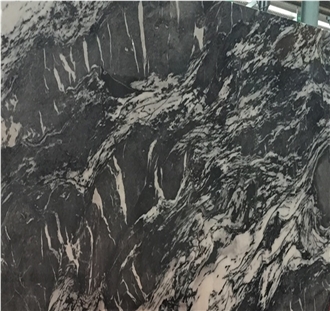
Nero Cristallo Marble features a deep black to dark charcoal-grey background with dramatic flowing waves in white and silver-grey. The strong contrast and directional movement create a luxurious, sophisticated appearance, making the material particularly suitable for bookmatched slab installations.

Texture & Structure:

Fine- to medium-grained crystalline texture with a compact, dense structure. The surface has a smooth crystalline character, while the interlocking mineral grains and contrasting veining create subtle depth and natural variation. The stone is typically selected and processed as slabs where its large-scale movement can be emphasized.

Pattern & Veining:

The defining feature is its bold, flowing white and silver-grey veining, forming sweeping waves and irregular fluid bands across the dark background. The veins vary in width, direction, and intensity, producing dramatic continuous patterns that can be mirrored through bookmatching.

Technical Characteristics (Indicative):

  • Water Absorption: 0.18–0.30% by weight
  • Density: 2700–2750 kg/m³
  • Flexural Strength: 10–12 MPa
  • Compressive Strength: 90–120 MPa
  • Open Porosity: 0.20–0.80%
  • Hardness: 3–4 Mohs

Mineral Composition (Indicative, % by weight):

  • Calcite: 75–90%
  • Dolomite: 3–10%
  • Quartz: 2–8%
  • Mica/Chlorite: 1–5%
  • Graphite/Carbonaceous Minerals: 0–3%
  • Accessory Minerals: 0–2%

Chemical Composition (Indicative, % by weight):

  • CaCO₃: 73–88%
  • MgCO₃: 2–7%
  • SiO₂: 1–8%
  • Al₂O₃: 0.2–2%
  • Fe₂O₃: 0.2–2%
  • C/Carbonaceous Matter: 0.5–4%
  • Other Oxides: 0–2%

Usage:

Suitable for luxury interior flooring, wall cladding, feature walls, bathroom walls, vanity tops, countertops, backsplashes, fireplace surrounds, reception areas, tabletops, furniture, decorative panels, and other high-end architectural applications. Its dramatic veining is especially suitable for bookmatched feature walls, large slab installations, and statement interiors.

Finishes:

Polished, honed, leathered, brushed, and other custom finishes.

Maintenance:

Clean with a pH-neutral natural stone cleaner and a soft cloth or mop. Avoid acidic cleaners, vinegar, lemon juice, bleach, and abrasive products. Seal according to the stone's porosity and intended application, particularly for countertops, vanities, and bathroom surfaces. Wipe spills promptly to minimize staining and etching.

FAQ

How can I repair the scratched surface of the Nero Cristallo Marble steps?

Repairing scratched Nero Cristallo Marble steps involves a few careful steps to restore their appearance. Heres a guide to help you tackle this task: 1. **Assess the Damage**: - Begin by examining the scratches to determine their depth. Superficial scratches can be addressed with polishing, while deeper scratches may require more extensive treatment. 2. **Clean the Marble**: - Thoroughly clean the marble steps with a mild, pH-neutral cleaner to remove any dirt or debris. This will prevent grime from interfering with the polishing process. Rinse with water and dry the surface completely with a soft cloth. 3. **Buffing Out Light Scratches**: - Use a marble polishing powder suited for Nero Cristallo marble. Sprinkle a small amount over the affected area and use a damp cloth to gently rub the powder into the scratch in circular motions. A power buffer with a marble polishing pad can also be effective for larger areas. 4. **Polishing**: - If the scratches are still visible, use a marble polishing compound or paste. Apply it to the surface with a soft cloth or a mechanical buffer, following the products instructions. Use light pressure and work in circular motions to restore the shine. 5. **Handling Deep Scratches**: - For deeper scratches, you might need to use fine-grade sandpaper (1200-grit or finer). Wet the sandpaper and the scratched area, and gently sand the scratch in a consistent, circular motion. Afterward, use a marble polishing compound to restore the gloss. 6. **Seal the Marble**: - Once the scratches are removed and the steps are polished to satisfaction, apply a marble sealer to protect the surface. Follow the instructions on the sealer for the best results. A well-sealed surface helps prevent future scratches and stains. 7. **Regular Maintenance**: - To keep the marble steps looking their best, clean them regularly with a soft cloth and a mild cleaner. Avoid harsh chemicals or abrasive materials that can damage the surface. Consider applying a marble sealant periodically, as per manufacturer instructions. If youre not comfortable handling this yourself or if the damage is extensive, consulting a professional stone restoration specialist is advised. They have the tools and expertise to restore the marble steps effectively without risking further damage.
Nero Cristallo Marble has its own natural veins. If I use it as stair steps, will it break along these veins?

Using Nero Cristallo Marble or any marble for stair steps requires careful consideration of the materials properties, including its veining. Marble is a natural stone, and its veins can sometimes represent areas of weakness where the stone may be more prone to cracking or breaking, especially under stress or heavy use. Here are a few considerations if youre thinking about using Nero Cristallo Marble for stair steps: 1. **Veining Direction**: Pay attention to the orientation of the veins when the stone is cut for use as steps. Ideally, the veins should run perpendicular to the direction of the steps to minimize potential breakage along the veins. 2. **Thickness and Support**: Ensure that the marble slabs used for the steps are thick enough to provide stability and durability. Adequate support underneath each slab is also essential to prevent stress that could lead to cracking. 3. **Sealing and Maintenance**: Marble is porous and needs to be properly sealed to prevent moisture penetration, which can exacerbate any existing weaknesses along the veins. Regular maintenance and resealing are important. 4. **Traffic and Use**: Consider the level of foot traffic and use the stairs will experience. High-traffic areas may not be suitable for marble with prominent veining unless careful precautions are taken. 5. **Professional Installation**: Ensure that a skilled professional installs the marble steps. They can assess the suitability of each slab and strategically place those with the least potential for breakage. By taking these factors into account and selecting high-quality materials and skilled professionals for the job, you can mitigate the risk of breakage and enjoy the aesthetic beauty of Nero Cristallo Marble for your stair steps.

If I cut meat directly on my Nero Cristallo Marble kitchen countertop, will it damage the surface?

Cutting meat directly on your Nero Cristallo Marble kitchen countertop is not recommended. Marble is a relatively soft and porous stone, which makes it susceptible to scratching, etching, and staining. Here are a few reasons why you should avoid cutting directly on marble: 1. **Scratches**: Marble can be easily scratched by knives. Cutting directly on the surface can leave noticeable marks and degrade the surface finish over time. 2. **Etching**: Marble is prone to etching, which is when the surface becomes dull and discolored due to contact with acidic substances. While meat itself might not cause etching, any acidic juices could potentially damage the surface. 3. **Staining**: Marble is porous and can absorb liquids, which might lead to stains, especially from raw meat juices. 4. **Knife Damage**: Using marble as a cutting surface can also dull your knives more quickly, as the hard surface can damage the edges. To protect your Nero Cristallo Marble countertop, its best to always use a cutting board when preparing food. This will help preserve the beauty and longevity of your marble surface.

Does Nero Cristallo Marble scratch easily?

Nero Cristallo Marble is a natural stone, and like most marbles, it can be prone to scratching. Marble is generally softer than other natural stones like granite, so it is more susceptible to damage from sharp or abrasive objects. To minimize the risk of scratching, its a good idea to use cutting boards, trivets, and coasters, and to avoid placing heavy or rough items directly on the surface. Additionally, regular sealing and proper maintenance can help protect the marble from scratches and other types of damage.

Can I mix cleaning vinegar and Dawn dish soap together to clean a Nero Cristallo Marble countertop?

Mixing cleaning vinegar and Dawn dish soap is generally not recommended for use on Nero Cristallo Marble or any other type of marble. Marble is a natural stone that is sensitive to acidic substances, and vinegar is acidic. Using vinegar on marble can cause etching or dull spots on the surface. Instead, you should use a pH-neutral cleaner specifically designed for natural stone or a mild liquid dish soap mixed with water. Always make sure to use a soft cloth or sponge when cleaning the marble and to dry the surface thoroughly to prevent water spots. Its also a good idea to periodically apply a marble sealer to protect the surface from staining and damage.

Is Nero Cristallo Marble heat resistant? Is it suitable for use in fireplaces?

Nero Cristallo Marble, like most natural marbles, is generally not known for being highly heat-resistant. While marble can withstand some heat, it may discolor, crack, or weaken if exposed to high temperatures over extended periods. This is particularly true in environments like fireplaces where direct and radiant heat can be intense. For fireplace surrounds or hearths, materials with higher heat resistance, such as granite, slate, or engineered stone specifically designed for heat resistance, are often recommended. If you are set on using Nero Cristallo Marble for a fireplace, consider using it in a way that minimizes direct exposure to heat. You should also consult with a professional to ensure proper installation and insulation to mitigate potential heat damage.

Products & Prices

Hot Marble

New Marble

Post Your Request

The request includes:
  1. surface finished, size
  2. quantity required

