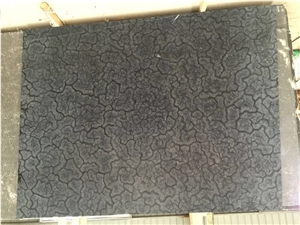
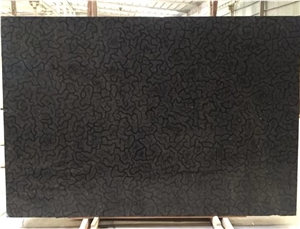
Oracle Marble features a deep, dark charcoal-grey to black background with a highly distinctive, rugged surface texture. Its most recognizable characteristic is the presence of irregular, swirling patterns and raised, vein-like ridges resembling ancient Chinese inscriptions, reflecting its name, Oracle (甲骨文). Silvery-grey and white mineral deposits trace these organic, carved-looking formations, creating a dramatic contrast against the dark stone matrix. The textured surface catches light along the raised areas, producing an antiquated, fossil-like and naturally etched appearance. Quarried in China.
Texture & Structure
-
Fine- to medium-grained natural stone structure.
-
Dark charcoal-grey to black mineral background.
-
Irregular, swirling and interconnected vein-like formations.
-
Raised ridges and recessed areas creating a pronounced three-dimensional texture.
-
Silvery-grey and white mineral deposits following organic patterns.
-
Naturally variable, inscription-like surface characteristics.
-
Textured, relief or specially processed finish emphasizing the stone's sculptural appearance.
Technical Characteristics
The exact geological classification and laboratory test results of Oracle Marble have not been provided. The following are indicative reference ranges for comparable dense dark marble and limestone materials, not verified specifications for this particular stone.
-
Water Absorption: Approximately 0.2–0.5%
-
Density: Approximately 2680–2720 kg/m³
-
Flexural Strength: Approximately 10–12 MPa
-
Compressive Strength: Approximately 80–100 MPa
-
Mohs Hardness: Approximately 3–4 (estimated).
Chemical & Mineralogical Composition
Indicative composition based on typical dark calcitic marble or limestone. Actual composition requires laboratory analysis.
Chemical Composition (% by Weight):
-
Calcium Oxide (CaO): 45–55%
-
Loss on Ignition (LOI): 35–43%
-
Silicon Dioxide (SiO₂): 1–8%
-
Magnesium Oxide (MgO): 0.5–5%
-
Aluminum Oxide (Al₂O₃): 0.2–3%
-
Iron Oxide (Fe₂O₃): 0.5–5%
-
Sulfur Trioxide (SO₃): 0–2%
-
Other Oxides: Trace amounts.
Mineral Composition (% by Weight):
-
-
-
-
-
Graphite and Carbonaceous Matter: 0–5%
-
Iron-bearing Minerals: 0.5–3%
-
Other Accessory Minerals: Trace amounts.
Usage
Suitable for decorative interior wall cladding, feature walls, reception areas, hotel lobbies, luxury residential interiors, fireplace surrounds, artistic wall panels, sculptural installations, decorative columns and bespoke architectural applications. Its dramatic dark coloration and inscription-like relief patterns make it particularly suitable for statement surfaces and distinctive contemporary or classical interior designs. Depending on the processing method, available finishes may include textured, brushed, honed, antique, leathered and specially carved surfaces.
Maintenance
Clean regularly using a soft cloth or brush and a pH-neutral stone cleaner. Avoid acidic cleaners, abrasive materials and harsh chemicals, as calcite-rich marble and limestone are susceptible to acid etching and surface damage. Use soft brushes to remove dust from recessed areas and textured patterns. Applying a suitable penetrating stone sealer is recommended to help reduce moisture and staining. Avoid excessive pressure during cleaning, particularly on raised or sculpted areas, to preserve the natural relief and surface details. Periodic resealing may be necessary depending on the installation environment and usage.


 China
 10YR





 Spain

 Italy
 Tunisia

 Pakistan

 France


 Myanmar


