Post Your Needs

Pandrosa Marble

Marble

Turkey

About

Item Details

Material Type:
Marble
Origin:
Turkey
Recommended Usage:
Kitchen and bathroom countertops, wash basins, building stone, ornamental stone, stairs, interior, exterior wall and floor applications, mosaic, waterjet pattern, wall panels, table tops, balustrades, columns, wall and pool copings, pool pavers, sculptures, fireplaces, window sills
Additional Names:
Blue Puzzle Marble, Picasso Gold Marble, Golden Shadow Marble, Dolomite Spica Marble
Finished Surface:
Polished,Bush Hammered,Tumbled,Brushed,Honed,Split,Machine Cut,Natural Surface,Sandblasted,Acid Washing,Combed,Leathered,Water Jet,Filled,Chiseled,Pickling

Testing

Water Absorption:
0.20 – 0.35 % (by weight)
Density:
2680 – 2720 kg/m³
Flexural Strength:
10 – 16 MPa
Compressive Strength:
95 – 120 MPa

Description

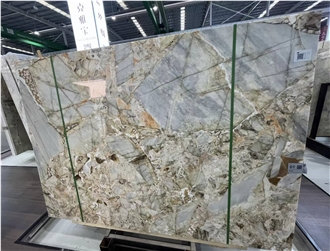
Pandrosa Marble is a visually striking natural marble quarried in Turkey, known for its highly dynamic, mosaic-like or fractured patterns. Its surface exhibits irregular, interlocking patches of color, creating a lively and artistic visual effect. Dominant hues include cool grays with subtle blue-gray undertones, creamy beiges, and warm brown or tan accents, all highlighted by crisp white “grout-like” lines that naturally separate the fragmented segments of the stone. The texture is fine- to medium-grained with a dense crystalline structure, offering a smooth yet tactile feel. The marble’s fractured, mosaic appearance makes it particularly appealing for feature walls, decorative panels, and luxurious interior applications, giving spaces a sense of depth, movement, and contemporary elegance.

Physical & Mechanical Properties

  • Apparent Density: 2,680 – 2,720 kg/m³
  • Water Absorption: 0.20 – 0.35 % (by weight)
  • Open Porosity: 0.40 – 0.70 %
  • Compressive Strength: 95 – 120 MPa
  • Flexural Strength: 10 – 16 MPa
  • Abrasion Resistance: 20 – 24 mm
  • Impact Resistance: 35 – 45 cm
  • Modulus of Elasticity: 45 – 60 GPa
  • Frost Resistance: Suitable for interior and mild exterior use
  • Mohs hardness: 3 – 4

Chemical Composition (% by Weight – Typical)

  • CaCO₃ (Calcium Carbonate): 94 – 97 %
  • MgCO₃: 0.5 – 1.5 %
  • SiO₂: 0.5 – 1.2 %
  • Al₂O₃: 0.2 – 0.5 %
  • Fe₂O₃: 0.1 – 0.3 %
  • Trace minerals: <0.5 %

Mineral Composition (% by Weight – Typical)

  • Calcite: 92 – 96 %
  • Dolomite: 1 – 3 %
  • Quartz: 1 – 2 %
  • Mica & clay minerals: 0.5 – 1 %
  • Iron oxides: traces

Surface Finish Options

Pandrosa Marble can be processed in multiple finishes to enhance its dynamic pattern:

  •  Polished – highlights the vibrant mosaic effect
  •  Honed – matte elegance with subtle depth
  •  Leathered – soft, tactile texture
  •  Brushed – textured contemporary look
  •  Tumbled – antique, rustic appearance

Applications

Pandrosa Marble is ideal for both residential and commercial design projects:

  • Interior feature walls and accent panels
  • Flooring and staircases
  • Kitchen countertops and vanity tops
  • Fireplace surrounds
  • Luxury hotel lobbies and reception areas
  • Decorative mosaics and art installations

Maintenance

  • Apply a penetrating stone sealer to protect against staining and moisture.
  • Clean with pH-neutral stone cleaners only.
  • Avoid acidic or abrasive chemicals.
  • Periodic polishing recommended in high-traffic areas.

FAQ

Can Pandrosa Marble tiles be used for high - traffic internal commercial flooring?

Pandrosa Marble can be used for high-traffic internal commercial flooring, but there are several factors to consider: 1. **Durability**: Marble is a natural stone and is generally durable, but it may not be as hard as granite or other commercial-grade tiles. For high-traffic areas, you should ensure that the specific type of Pandrosa Marble you choose is dense and hard enough to withstand wear and tear. 2. **Maintenance**: Marble requires regular maintenance, including sealing, to protect it from stains and scratching. In high-traffic areas, this maintenance might need to be more frequent. 3. **Slip Resistance**: Highly polished marble can be slippery, which can be a concern in commercial settings. Consider using a honed finish or applying a non-slip treatment to the surface. 4. **Aesthetics and Longevity**: While marble is highly valued for its aesthetic appeal, high traffic can lead to wear patterns over time. Regular maintenance can help preserve its appearance. 5. **Cost**: Marble can be more expensive compared to other flooring materials, both in terms of initial cost and ongoing maintenance. 6. **Environmental Suitability**: Consider the environment where its being installed. Marble can be sensitive to acidic substances, which can cause etching or discoloration. For high-traffic commercial settings, you might want to consult with a professional to ensure that the marble selected meets the specific requirements for durability and safety. You may also consider alternative materials, such as porcelain tiles that mimic the look of marble but offer greater durability for high-traffic areas.
How to remove scratches from Pandrosa Marble floor tiles?

Removing scratches from Pandrosa marble floor tiles requires a careful approach to preserve the natural beauty and integrity of the stone. Here are some steps you can follow: 1. **Assess the Scratches:** - Determine the depth of the scratches. Light or superficial scratches can be treated more easily at home, while deep scratches might require professional attention. 2. **Clean the Area:** - Start by cleaning the affected area with a pH-neutral marble cleaner. Avoid acidic or abrasive cleaners that can damage the marble. Use a soft cloth or mop to gently clean and dry the surface. 3. **Buffing Light Scratches:** - For light scratches, use a soft cloth and a marble polishing powder or compound. Follow the instructions on the product packaging, applying the powder to the scratched area. - Gently buff the area in a circular motion using a clean, damp cloth until the scratches diminish. 4. **Use Marble Polishing Pads:** - For more persistent or slightly deeper scratches, use a set of marble polishing pads. These pads typically come in various grits for progressively finer sanding. - Begin with the coarsest grit recommended for marble and gradually move to finer grits. Always keep the pad and marble slightly moist during the process. 5. **Polishing:** - After sanding, use a marble polishing powder and a buffer pad or a soft cloth to achieve a polished finish. Again, follow the manufacturers instructions carefully. - Be sure to buff until the marbles sheen matches the surrounding area for uniformity. 6. **Sealing:** - Once youve removed the scratches, consider sealing the marble with a high-quality stone sealer to protect against future scratches and stains. - Follow the instructions on the sealer packaging for application. 7. **Professional Help:** - If the scratches are deep or if youre unsure about the process, its best to consult a professional stone restoration specialist. They have the tools and expertise to repair marble surfaces effectively. 8. **Regular Maintenance:** - To prevent future scratches, regularly clean the floor with a pH-neutral cleaner and use rugs or mats in high-traffic areas to minimize wear. By following these steps, you can help restore the appearance of your Pandrosa marble tiles. Always handle marble surfaces with care to maintain their natural elegance and durability.

Are sandblasted finish Pandrosa Marble floor tiles easily stained?

Pandrosa Marble, like many other types of marble, is a natural stone that can be prone to staining due to its porosity. A sandblasted finish involves blasting the marble surface with sand to create a textured, matte finish. This can make the stone even more susceptible to staining because the textured surface may hold onto liquids and substances more readily than a polished finish. To reduce the risk of staining, it is important to properly seal sandblasted Pandrosa Marble tiles. A quality sealer will help create a barrier to prevent liquids from penetrating the stone. Regular maintenance, such as promptly cleaning up spills and using appropriate cleaning products, is also crucial in maintaining the appearance of these tiles. It might also be worth considering the type of space where the marble is installed. For high-traffic or spill-prone areas, additional caution and maintenance measures may be necessary to preserve the stones appearance.

Is polished Pandrosa Marble good for commercial building floors?

Polished Pandrosa Marble can be a suitable choice for commercial building floors, depending on the specific requirements and aesthetic goals of the project. Here are some factors to consider: 1. **Aesthetic Appeal**: Pandrosa Marble is known for its unique and attractive patterns, adding a sophisticated and luxurious look to a space. 2. **Durability**: Marble is a durable natural stone, but it is softer compared to granite and some other stones. It can withstand regular foot traffic in commercial settings, though it may be prone to scratching and etching over time if not maintained properly. 3. **Maintenance**: Marble floors require regular maintenance to keep their polished appearance. This includes cleaning with the appropriate products and periodic resealing to protect against stains and moisture. 4. **Cost**: Marble is often more expensive than other flooring options. Budget considerations are important when choosing materials for large commercial spaces. 5. **Slip Resistance**: Polished marble can be slippery, especially when wet, so it might not be suitable for all areas. Its important to consider where the marble will be installed and if additional treatments are needed to make it slip-resistant. 6. **Environmental Conditions**: Consider the climate and location of the building. Marble can be affected by extreme temperature changes and may not be the best choice for all environments. In summary, while Pandrosa Marble can be a beautiful and elegant option for commercial floors, its suitability depends on factors such as maintenance resources, budget, and the intended use of the space. Its advisable to consult with a professional to evaluate the specific needs and challenges of your project.

What is the best way to clean Pandrosa Marble floor tiles?

Cleaning Pandrosa Marble floor tiles requires some special care, given the natural properties of marble. Heres a step-by-step guide to ensure you clean your marble tiles effectively without causing any damage: 1. **Gather Supplies**: - Soft broom or microfiber dust mop. - pH-neutral stone cleaner or mild dish soap. - Warm water. - Soft cloths or microfiber towels. - Bucket. - Mop with a non-abrasive head. - Marble polish (optional). 2. **Dust and Sweep**: - Begin by removing loose dirt and debris using a soft broom or a microfiber dust mop. Be gentle to avoid scratching the marble surface. 3. **Prepare Cleaning Solution**: - In a bucket, mix warm water with a small amount of a pH-neutral stone cleaner or mild dish soap. Avoid acidic or alkaline cleaners as they can damage the marble. 4. **Mopping**: - Dip your mop in the cleaning solution, wring out excess water, and softly mop the floor. Ensure the mop is damp, not soaking wet, as excess water can seep into the marble and cause damage. - For stubborn spots, use a soft cloth or a sponge dipped in the cleaning solution to gently scrub the area. 5. **Rinse the Floor**: - After mopping, rinse the floor with clean water to remove any soap residue. Use a clean mop or a separate bucket of water for this step. 6. **Dry the Floor**: - Use soft, dry microfiber towels or cloths to thoroughly dry the floor. This step is essential to prevent water spots and potential water damage. 7. **Optional Polishing**: - After drying, you can apply a marble polish to restore the natural shine of your Pandrosa Marble. Follow the manufacturers instructions carefully. 8. **Regular Maintenance Tips**: - Place mats at entryways to minimize dirt and grit. - Wipe up spills immediately to prevent staining. - Use protective pads under furniture to prevent scratches. By regularly maintaining your Pandrosa Marble tiles with gentle, pH-neutral cleaning methods, youll help preserve their beauty and extend their lifespan.

Can Pandrosa Marble be scratched with a knife?

Pandrosa Marble, like other types of marble, is a natural stone that ranks around 3 to 5 on the Mohs scale of mineral hardness. This means it is relatively soft compared to many other stones, such as granite. A standard steel knife ranks around 5 to 5.5 on the Mohs scale, so it is possible for a knife to scratch marble surfaces, including Pandrosa Marble. Care should be taken to avoid using knives or other sharp utensils directly on marble to prevent scratching and maintain its polished appearance.

Products & Prices

Hot Marble

New Marble

Post Your Request

The request includes:
  1. surface finished, size
  2. quantity required

