Post Your Needs

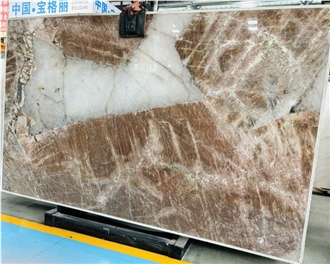
Patagonia Glace Quartzite

Multicolor - Quartzite

Brazil

About

Item Details

Material Type:
Quartzite
Origin:
Brazil
Primary Color(s):
Multicolor
Recommended Usage:
kitchen and bathroom countertop, wash basins, building stone, ornamental stone, stairs, interior wall and floor applications, mosaic, water-jet pattern, wall panels, table tops, balustrades, columns, fireplaces, luxury furniture
Additional Names:
Patagonia Pink Quartzite, Patagonia Quartzite, in China stone market:巴达哥尼亚(Bā Dá Gē Ní Yà)
Finished Surface:
Polished,Bush Hammered,Tumbled,Brushed,Honed,Split,Machine Cut,Natural Surface,Sandblasted,Combed,Leathered,Water Jet,Chiseled,Pickling

Testing

Water Absorption:
0.10 – 0.25 %
Density:
2670 – 2730 kg/m³
Flexural Strength:
20 – 23 MPa
Compressive Strength:
200 – 240 MPa

Description

Patagonia Glace Quartzite is an extraordinary premium natural stone quarried in Brazil, celebrated for its luminous crystalline appearance and dramatic geological composition. This exotic quartzite showcases a breathtaking blend of translucent quartz formations, creamy white and beige backgrounds, soft grey mineral clouds, and striking deep brown to golden crystalline veins. Its semi-translucent quartz clusters create a jewel-like effect, making it one of the most luxurious statement stones available for high-end architectural and interior design projects.

Texture

  • Medium to coarse crystalline texture
  • Natural translucent quartz formations
  • Dense and compact structure
  • Crystalline depth with light-reflecting properties
  • Smooth, luxurious touch when polished
  • Distinct mineral boundaries and quartz pockets

Pattern

  • Large translucent quartz chunks and crystal clusters
  • White, ivory, beige, and light grey mineral fields
  • Dramatic golden brown and dark amber crystalline veining
  • Naturally fragmented mosaic appearance
  • Strong movement and visual depth
  • Highly unique slab-to-slab variation
  • Exceptional bookmatching potential

Physical & Mechanical Properties

  • Density: 2,670 – 2,730 kg/m³
  • Water Absorption: 0.10 – 0.25 %
  • Open Porosity: 0.20 – 0.50 %
  • Compressive Strength: 200 – 240 MPa
  • Flexural Strength: 20 – 23 MPa
  • Abrasion Resistance: 18 – 22 mm
  • Impact Resistance: High
  • Frost Resistance: Excellent
  • Mohs Hardness: 6.5 – 7.5
  • Modulus of Rupture: 15 – 22 MPa

Mineral Composition (% by Weight)

  • Quartz: 80 – 92%
  • Feldspar: 4 – 10%
  • Mica: 1 – 4%
  • Garnet & Accessory Minerals: 0.5 – 2%
  • Iron-bearing Minerals: 0.5 – 2%
  • Tourmaline & Trace Minerals: 0.1 – 1%

Chemical Composition (% by Weight)

  • SiO₂ (Silicon Dioxide): 85 – 95%
  • Al₂O₃ (Aluminum Oxide): 1 – 5%
  • Fe₂O₃ (Iron Oxide): 0.5 – 3%
  • K₂O (Potassium Oxide): 0.5 – 2%
  • Na₂O (Sodium Oxide): 0.1 – 1%
  • MgO (Magnesium Oxide): 0.1 – 1%
  • CaO (Calcium Oxide): <1%
  • Trace Elements: <1%

Applications

  • Luxury kitchen countertops, Waterfall kitchen islands
  • Bathroom vanity tops
  • Feature walls, Backlit wall panels
  • Fireplace surrounds
  • Hotel reception desks
  • Bar and wine cellar countertops
  • High-end retail interiors
  • Staircases
  • Flooring, Wall cladding
  • Custom furniture, Conference tables
  • Luxury yacht and private residence interiors

Maintenance

  • Clean with pH-neutral stone cleaners.
  • Avoid acidic or abrasive cleaning products.
  • Seal periodically to maximize stain resistance.
  • Remove spills promptly, especially oils, wine, coffee, and citrus products.
  • Use protective pads under heavy objects.
  • Backlit installations should utilize professional stone-support systems.
  • Regular dusting and gentle cleaning preserve the stone's natural brilliance. 

FAQ

How can I remove rust stains from a Patagonia Glace Quartzite kitchen countertop?

Removing rust stains from a Patagonia Glace Quartzite kitchen countertop requires a gentle approach to ensure the surface is not damaged. Heres how you can do it: 1. **Materials Needed:** - Baking soda - Hydrogen peroxide - Plastic wrap - Non-abrasive cloth or sponge - Plastic or wooden spatula - Soft cloth for polishing 2. **Make a Poultice:** - Mix baking soda with a few drops of hydrogen peroxide to form a thick paste. The consistency should be similar to peanut butter. 3. **Apply the Poultice:** - Spread the paste over the rust stain. Ensure the entire stained area is covered with a generous layer. 4. **Cover it:** - Place a piece of plastic wrap over the poultice. This will keep the mixture moist and allow it to penetrate the stain effectively. 5. **Let it Sit:** - Leave the poultice on the stain for about 24-48 hours. If possible, tape down the edges of the plastic wrap to prevent it from moving. 6. **Remove the Poultice:** - Carefully remove the plastic wrap. Using a plastic or wooden spatula, gently scrape off the dried poultice. 7. **Clean the Surface:** - Wipe the area with a clean, damp non-abrasive cloth or sponge. - If any residue remains, gently buff it away with the cloth. 8. **Polish:** - Once the area is clean and dry, polish the quartzite with a soft cloth to restore its shine. 9. **Repeat if Necessary:** - If the stain persists, you may need to repeat the process. Rust stains can be stubborn, but repeated applications usually help. 10. **Prevent Future Stains:** - To prevent future rust stains, ensure that metal items do not stay wet on the countertop and regularly clean the surface. Always test the cleaning solution on a small, inconspicuous area first to ensure that it doesnt affect the stones appearance.

Is Patagonia Glace Quartzite heat resistant? Is it suitable for use in fireplaces?

Patagonia Glace Quartzite is known for its durability and heat resistance, making it generally suitable for use in high-heat areas like fireplaces. Quartzite is a natural stone formed from sandstone and is subjected to high heat and pressure during its formation, which gives it excellent resistance to heat and a dense, hard surface. However, despite its heat resistance, it’s essential to ensure that the installation is done correctly, and the stone is adequately supported to prevent cracking or damage. It is also wise to consult with a professional to confirm its suitability for your specific fireplace design and to ensure compliance with local building codes and standards. Additionally, consider regular maintenance to keep the stone looking its best and to address any potential wear and tear over time.

Can I put a hot pan on Patagonia Glace Quartzite kitchen countertop?

Patagonia Glace Quartzite is a natural stone known for its durability and resistance to heat, making it generally suitable for kitchen countertops. However, while quartzite can withstand significant heat, it is always prudent to use trivets or heat pads when placing hot pans directly on any natural stone surface. This precaution helps prevent potential thermal shock, which might cause cracking or discoloration over time. Additionally, using trivets helps protect any sealant that might be applied to the surface to maintain its appearance and longevity.

If I chop meat on a Patagonia Glace Quartzite kitchen countertop, will it leave knife marks?

Patagonia Glace Quartzite is known for being a very hard and durable natural stone, often used for countertops due to its resistance to scratching, heat, and etching. However, while quartzite is tough, using a knife directly on the surface can potentially cause damage to both the countertop and your knife. Chopping directly on a quartzite surface could leave marks or dull your knife over time. Therefore, it is always recommended to use a cutting board to protect both your knives and your countertop. This will help maintain the surfaces appearance and prolong the life of your kitchen tools.

Can I use bleach when cleaning a Patagonia Glace Quartzite kitchen countertop?

Its not recommended to use bleach on Patagonia Glace Quartzite kitchen countertops. Quartzite is a natural stone and can be sensitive to harsh chemicals, which may cause discoloration or damage the surface. Instead, its best to use mild dish soap and warm water for regular cleaning. For tougher stains, you can use a mixture of baking soda and water applied gently with a soft cloth. Always make sure to thoroughly rinse and dry the countertop after cleaning to prevent any residue.

How can I remove a red sauce stain from a Patagonia Glace Quartzite kitchen countertop?

Removing a red sauce stain from a Patagonia Glace Quartzite kitchen countertop requires a gentle approach to avoid damaging the stone. Here are steps you can follow: 1. **Act Quickly**: The sooner you can address the stain, the better the chance of complete removal. 2. **Blot the Stain**: Use a clean, dry cloth or paper towel to blot up as much of the sauce as possible. Avoid rubbing, as this can spread the stain. 3. **Mild Dish Soap and Water**: Make a solution of warm water and a few drops of mild dish soap. Dampen a soft cloth or sponge in the soapy water, and gently clean the stained area. Rinse with a clean, damp cloth to remove soap residue, and dry with a soft towel. 4. **Baking Soda Poultice**: For stubborn stains, create a poultice with baking soda and water. Mix them into a thick paste. Apply the paste to the stain, covering it with plastic wrap, and secure the edges with tape. Leave it overnight to draw out the stain. Remove the plastic wrap and wipe away the dried paste with a damp cloth. Rinse and dry the area. 5. **Stone Cleaner**: Use a cleaner specifically designed for natural stone, following the manufacturers instructions. This can help in breaking down stubborn stains without harming the surface. 6. **Avoid Harsh Chemicals**: Avoid using acidic or abrasive cleaners, vinegar, lemon juice, ammonia, or bleach, as these can damage the quartzite surface. 7. **Professional Help**: If the stain persists, consider contacting a professional stone care specialist for advice or assistance. Remember to regularly seal your quartzite countertop as recommended by the manufacturer to help prevent future staining.

Products & Prices

Hot Multicolor Quartzite

New Quartzite

Post Your Request

The request includes:
  1. surface finished, size
  2. quantity required