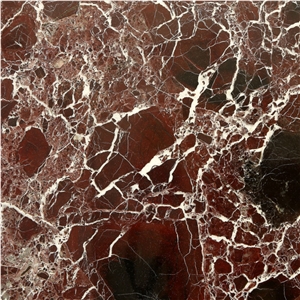
Pelo Red Marble

About
Item Details
- Material Type:
- Marble
- Origin:
Italy (Provincia di Livorno, Toscana) - Primary Color(s):
- Red
- Recommended Usage:
- kitchen and bathroom countertop, wash basins, building stone, ornamental stone, stairs, interior, exterior wall and floor applications, mosaic, water-jet pattern, wall panels, table tops, balustrades, columns, wall and pool copings, pool pavers, sculptures, fireplaces, window sills
- Additional Names:
- Pelo Red Limestone, Amiata Bruciato Marble, Pelo Red
- Finished Surface:
- Polished,Bush Hammered,Tumbled,Brushed,Honed,Split,Machine Cut,Natural Surface,Sandblasted,Combed,Leathered,Water Jet,Chiseled,Pickling
Testing
- Water Absorption:
- 0.23 By weight %
- Density:
- 2610 kg/m³
- Flexural Strength:
- 16.6 MPa
- Compressive Strength:
- 136.00 MPa
- Stone texture:
- a warm, rich terracotta or brick-red background patterned with fine, prominent white and cream veins. The bold background and striking web-like veining create a high-contrast, luxurious appearance
Description
Pelo Red Marble is a distinct and luxurious natural stone that exudes warmth and sophistication. Quarried in the Province of Livorno, Toscana, Italy, this marble is known for its warm, rich terracotta or brick-red background, accented by fine, prominent white and cream veins. These striking web-like patterns create a high-contrast, visually appealing appearance, making it a popular choice for upscale architectural and design projects.
Physical and Mechanical Properties
- Water Absorption: 0.23% by weight
- Density: 2610 kg/m³
- Flexural Strength: 16.6 MPa
- Compressive Strength: 136.00 MPa
- Hardness: Typically measured on the Mohs scale, marble generally ranges from 3 to 5
- Porosity: Low, contributing to its durability and resistance to moisture
- Slip Resistance: Dependent on surface finish; polished surfaces may be more slippery, while honed or textured finishes offer better slip resistance
Chemical and Mineral Composition (% by weight)
- Calcium Carbonate (CaCO3): Predominantly high, as it is a primary component of marble
- Silica (SiO2): Present in small quantities due to mineral impurities
- Iron Oxides (Fe2O3): Responsible for the red coloration, though in trace amounts
- Magnesium Carbonate (MgCO3): Present, contributing to marble's structure
- Other Minerals: Trace amounts of quartz, mica, and clay minerals
Usage
- Interior Flooring and Wall Cladding: Ideal for creating sophisticated indoor environments
- Countertops and Vanities: Popular in kitchens and bathrooms for its aesthetic appeal
- Fireplaces: Used in decorative or functional fireplaces for its heat resistance
- Furniture Inlays: Employed in high-end tables, desks, or other furniture items
Maintenance
- Regular Cleaning: Use pH-balanced cleaners suitable for natural stone to avoid damaging the surface
- Sealing: Periodic sealing recommended to enhance stain resistance
- Avoid Harsh Chemicals: Acidic or abrasive cleaners can etch or dull the surface
Cutting Sizes
- Standard tile sizes typically range from small mosaic pieces to large slabs, such as:
- 30 x 30 cm
- 30 x 60 cm
- 60 x 60 cm
- Custom Slab Sizes: Vary depending on the quarry and fabrication facility
Available Common Surface Finish Options
- Polished: Offers a high-gloss finish, enhancing the marble’s natural colors and veining
- Honed: Provides a smooth, matte finish, reducing slipperiness and glare
- Brushed or Antiqued: Textured finish that gives an aged or rustic appearance
- Tumbled: Creates a softer, weathered finish, often used for smaller tiles and decorative pieces
Pelo Red Marble, with its striking coloration and luxurious veining, is suitable for a variety of applications where elegance and durability are priorities. Proper maintenance and choosing the right finish can maximize both its aesthetic appeal and functional longevity.
FAQ
The thickness of Italys Pelo Red Marble slabs can vary depending on the specific requirements and availability. However, a common thickness range for marble slabs is 2 cm to 3 cm (0.8 inches to 1.2 inches).
What is the coefficient of friction of Filled Italy's Pelo Red Marble tiles?
The coefficient of friction of Filled Italys Pelo Red Marble tiles can vary depending on various factors such as the surface finish, texture, and amount of filling material used. In order to accurately determine the specific coefficient of friction for these tiles, it is recommended to consult the manufacturer or supplier of the tiles. They should be able to provide you with the relevant technical data, including the coefficient of friction, for their specific product.
Can Italy's Pelo Red Marble be used exterior applications in very dusty climates?
Yes, Italys Pelo Red Marble can be used for exterior applications in dusty climates. Marble is a durable natural stone that can withstand different weather conditions, including dusty environments. However, it is important to note that regular maintenance and cleaning may be required to keep the marble looking its best in such conditions.+
Can Italy's Pelo Red Marble be used in wall coverings?
Yes, Italys Pelo Red Marble can be used for wall coverings. Marble is a popular choice for wall coverings in both interior and exterior applications due to its elegant appearance and durability. Pelo Red Marble, with its red tones and natural veining, can add a stunning and luxurious touch to any wall surface. Whether its used in bathrooms, kitchens, living rooms, or even as a feature wall, Pelo Red Marble can enhance the overall aesthetic appeal of the space.
Can Italy's Pelo Red Marble be used in a kitchen?
Yes, Italys Pelo Red Marble can be used in a kitchen. Marble is a popular material for kitchen countertops and backsplashes due to its durability, beauty, and heat resistance. However, it is important to note that marble is a natural stone and is porous, which means it can stain and etch more easily than other materials like granite or quartz. Proper sealing and regular maintenance are crucial to keep the marble looking its best in a kitchen setting.
Are there color variations of Italy's Pelo Red Marble?
Yes, there can be slight color variations in Italys Pelo Red Marble. As a natural stone, the color can vary depending on factors such as the location of the quarry and the specific block being extracted. While the base color is typically a deep red, variations can range from lighter shades to darker tones, with some veins or flecks of different colors like white or gray. Additionally, factors such as lighting and finishing techniques can also affect the perception of color in the marble. It is always recommended to view samples or slabs in person to fully appreciate the color variation of Pelo Red Marble.
Can Italy's Pelo Red Marble be used outdoors?
Yes, Italys Pelo Red Marble can be used outdoors. It is a durable and weather-resistant material that can withstand outdoor elements such as rain, sunlight, and temperature changes. However, it is always recommended to consult with a professional to ensure proper installation and maintenance for outdoor applications.
What grade is Italy's Pelo Red Marble?
I do not have personal preferences and opinions. However, in terms of quality grading, Italys Pelo Red Marble is typically classified as a high-grade marble, known for its vibrant red color and intricate veins. The exact grade may depend on various factors such as the size of the slab, color consistency, and patterning.
Is Italy's Pelo Red Marble an expensive stone?
I dont have access to the current market prices of marble. However, Pelo Red Marble is considered a high-end marble and has a reputation for being expensive due to its rarity and unique beauty. Factors such as the quality, size, and shape of the slab can also affect the cost. It is often used in high-end residential and commercial projects, which can contribute to its overall market value.