Material Information
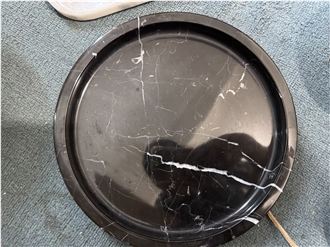
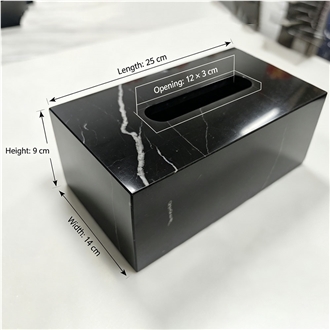
Dark green marble is prized for sculpture because its unusually high serpentine content makes it the hardest marble available, yet it still carves cleanly under tempered-steel chisels and accepts razor-sharp detail without bruising. Freshly quarried blocks display a saturated forest-green base that can verge on black in deeper beds, while milky-white and pale-green serpentine veins thread through the mass like frozen lightning, creating a natural “forest pattern” that evokes dense foliage even before the carver lifts a tool. Under raking light these internal veins catch and refract rays, giving the surface a subtle, waxy glow that appears to illuminate the stone from within, a phenomenon caused by calcite’s low refractive index.
Stock Information
Packing Details
Fumigated solid wood packages
Shipping Details
Shipping Port:Xiamen, China
Approximate shipping time after payment is 1 month to 2 months.
Payment Details
T/T bank transfer;
Letter of Credit;
Maintenance Informations
When the sculptor begins relief work, the first texture encountered is the sawn skin left by the diamond-blade block saw—an even, matte tooth that feels like 220-grit sandpaper and serves as the datum plane from which all depths are measured. Roughing-out with a point chisel introduces a stippled fracture texture: tiny conchoidal shells that sparkle where quartz grains cleave, contrasting against the darker serpentine matrix. Progressively finer tools—flat chisels, bull-nose rifflers, and finally carbide micro-rasps—replace these scars with controlled facets; in dark green marble each facet behaves like a miniature prism, splitting incident light into soft emerald halos that accentuate the emerging contours.
Other
High-relief foliage requires deeper undercutting, and here the dark green marble reveals its hidden brittleness: veins sometimes act as micro-faults, encouraging hairline cracks that must be chased and stabilized with CA adhesive before carving continues. Once stabilized, the carver exploits these same veins as natural highlights—by leaving them proud by half a millimeter they catch light along their crests, so that every vein becomes a living rib of leaf or tendon of muscle.
To model skin or drapery, the sculptor turns to abrasives. A 400-grit silicon-carbide slip removes tool marks and leaves a satin surface whose micro-scratches follow the direction of the form, guiding the viewer’s eye along limbs or folds. Polishing with tin-oxide on felt brings the marble to a vitreous gloss; at this stage the dark green base turns almost black, while the veins flare to a luminous jade, creating an optical oscillation between figure and ground that gives the relief uncanny depth without additional carving.
Selective texturing heightens narrative. Backgrounds are often sand-blasted through a rubber stencil, pitting the surface with 0.2–0.5 mm craters that swallow light and push the treated plane into shadow; foreground figures retain the mirror polish, so they leap forward by sheer reflectivity. Incised lettering or fine linear details are executed with diamond-tipped burrs rotating at 30,000 rpm; the resulting grooves are U-shaped in cross-section, their walls as smooth as blown glass, and when filled with gold leaf they read like molten threads against the cool green stone.
The finished dark-green marble relief invites touch. The polished ridges are cool and slick, while the sand-blasted recesses remain slightly warmer and rougher, encouraging fingertips to explore the carved story through temperature and texture as much as sight. Under museum spotlights the veins shimmer like distant auroras frozen in stone, a reminder that every texture—whether chisel mark, abrasive satin, or natural vein—was coaxed from a single block of metamorphic ocean floor now reimagined as art.


 China
 16YR