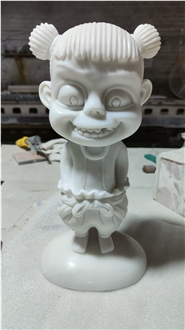
These prices are retail. Please contact us for wholesale and bulk order prices and discounts.
PACKAGE WEIGHT(KG) PRICE
TOTO 5 USD 199
BIG TOTO 8 USD 299
MEDIUM 10 USD 399
LARGE 15 USD 499
Related products from other suppliersRelated Stone Handicrafts, Gifts products from other supplier
Soapstone rocks are sourced in Kenya's Nyanza province in a place known as Tabaka. Soapstone products have become synonymnous with Kisii people because it is the only place in Kenya where these soapstone rock mines covering over 25 kilometers squared are found. The soapstone comes in a variety of colours: dark reddish, pinkish, gold brown, grey creamish and even black.
The mining of these rocks is carried out using crude tools, which is labour intensive. Due to the market potential and the easy availability of this natural resource commodity, many Kisii people have come to rely on it as one of their major sources of income. The raw quarry stones are excavated by hand and carried to workshops that are up to 10 kilometers away. The stones are first worked with a panga (machete), to break the stones into a manageable size and get the rough shape. A kisu (smaller knife) is then used for more detailed work. Finally increasingly fine-grained sands are used to polish and finish the piece.
How seriously the local people place on soapstone as their income generating activity can be seen by the manner in which the carvers have perfected their skills. The greatest consumers of the product are tourists who often buy and take the decorative soapstone items as gifts for friends or for home decoration.
Since the soapstone is sourced from the local community farms, the mining and carving of the soapstone is often treated as a family income generating activity and as such it is carried out at a family level. It is at the family that marketing of the finished products to interested buyers is carried out and at times through group work or through the co-operative.
The trade of soapstone comprises both the men and the women, young and old. Traditionally, it is men who do the digging of the stone from the mines or the quarry as well as carving the products in the required designs. The women's part involves polishing and washing the finished products as well as applying the shining wax cream popularly known as cobra wax. Though soapstone is a leading export product, it is a very fragile commodity, which requires extra care, particularly when it comes to handling and exporting or transfering the finished product from the rural areas to Nairobi and even to the port of destination be it in Kenya's Mombasa port or overseas.


 China
 1YR

 Kenya Nyanza


 Pakistan


 Indonesia