Roman Empire Quartzite

About
Item Details
- Material Type:
- Quartzite
- Origin:
Brazil - Primary Color(s):
- Brown
- Recommended Usage:
- Kitchen and bathroom countertops, wash basins, building stone, ornamental stone, stairs, interior, exterior wall and floor applications, mosaic, waterjet pattern, wall panels, table tops, balustrades, columns, wall and pool copings, pool pavers, fireplaces
- Additional Names:
- Roma Imperial Granite, Roman Imperiale Quartzite, in China stone market:罗马帝国(Luómǎ dìguó), Roman Empire, Roman Empire Quartzite
- Finished Surface:
- Polished,Bush Hammered,Tumbled,Brushed,Honed,Split,Machine Cut,Natural Surface,Sandblasted,Combed,Leathered,Water Jet,Filled,Chiseled,Pickling
Testing
- Water Absorption:
- 0.2% to 0.4%
- Density:
- 2690 - 2750 kg/m³
- Flexural Strength:
- 15 - 20 MPa
- Compressive Strength:
- 160 - 220 MPa
- Stone texture:
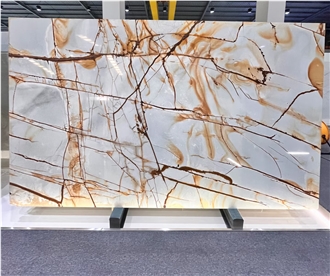
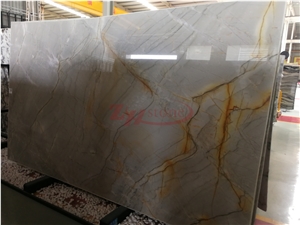
- features a creamy, beige, or earth-gray background with unique veining exotic quartzite; vein colors range from coffee-colored to golden-brown, creating a rich, sophisticated pattern
Description
Roman Empire Quartzite is an exclusive natural stone quarried in Brazil. It is known for its elegant appearance, characterized by a creamy, beige, or earth-gray background adorned with distinctive veining that ranges in color from coffee to golden-brown. This sophisticated pattern makes it suitable for both contemporary and classic architectural designs.
Physical and Mechanical Properties:
- Water Absorption:Typically low, at approximately 0.2% to 0.4%.
- Density:Ranges from 2,690 to 2,750 kg/m³.
- Flexural Strength:Usually falls between 15 to 20 MPa.
- Compressive Strength:Usually ranges from 160 to 220 MPa.
- Hardness:Measures around 6 to 7 on the Mohs scale, indicating good resistance to scratching.
- Porosity:Generally low, which helps in resisting stains and moisture.
- Slip Resistance:Can be improved with textured finishes, typically scoring above 0.6 wet/dry in slip resistance tests.
Chemical and Mineral Composition (Typical, % by Weight):
- Silicon Dioxide (SiO₂): 90-95%
- Aluminum Oxide (Al₂O₃): 1-3%
- Iron Oxide (Fe₂O₃): 1-3%
- Potassium Oxide (K₂O): 0.5-2%
- Calcium Oxide (CaO): 0.5-1.5%
- Magnesium Oxide (MgO): 0.5-1%
- Sodium Oxide (Na₂O): Trace amounts
Detailed Usage:
- Interior Flooring: Ideal for high-traffic areas due to its durability.
- Countertops: Popular choice for kitchen and bathroom surfaces.
- Wall Cladding: Used in both interior and exterior applications for an elegant look.
- Staircase and Steps: Suitable for staircases due to its non-slip surface potential with appropriate finishes.
- Fireplaces: Adds a cozy, luxurious appearance.
Maintenance:
- Regular Cleaning: Use a pH-neutral cleaner; avoid acidic or abrasive cleaners.
- Sealing: Periodic sealing recommended to enhance stain resistance, typically every 1-2 years.
- Immediate Spill Management: Clean spills promptly, especially acidic substances like wine or lemon juice.
Cutting Sizes:
- Slabs: Common sizes range from 200 cm x 100 cm to 300 cm x 180 cm.
- Tiles: Standard tile sizes include 30 cm x 30 cm, 60 cm x 30 cm, and 60 cm x 60 cm, but custom sizes are available upon request.
Available Surface Finish Options:
- Polished: Provides a glossy look that highlights the stone's natural colors.
- Honed: Offers a matte finish with a less reflective surface.
- Leathered: Features a textured surface that enhances slip resistance and tactile appeal.
- Brushed: Provides a slightly textured finish for a rustic appearance.
Roman Empire Quartzite combines beauty and strength, making it an excellent choice for both residential and commercial projects. Proper maintenance ensures its elegance and durability over time.
FAQ
The coefficient of friction of Leathered Brazils Roman Empire Quartzite tiles can vary depending on the specific finish applied to the surface. Generally, leathered quartzite tiles have a slightly higher coefficient of friction compared to polished tiles due to their textured finish. However, the exact value can only be determined by conducting friction tests on the specific tile sample in question.
Can Brazil's Roman Empire Quartzite be used in a bathroom?
Yes, Brazils Roman Empire Quartzite can be used in a bathroom. Quartzite is a natural stone that is extremely durable, heat-resistant, and water-resistant, making it a popular choice for bathroom applications. It can be used for countertops, vanity tops, shower surrounds, flooring, and walls in a bathroom. However, it is important to properly seal the quartzite to ensure it is protected from moisture and stains in a high-moisture environment like a bathroom.
Can Brazil's Roman Empire Quartzite be used exterior applications in hot climates?
Yes, Brazils Roman Empire Quartzite can be used for exterior applications in hot climates. Quartzite is a natural stone with excellent heat resistance, making it suitable for outdoor use in hot climates. It has the ability to withstand high temperatures without significant damage such as warping or fading. Additionally, quartzite is a durable and hard stone that is resistant to weathering and can withstand extreme temperature fluctuations, which makes it ideal for outdoor applications.
Can Brazil's Roman Empire Quartzite be used in landscaping?
Yes, Brazils Roman Empire Quartzite can certainly be used in landscaping. Quartzite is a versatile and durable natural stone that is often used in various landscaping applications. It is highly popular for outdoor projects such as patios, walkways, retaining walls, and other hardscape features.
Brazils Roman Empire Quartzite is known for its elegant and luxurious appearance, with its beautiful combination of gray, white, and beige tones. Its natural veining and patterns add a touch of sophistication to any landscape design.
Moreover, quartzite is resistant to weathering, wear, and fading, making it suitable for outdoor use. It is also known for its high resistance to heat, which makes it ideal for areas with intense sunlight or hot climates.
Whether youre looking to create a stunning patio, a stylish walkway, or a visually appealing retaining wall, Brazils Roman Empire Quartzite can be a great choice to enhance the aesthetics and durability of your landscaping project.
What grade is Brazil's Roman Empire Quartzite?
There is no specific grade for Brazils Roman Empire Quartzite. Quartzite is a natural stone that is graded based on various factors such as color, texture, pattern, and overall quality. Each stone supplier or retailer may have their own grading system. It is best to contact a stone supplier or retailer in Brazil for specific information about the grade of Roman Empire Quartzite.
Are there color variations of Brazil's Roman Empire Quartzite?
Yes, there are color variations of Brazils Roman Empire Quartzite. Roman Empire Quartzite can come in a range of colors including white, cream, beige, grey, and even some brown or gold variations. The exact color variations can differ depending on the specific quarry and the part of Brazil where the quartzite is sourced from.
How thick is Brazil's Roman Empire Quartzite slabs?
The thickness of Brazils Roman Empire Quartzite slabs can vary depending on customer preferences and specific project requirements. Generally, quartzite slabs are available in thicknesses ranging from 2 cm (0.78 inches) to 3 cm (1.18 inches). However, it is recommended to contact quartzite suppliers or manufacturers in Brazil for more precise thickness options and availability.
Can Brazil's Roman Empire Quartzite be used outdoors?
Yes, Brazils Roman Empire Quartzite can be used outdoors as it is resistant to weathering, erosion, and heat. The natural stones density and hardness make it an ideal choice for use in outdoor spaces like patios, pool decks, and walkways. However, it is recommended to seal the surface of the stone to protect it from moisture and stains.
Is Brazil's Roman Empire Quartzite an expensive stone?
I do not have access to the current market prices for the Brazilian Roman Empire Quartzite. However, the pricing of natural stones can vary depending on factors such as location, availability, demand, and quality. It is best to check with a local stone supplier or contractor for an accurate assessment of the price.


2YR