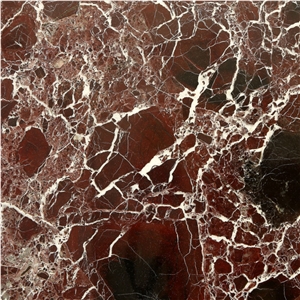
Rosso Maremma Marble is a distinctive and exquisite natural stone quarried in the Caldana, Gavorrano area of the Provincia di Grosseto in the Toscana region of Italy. It is renowned for its unique fleshy reddish-pink base color, interspersed with soft red and milky-white patterns. This striking aesthetic makes it a popular choice for both decorative and functional applications.
Physical and Mechanical Properties
- Water Absorption: Low, indicating a dense structure suitable for various applications.
- Density: Approximately 2700 kg/m³, which signifies a solid and substantial material.
- Flexural Strength: Generally high, ensuring that the marble can withstand bending forces without cracking.
- Compressive Strength: Exhibits excellent compressive strength, making it ideal for structural applications.
- Hardness: Typically rates high on the Mohs hardness scale, ensuring scratch resistance.
- Porosity: Low porosity contributes to its durability and resistance to staining.
- Slip Resistance: When polished, it has moderate slip resistance; honed or textured finishes increase slip resistance for safety in wet areas.
Chemical and Mineral Compositions (Approx. % by Weight)
- Calcium Carbonate (CaCO₃): The primary component, accounting for 85-95% of the composition, providing the characteristic properties of marble.
- Magnesium Carbonate (MgCO₃): Present in small quantities, typically around 1-5%.
- Silica (SiO₂): Varies, commonly found in small amounts contributing to the stone's structural integrity.
- Iron Oxides (Fe₂O₃): Present in trace amounts, contributing to the reddish-pink coloration.
- Others: Minor quantities of various minerals that can influence color and texture.
Uses
- Interior Flooring: Often used in high-end residential and commercial spaces for its luxurious appearance.
- Wall Cladding: Suitable for both interior and exterior applications, providing elegance and natural beauty.
- Countertops: Popular for kitchens and bathrooms due to its aesthetic appeal and durability.
- Decorative Elements: Columns, fireplaces, and furniture inlays.
Maintenance
- Regular Cleaning: Use a pH-neutral cleaner to avoid etching or dulling the surface.
- Sealing: Periodically seal to enhance resistance to stains and spills.
- Avoid Abrasives: Use soft cloths or brushes to maintain the polished finish and avoid scratches.
Cutting Sizes (cm)
Rosso Maremma Marble is available in various standard sizes, including but not limited to:
- Slabs: Typically 2cm or 3cm thickness available for larger countertops or wall applications.
- Tiles: Commonly cut in sizes such as 30x30 cm, 30x60 cm, and 60x60 cm for flooring and wall use.
Available Common Surface Finish Options
- Polished: Offers a glossy finish that highlights the stone's vibrant colors and patterns.
- Honed: Provides a smooth, matte finish, making it suitable for areas where slip resistance is a concern.
- Brushed: A textured finish that enhances the stone's natural look while adding slip resistance.
- Leathered: Offers a soft sheen with a textured surface, enhancing both appearance and grip.
Rosso Maremma Marble combines aesthetic appeal with durability, making it a versatile choice for many architectural and design applications. Whether used for its structural capabilities or decorative elegance, it requires proper maintenance to preserve its natural beauty and functionality.


 Italy

 Qatar


 Iran

 Spain

 France


 Myanmar


 China
