Rosso Noce Marble Overview
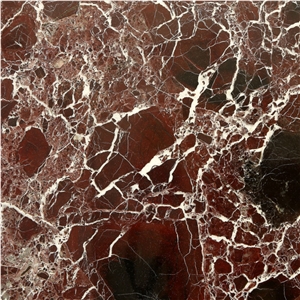
Rosso Noce Marble is a unique and luxurious natural stone quarried in Tolmezzo, Provincia di Udine, Friuli Venezia Giulia, Italy. This striking marble is renowned for its rich, terracotta wine-red base adorned with intricate light orange-red and golden yellow-beige wavy vein patterns, making it a popular choice for elegant interior applications.
Physical and Mechanical Properties
- Water Absorption: 0.22% by weight
- Density: 2700 kg/m³
- Flexural Strength: 16.1 MPa
- Compressive Strength: 148.0 - 157.5 MPa
- Hardness: Generally categorized in the moderate range for marble, allowing for easy workability.
- Porosity: Low porosity, enhancing its resistance to staining with proper sealing.
- Slip Resistance: Dependent on the surface finish; a honed finish provides better slip resistance compared to polished surfaces.
Chemical and Mineral Compositions
- Calcium Carbonate (CaCO3): The predominant mineral, typical of marble.
- Iron Oxides: Responsible for the warm red and orange hues.
- Quartz: Minor amounts can be present.
- Silicates and Aluminosilicates: Trace impurities that may affect coloration.
Usage
Rosso Noce Marble is favored for its aesthetic appeal and is commonly used in:
- Flooring: Adds a luxurious touch to hallways, foyers, and living areas.
- Wall Cladding: Enhances the sophistication of both internal and external walls.
- Countertops: Provides elegance in kitchens and bathrooms.
- Decorative Pieces: Such as columns, fireplaces, and sculptures.
Maintenance
- Sealing: Regular sealing is recommended to protect against staining and moisture infiltration.
- Cleaning: Use a soft cloth or mop with mild detergent; avoid acidic or abrasive cleaners.
- Polishing: To maintain its sheen, occasional professional polishing may be required.
Cutting Sizes and Surface Finishes
- Standard Cuts: Available in tiles of common sizes like 30x30 cm, 40x40 cm, and slabs of varying thickness.
- Custom Sizes: Available upon request for bespoke projects.
- Surface Finishes:
- Polished: Enhances the stone's natural color and veins with a glossy surface.
- Honed: Provides a matte finish that is softer and more subtle.
- Brushed: Offers a textured surface with an antique feel.
- Sandblasted: Creates a rough, non-slip surface ideal for outdoor applications.
This versatile marble's combination of aesthetic warmth, mechanical strength, and varied finish options makes it a sought-after material for architects and designers aiming for an exquisite, timeless look.
Petrographic definition: nodular limestone
Massa Unit Volume: 2700 Kg/m3
Water absorption: 0.22%
Compression breaking load Simple: 158 MPa
Compression breaking load after freezing: 148 MPa
Tangent elastic modulus: 71,300 MPa
Indirect Tensile Strength by bending: 16,1 MPa
Coefficient corresponding Abrasion (referred to Granite St. Fedelino): 0.75
Impact resistance: minimum fall height: 40 cm
Coefficient of linear thermal expansion: 1.6 x 10⁻⁵ 0C-1


 Italy (Tolmezzo, Provincia di Udine, Friuli Venezia Giulia)


 Iran

 Spain

 France


 Myanmar


 China


