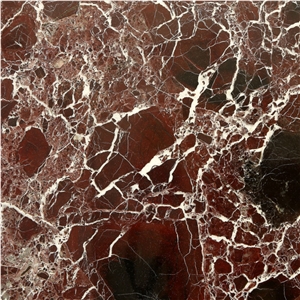
Rouge Rue Marble

About
Item Details
- Material Type:
- Marble
- Origin:
France - Primary Color(s):
- Red
- Recommended Usage:
- Kitchen and bathroom countertops, wash basins, building stone, ornamental stone, stairs, interior, exterior wall and floor applications, mosaic, waterjet pattern, wall panels, table tops, balustrades, columns, wall and pool copings, pool pavers, sculptures, fireplaces, window sills
- Additional Names:
- Marmol Rouge Rue, Rouge Rue Marbre, Rouge Rue, Rouge Rue Marble
- Finished Surface:
- Polished,Bush Hammered,Tumbled,Brushed,Honed,Split,Machine Cut,Natural Surface,Sandblasted,Acid Washing,Combed,Leathered,Water Jet,Filled,Chiseled,Pickling
Testing
- Water Absorption:
- 0.15 - 0.34%
- Density:
- 2700 - 2730 kg/m³
- Flexural Strength:
- 12 - 15 MPa
- Compressive Strength:
- 130 - 150 MPa
- Stone texture:
- fine to medium crystalline grain a reddish‑brown natural marble with a warm, rich red color that remains fairly consistent across the surface, offering a deep red tone that brings warmth and visual depth to architectural and design projects; the coloration is typically solid rather than heavily patterned, making it appealing for interior and exterior wall and floor applications, monuments, countertops, fountains, stairs, and decorative accents.
Description
Rouge Rue Marble is a distinguished natural stone quarried in France, known for its fine to medium crystalline grain and its appealing reddish-brown hue. With a warm, rich red color that remains relatively consistent across its surface, this marble offers a deep tone that adds warmth and visual depth to various architectural and design projects. Its solid coloration, rather than a heavily patterned appearance, makes it particularly attractive for diverse applications, both indoors and outdoors.
Physical and Mechanical Properties:
- Water Absorption: Approximately 0.15% to 0.34%. This low water absorption rate indicates resistance to moisture, which is beneficial for both interior and exterior applications.
- Density: Typically around 2,700 to 2,730 kg/m³. This standard density ensures durability.
- Flexural Strength: Approximately 12 to 15 MPa. This indicates moderate resistance to bending, suitable for load-bearing applications.
- Compressive Strength: Ranges from 130 to 150 MPa. This strength is indicative of the marble's ability to withstand significant pressure and load, making it suitable for flooring and structural elements.
- Hardness: Ranges from 3 to 4 on the Mohs scale. This moderate hardness offers a balance between durability and ease of cutting and shaping.
- Porosity: Low porosity, typically less than 0.5%. This makes the marble less prone to staining and easier to maintain.
- Slip Resistance: When polished, the slip resistance is moderate; when honed or textured, it is higher, making it suitable for various applications, including staircases and flooring.
Chemical and Mineral Composition (% by Weight):
- Calcium Carbonate (CaCO3): Typically around 93% to 98%, which is characteristic of marbles and contributes to its durability and luster.
- Iron Oxides (Fe2O3): Trace amounts, contributing to the reddish-brown coloration.
- Silica (SiO2): Small percentages typically less than 2%, can influence its hardness and durability slightly.
- Other impurities: Include minor traces of aluminum and magnesium, contributing to the stone's unique characteristics.
Usage:
- Interior Applications: Walls, flooring, countertops, stairs, decorative accents, and fireplaces.
- Exterior Applications: Cladding, paving, monuments, fountains.
- Commercial Spaces: Hotels, museums, office buildings for aesthetic appeal and durability.
Maintenance:
- Sealing: Regular sealing recommended to protect against stains and enhance the surface finish.
- Cleaning: Use pH-neutral cleaners to avoid damaging the marble's surface.
- Polishing: Periodic polishing may be necessary to maintain the marble's shine, particularly for high-traffic areas.
Available Common Surface Finish Options:
- Polished: Provides a glossy, reflective finish that enhances the marble's color and veining.
- Honed: Offers a smooth, matte finish without reflection, ideal for flooring.
- Brushed: Gives a textured surface that adds a tactile element to the stone.
- Antiqued: Creates an aged appearance for rustic or traditional design aesthetics.
- Bush-hammered: Provides a rugged, rough texture, suitable for outdoor use where slip resistance is essential.
Rouge Rue Marble is an exceptional and versatile choice for various architectural and design applications, appreciated for both its aesthetic qualities and its robust physical properties.
FAQ
Yes, Frances Rouge Rue Marble can be used in landscaping. Its vibrant red color and distinctive veining make it an attractive option for various landscaping applications. It can be used for pathways, patios, garden borders, accent pieces, or even as decorative mulch. However, it is important to note that marble is a natural stone and may require special care and maintenance to preserve its appearance over time.
Can France's Rouge Rue Marble be used exterior applications in very rainy climates?
Yes, Frances Rouge Rue Marble can be used for exterior applications in very rainy climates. However, it is important to note that marble is a porous material and may require additional maintenance and sealing to protect against water damage. Regular cleaning and proper sealing will help to ensure the longevity and durability of the marble in wet and rainy conditions. Additionally, it is recommended to consult with a professional or a marble supplier for specific recommendations and guidance for your particular climate and application.
Can France's Rouge Rue Marble be used in a bathroom?
Yes, Frances Rouge Rue Marble can be used in a bathroom. It is a durable and versatile material that is commonly used in bathrooms for various applications such as countertops, flooring, shower walls, and backsplashes. Its unique reddish-brown color with white veins adds elegance and a luxurious touch to bathroom designs. However, it is important to properly seal and maintain the marble to prevent staining and damage from water and moisture.
What is the average compressive strength of France's Rouge Rue Marble?
There doesnt seem to be a specific value available for the average compressive strength of Frances Rouge Rue Marble. The compressive strength of marble can vary depending on its specific characteristics and quality. It is recommended to consult with a marble supplier or geologist in France for more accurate information about this specific marble variety.
What grade is France's Rouge Rue Marble?
There is no official grading system for Frances Rouge Rue Marble. The quality and grade of the marble may vary based on factors such as color, veining, and overall appearance, but it is not assigned a specific grade like in some other materials.
What is the coefficient of friction of Chiseled France's Rouge Rue Marble tiles?
It is not possible to provide an accurate answer without specific information about the characteristics and properties of Chiseled Frances Rouge Rue Marble tiles. The coefficient of friction can vary depending on various factors such as the finish, surface texture, and any additional treatments applied to the tiles. It is recommended to consult the manufacturer or supplier of the tiles for the specific coefficient of friction information.
Can France's Rouge Rue Marble be used outdoors?
I do not have the complete information about the Rouge Rue Marbles specifications. However, as a natural stone, marble can be used outdoors if it is sealed and maintained properly. Some factors such as the climate, weather, and exposure to sunlight can affect the durability and appearance of the stone. It is recommended to consult with a professional before installing marble outdoors to ensure that it is suitable for the specific project and location.
Are there color variations of France's Rouge Rue Marble?
I do not have access to up-to-date information on the topic. However, generally, marble can have natural variations in the coloring and veining due to the minerals and impurities present in the rock during formation. So, there may be some slight variations in the shade of Rouge Rue marble that occur naturally and may differ slightly depending on the quarry location and depth of the stone extracted.
Is France's Rouge Rue Marble an expensive stone?
I do not have pricing information about specific products in real-time. However, generally speaking, marble is considered a luxury material, and different types of marbles can vary in price depending on their quality, availability, and demand. Factors such as the size and thickness of the marble slab, and the complexity of the fabrication process also contribute to the final price. Therefore, it is likely that Rouge Rue Marble, a type of marble quarried in France, would also be relatively expensive.