Post Your Needs

Royal Danby Marble

White - Marble

United States

About

Item Details

Material Type:
Marble
Origin:
United States (Rutland County, Green Mountains, Vermont)
Primary Color(s):
White
Recommended Usage:
countertops, monuments, mosaic, exterior - interior wall and floor applications, stairs, fountains, pool and wall parapets
Additional Names:
Royal Danby, VT Royal Danby Marble, Vermont Royal Danby Marble, Royal Danby Marble
Finished Surface:
Polished,Bush Hammered,Tumbled,Brushed,Honed,Split,Machine Cut,Natural Surface,Sandblasted,Acid Washing,Combed,Leathered,Water Jet,Filled,Chiseled,Pickling

Testing

Water Absorption:
0.06 By weight %
Density:
2710 Kg/m3
Flexural Strength:
8.45 MPa
Compressive Strength:
65.33 MPa
Stone texture:
a clean, white background, which is crisscrossed with consistent, medium-intensity gray veins white marble quarried in the largest underground marble quarry in the world

Description

Royal Danby Marble is a highly regarded natural stone known for its clean white background accentuated by medium-intensity gray veining. It is quarried from the largest underground marble quarry in the world, located in Rutland County, Green Mountains, Vermont, USA.

Physical and Mechanical Properties:

  • Water Absorption: 0.06% by weight
  • Density: 2710 kg/m³
  • Flexural Strength: 8.45 MPa
  • Compressive Strength: 65.33 MPa
  • Hardness: Moderately high (specific measurements can vary, typically assessed using the Mohs scale where it might range around 3-4)
  • Porosity: Low - indicates a dense material, less susceptible to staining
  • Slip Resistance: Generally low when polished but can be enhanced with textured finishes for better traction.

Chemical and Mineral Composition:

  • Calcium Carbonate (CaCO3): Primary component, typically >90%
  • Silica (SiO2): <3%
  • Other minerals (such as albite, clay, or trace oxides): Varies, usually <5%

Usage Possibilities:

Interior Design:

  • Flooring
  • Wall cladding
  • Countertops
  • Backsplashes
  • Fireplace surrounds

Exterior Applications:

  • Facades
  • Landscaping elements (e.g., benches, planters)

Specialty Projects:

  • Artistic installations
  • Sculptures

Maintenance:

  • Regularly clean with pH-neutral cleaners to avoid etching.
  • Seal periodically to protect against staining and scratching.
  • Wipe up spills quickly, especially acidic substances like lemon juice or vinegar.
  • Use coasters, mats, and trivets to protect the surface in kitchen settings.

Common Cutting Sizes (cm):

  • Tiles: 30x30, 30x60, 60x60, custom sizes available
  • Slabs: Typically vary in thickness around 2cm or 3cm; widths and lengths depend on specific quarry blocks

Available Surface Finish Options:

  • Polished: High gloss finish enhances color and veining
  • Honed: Smooth, matte finish suitable for a more understated look
  • Brushed/Antiqued: Textured finish for a more rustic appearance
  • Sandblasted: Offers a rough, textured surface with increased slip resistance

Royal Danby Marble is a versatile choice due to its aesthetic appeal and robust physical properties, making it a preferred option for both traditional and modern design applications. Proper maintenance ensures its longevity and maintains its pristine appearance.

Gray, muted veins (softer compared to Statuary Marble). Consistent medium veining pattern.

Technical Specifications (ASTM Standards):

  • ASTM C97 – Absorption by Weight: 0.06%
  • ASTM C97 – Density: 169.2 lbs/ft³
  • ASTM C97 – Specific Gravity: 2.711 g/cm³
  • ASTM C170 – Compressive Strength: 9,475 psi
  • ASTM C241 – Abrasion Resistance (Hardness): 12.1
  • ASTM C880 – Flexural Strength: 1,226 psi
  • ASTM C99 – Modulus of Rupture: 1,077 psi

FAQ

Can United States's Royal Danby Marble be used exterior applications in cold climates?

Royal Danby Marble is a type of white marble that is quarried in Vermont, United States. While marble is a naturally durable and sturdy material, it may not be the best choice for exterior applications in cold climates. Marble is known to be more susceptible to damage from freeze-thaw cycles, where water seeps into the stone and freezes, causing it to expand and potentially crack or break. In cold climates where temperatures regularly drop below freezing, this can pose a risk to the durability of the marble. However, some factors can mitigate the risks and make it suitable for exterior use in cold climates: 1. Quality of the Marble: High-quality Royal Danby Marble may have more resistance to freeze-thaw cycles due to its composition and lack of fissures or weaknesses in the stone. 2. Proper Installation: Correct installation techniques, such as ensuring proper drainage and utilizing appropriate expansion joints, can help minimize the risk of damage from freeze-thaw cycles. 3. Maintenance: Regular maintenance and sealing can help protect the marble from water penetration and potential damage. It is recommended to consult with a professional stone supplier or installer who can evaluate the specific conditions, quality of the marble, and provide guidance on its suitability for exterior applications in cold climates.

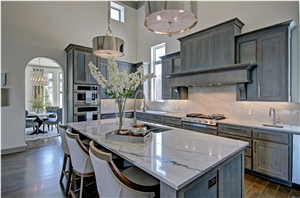
Can United States's Royal Danby Marble be used in landscaping?

Yes, United States Royal Danby Marble can be used in landscaping. This type of marble can be utilized in various landscaping applications such as walkways, patios, retaining walls, garden steps, decorative borders, and more. Its elegant appearance and durability make it a popular choice for both residential and commercial landscaping projects. However, it is important to note that marble is a natural stone and may require regular maintenance to keep its aesthetic appeal and withstand outdoor elements.

Can United States's Royal Danby Marble be used in a office?

Yes, United States Royal Danby Marble can be used in an office. Marble is a versatile material that is commonly used in various commercial spaces, including offices, due to its elegance, durability, and easy maintenance. It can be used for office countertops, desks, conference tables, flooring, and other architectural and decorative elements. Royal Danby Marble, specifically, is known for its white and grey tones, which exude a sleek and sophisticated aesthetic that can enhance the professional atmosphere of an office.

How thick is United States's Royal Danby Marble slabs?

The thickness of Royal Danby Marble slabs from the United States typically ranges from 2 centimeters (0.79 inches) to 3 centimeters (1.18 inches). However, it is important to note that the thickness can vary depending on the specific requirements of the project or the supplier.

Are there color variations of United States's Royal Danby Marble?

Yes, there are color variations of the Royal Danby Marble found in the United States. The marble typically appears in shades of white or off-white, with gray veining. However, the intensity and distribution of the gray veining can vary, resulting in different patterns and appearances. Some slabs may have more pronounced veining, while others may showcase a more subtle and uniform pattern. It is also possible for slight variations in color tone to occur, ranging from a brighter white to a slightly warmer hue. These natural variations in color and veining add to the uniqueness and beauty of each piece of Royal Danby Marble.

What grade is United States's Royal Danby Marble?

The United States Royal Danby Marble is typically graded as a high-quality, premium grade marble. It is known for its white color and fine texture, making it suitable for a variety of applications such as countertops, flooring, and cladding.

Is United States's Royal Danby Marble an expensive stone?

I do not have access to current market prices. However, Royal Danby Marble is known for its high quality and durability, which often leads to a higher price point compared to other marble types. Additionally, factors such as rarity, availability, and location of the quarry can also impact the cost of the stone.

Products & Prices

View More

Hot White Marble

New Marble

Post Your Request

The request includes:
  1. surface finished, size
  2. quantity required