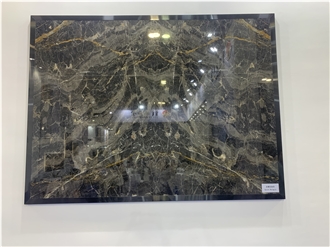
Saint Pelagia Marble is an exotic and visually striking natural stone quarried in Cambodia. It features a dramatic interplay of dark gray to black backgrounds, highlighted with white and golden yellow streaks and light hues in flowing, cloud-like patterns. This elegant marble is favored in both classic and modern architectural applications due to its richness of color, natural veining, and premium finish.
Geological Classification:
- Type: Metamorphic carbonate rock
- Group: Marble (recrystallized limestone or dolomite)
- Origin: Quarried in Cambodia
- Formation Process: Regional metamorphism of limestone with mineral impurities causing colored veining
Aesthetic Characteristics:
- Color : Base color ranges from dark gray to black
- Veining : Prominent white streaks, golden yellow veins, and light gray swirls
- Pattern : Dynamic and elegant with fluid, natural waves and streaks
- Texture : Fine- to medium-grained crystalline texture with occasional mineral speckling
- Appearance : Luxurious, dramatic contrast suitable for statement interiors
Physical and Mechanical Properties:
- Density : 2.65 – 2.75 g/cm³
- Water Absorption : 0.2% – 0.4% (by weight)
- Porosity : 0.3% – 0.8%
- Compressive Strength : 90 – 130 MPa
- Flexural Strength : 10 – 18 MPa
- Abrasion Resistance : Medium (suitable for floors with moderate use)
- Mohs Hardness : 3 – 4
- Slip Resistance : Varies by finish (flamed/bush-hammered increase slip resistance)
Chemical and Mineral Composition (% by weight):
- Calcium Carbonate (CaCO3) : 85% – 95%
- Silica (SiO2) : 2% – 6%
- Iron Oxide (Fe2O3) : 0.5% – 2.5% (gives golden streaks)
- Magnesium Carbonate (MgCO3) : 1% – 2%
- Alumina (Al2O3) : 0.3% – 1.5%
- Other Minerals : Trace (pyrite, graphite, mica)
Cutting Sizes (in cm):
Tiles : 30x30, 60x30, 60x60, 80x40, 90x60
Slabs : 250–300 cm x 140–200 cm (2 cm / 3 cm thick)
Custom Cuts : Vanity tops, stairs, thresholds, etc.
Surface Finish Options:
- Polished : High gloss, mirror-like finish; rich contrast
- Honed : Smooth, matte surface; softens contrast
- Leathered : Textured surface with soft sheen
- Brushed : Aged appearance with slight texture
- Bush-Hammered : Coarse finish for anti-slip use
Recommended Applications:
- Interior flooring and wall cladding
- Luxury bathrooms and wet areas
- Kitchen countertops and islands
- Reception counters and bar tops
- Feature walls and fireplaces
- Staircases and landings
- Monuments and sculptures
- Boutique hotel and high-end commercial spaces
Maintenance & Care:
- Requires periodic sealing to prevent staining (especially in kitchens or wet areas)
- Clean using pH-neutral stone cleaners; avoid acids
- Polish and re-hone can restore gloss over time
- Not ideal for heavy commercial flooring due to moderate abrasion resistance
- For outdoor use, non-slip finishes like flamed or bush-hammered are recommended
Key Selling Points:
- Unique dark palette with natural gold and white contrasts
- Sophisticated aesthetic for modern and classic interiors
- Durable and dense, with low porosity for a polished marble
- Sourced from Cambodia, adding geographic uniqueness to design projects


 Cambodia
 China

 Italy

 Turkey


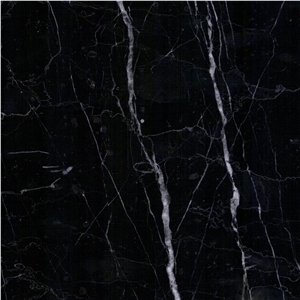
 Spain

 India


 Greece


 Iran