Post Your Needs

Silver Martini Marble

Marble

Turkey

About

Item Details

Material Type:
Marble
Origin:
Turkey (Isparta)
Recommended Usage:
kitchen and bathroom countertop, wash basins, building stone, ornamental stone, stairs, interior, exterior wall and floor applications, mosaic, water-jet pattern, wall panels, table tops, balustrades, columns, wall and pool copings, pool pavers, sculptures, fireplaces, window sills
Additional Names:
Silver Shadow Marble, Tundra Grey Marble, Castle Grey Marble, New Castle Grey Marble, Ballot Grey Marble, Castle Gray Marble, Joyace Old Mine Castle Grey Marble, in China stone market:古堡灰(Gǔ Bǎo Huī), 老矿古堡灰(Lǎo Kuàng Gǔ Bǎo Huī), Silver Martini Marble
Finished Surface:
Polished,Bush Hammered,Tumbled,Brushed,Honed,Split,Machine Cut,Natural Surface,Sandblasted,Combed,Leathered,Water Jet,Chiseled,Pickling

Testing

Water Absorption:
0.80% by weight
Density:
2610 kg/m³
Flexural Strength:
13.94 MPa
Compressive Strength:
67.05 - 68.03 MPa

Description

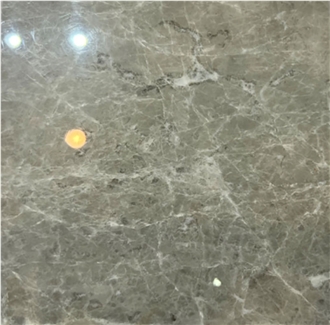
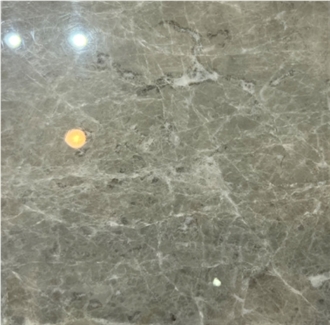
Silver Martini Marble is a sophisticated neutral-toned natural marble quarried in Isparta, Turkey. It is characterized by a soft silver-grey base interspersed with subtle beige and light taupe hues. Unlike highly dramatic marbles dominated by broad sweeping veins, Silver Martini Marble has a fine-grained, fossil-like texture with delicate, irregular and fractured micro-veining distributed throughout the surface. This creates a natural, understated and slightly weathered appearance.

General Characteristics

  • Base Color: Silver-grey
  • Secondary Colors: Beige, light taupe and soft grey
  • Veining: Fine, irregular and fractured micro-veining
  • Pattern: Fossil-like, granular and subtly mottled
  • Texture: Fine-grained crystalline texture
  • Appearance: Understated, elegant and naturally weathered
  • Variation: Low to medium
  • Recommended Finishes: Polished, honed, brushed, tumbled, leathered and sandblasted

Texture

Silver Martini Marble has a fine-grained crystalline texture that gives the surface a relatively uniform appearance while retaining natural geological variation. Rather than displaying large, dramatic veins, the stone contains numerous small fractured markings and micro-veins distributed across the surface. These subtle structures can give the material a fossil-like or aged appearance, particularly when finished in honed, brushed or tumbled surfaces.

Pattern & Veining

The stone's pattern is understated and relatively homogeneous compared with strongly veined decorative marbles. Silver-grey provides the dominant background. Beige and light taupe tones create gentle tonal variation. Fine micro-veins form irregular fractured patterns. Small fossil-like structures may be visible in certain areas. The pattern can range from relatively uniform to moderately mottled depending on the block. This restrained movement makes Silver Martini Marble suitable for large areas where a sophisticated natural appearance is desired without strong visual veining.

Physical & Mechanical Test Results

  • Water Absorption: 0.80% by weight
  • Density: 2,610 kg/m³
  • Flexural Strength: 13.94 MPa
  • Compressive Strength: 67.05–68.03 MPa
  • Mohs Hardness: Approx. 3–4

The stated physical and mechanical values should be understood as representative test results for the material. Natural stone properties can vary according to quarry bench, block selection and laboratory methodology.

Mineral Composition

Silver Martini Marble is predominantly a carbonate stone, with calcite as the principal mineral and smaller quantities of dolomite and accessory minerals. Indicative mineral composition: Approx. % by Weight

  • Calcite: 85–95%
  • Dolomite: 2–8%
  • Quartz: 0.5–3%
  • Mica / Clay Minerals: 0.5–3%
  • Feldspar and other accessory minerals: <2%

The exact mineral composition may vary naturally between quarry benches and individual blocks.

Chemical Composition

Indicative chemical composition: Chemical Component, Approx. % by Weight

  • CaCO₃: 85–95%
  • MgCO₃: 2–7%
  • SiO₂: 0.5–3%
  • Al₂O₃: 0.1–1.5%
  • Fe₂O₃: 0.1–1.0%
  • Other oxides: <1%

These values are indicative of carbonate marble and may vary according to the geological characteristics of the specific Isparta quarry.

Recommended Applications

Silver Martini Marble is suitable for both residential and commercial interior applications, including:

Interior flooring, Wall cladding, Feature walls, Hotel and hospitality interiors, Residential interiors, Bathroom walls, Bathroom vanity tops, Kitchen countertops, Kitchen islands, Fireplace surrounds, Reception desks, Staircases and steps, Dining and coffee tables, Furniture, Decorative panels, Mosaics, Waterjet designs, Commercial flooring,

Its relatively subtle pattern makes it particularly suitable for large-format flooring and wall applications, where a consistent and elegant background is preferred. Exterior use should be evaluated according to the climate, water exposure, freeze-thaw conditions and selected finish.

Maintenance

Silver Martini Marble is a carbonate natural stone and should be maintained with marble-compatible products.

  • Apply a suitable penetrating stone sealer after installation.
  • Use a pH-neutral natural-stone cleaner for routine maintenance.
  • Avoid vinegar, lemon juice and other acidic cleaning products.
  • Clean spills promptly, particularly wine, coffee, oils and acidic substances.
  • Avoid abrasive powders and harsh scouring pads.
  • Use cutting boards and trivets on kitchen countertops.
  • Periodically inspect the sealer and reseal when necessary.
  • Avoid strong chemical cleaners and prolonged chemical exposure.
  • For polished floors, use non-abrasive cleaning equipment to preserve the surface finish.

FAQ

If lemonade spills on a Silver Martini Marble kitchen countertop, will it damage the surface?

Silver Martini Marble, like other marble surfaces, is a natural stone that is susceptible to etching and staining when it comes into contact with acidic substances. Lemonade, which contains citric acid, can potentially damage the surface of marble by causing etching, a process where the acid reacts with the calcium carbonate in the marble. To minimize potential damage, you should promptly clean up any lemonade spills by blotting the area with a soft microfiber cloth or paper towel, rather than wiping, to avoid spreading the liquid. Then, clean the area with a pH-neutral cleaner designed for use on natural stone surfaces. Its also a good idea to regularly seal your marble countertop to provide an additional layer of protection against spills and stains.

Can I use bleach when cleaning a Silver Martini Marble kitchen countertop?

Its generally not recommended to use bleach on Silver Martini Marble or any natural stone countertops. Marble is a porous material and can be sensitive to acidic and harsh cleaning agents, potentially causing damage or discoloration. Bleach can etch the surface of the marble and ruin its finish. Instead, it is best to clean your marble countertop with a pH-neutral cleaner specifically designed for stone surfaces, or simply use a mixture of warm water and a mild dish soap. Always use a soft cloth or sponge to avoid scratching the surface, and make sure to rinse the area thoroughly and dry it afterward to prevent water spots or residue.

Can scratches on Silver Martini Marble countertop be fixed?

Yes, scratches on a Silver Martini Marble countertop can be fixed, but the approach will depend on the severity of the scratches. Here are some general steps to help you address scratches on marble: 1. **Light Scratches:** - **Polishing Powder:** For light scratches, use a marble polishing powder. This can be applied with a soft cloth and buffed into the surface in a circular motion. Follow the manufacturers instructions for best results. - **Baking Soda Paste:** Make a paste of baking soda and water and gently rub it onto the scratch with a soft cloth. Rinse with water and dry with a soft towel. 2. **Moderate Scratches:** - **Sanding:** Use fine-grit sandpaper (such as 1000-grit) to gently sand the scratch in a circular pattern. Be sure to keep the area wet while sanding to avoid causing further damage. After sanding, use a polishing compound to restore the shine. - **Polishing Compound:** After sanding, apply a polishing compound suitable for marble surfaces to help restore the gloss. 3. **Deep Scratches:** - **Professional Repair:** Deep scratches typically require the expertise of a professional. They might use specialized equipment like a diamond sanding pad and polishing machine to restore the surface to its original condition. 4. **Preventative Measures:** - To prevent future scratches, use cutting boards and avoid placing sharp objects directly on the marble. Regularly sealing the marble can also help protect it from damage. Its important to test any method on a small, inconspicuous area first to ensure that it doesnt damage or discolor the marble. If youre unsure or uncomfortable doing the repairs yourself, consider consulting a professional specializing in marble restoration.

Is Silver Martini Marble durable enough for use as outdoor terrace pavers?

Silver Martini Marble can be used for outdoor applications, but there are several factors to consider regarding its durability and suitability as terrace pavers. Marble is a natural stone and has certain characteristics that may affect its performance outside: 1. **Porosity**: Marble is a porous material, which means it can absorb water. In climates with freeze-thaw cycles, this absorption can lead to cracking or spalling over time. 2. **Weathering**: Exposure to the elements, especially in areas with significant weather variations, can lead to wear and fading. Marble is more susceptible to weathering and acid rain compared to more durable stones like granite. 3. **Surface Finish**: The finish of the marble can affect its performance outdoors. A highly polished finish might become slippery when wet, while a honed or textured finish might be more suitable. 4. **Maintenance**: Marble requires more maintenance to keep its aesthetic appeal. It might need sealing and regular cleaning to prevent staining and damage. 5. **Slip Resistance**: Ensure the marble is finished in a way that provides adequate slip resistance to avoid accidents, especially when wet. For outdoor terrace pavers, its crucial to consider the local climate and maintenance willingness. In some cases, alternative materials like granite, engineered stone, or specialized outdoor porcelain tiles might offer better durability and lower maintenance. If you do choose Silver Martini Marble, make sure to consult with a professional stone supplier or installer to ensure its finished and treated appropriately for outdoor use.

Does Silver Martini Marble floor tiles scratch easily?

Silver Martini Marble, like most natural marble, is relatively prone to scratching compared to harder materials like granite or quartz. Marble is a softer stone, which means it can be scratched by abrasive materials or heavy objects. To minimize the risk of scratching, its essential to take appropriate care, such as: 1. **Sealing:** Regularly sealing marble tiles can provide a protective layer that resists staining and minor scratches. 2. **Cleaning:** Use soft, non-abrasive cleaning materials and avoid harsh chemicals. 3. **Floor Protection:** Use felt pads under furniture legs, and be cautious with heavy or sharp objects. 4. **Regular Maintenance:** Sweep or vacuum regularly to remove dirt and grit that could scratch the surface. Despite these precautions, some wear and tear over time is typical with marble floors, so its important to maintain them regularly to keep them looking their best.

How can I remove rust stains from a Silver Martini Marble kitchen countertop?

Removing rust stains from a Silver Martini Marble countertop requires a gentle approach to avoid damaging the stone. Here’s a step-by-step guide: 1. **Materials Needed:** - Mild dish soap - Baking soda - Hydrogen peroxide (3% solution) - Soft cloths or sponge - Plastic wrap - Soft-bristled brush or toothbrush - Plastic or wooden spatula 2. **Initial Cleaning:** - Begin by cleaning the surface with mild dish soap and warm water. Use a soft cloth or sponge to gently scrub the stained area. - Rinse thoroughly with clean water and dry with a soft towel. 3. **Create a Poultice:** - Mix baking soda with hydrogen peroxide to create a paste with the consistency of peanut butter. This acts as a non-abrasive poultice that helps pull the rust out of the marble. 4. **Apply the Poultice:** - Apply the baking soda and hydrogen peroxide paste directly onto the rust stain. Cover the stained area completely. - Lay a piece of plastic wrap over the poultice and secure the edges with tape to keep it in place. This helps keep the poultice moist, allowing it time to work on the stain. 5. **Allow to Set:** - Let the poultice sit on the stain for 24 to 48 hours. This duration allows the paste to draw out the stain from the marble. 6. **Remove the Poultice:** - Gently remove the plastic wrap and use a spatula or scraper to lift the dried poultice without scratching the surface. - Rinse the area thoroughly with water and wipe with a clean, soft cloth. 7. **Additional Cleaning:** - If any rust residue remains, you can gently scrub the area with a soft-bristled brush or toothbrush using a bit more of the baking soda paste. Be gentle to avoid scratching the marble. 8. **Final Rinse and Dry:** - Rinse the countertop thoroughly with clean water to remove any residue from the cleaning process. - Dry with a soft, clean cloth. **Important Tips:** - Avoid acidic or abrasive cleaners, as they can damage marble. - Always test the poultice on a small, inconspicuous area first to ensure it does not cause etching or discoloration. - Regularly seal your marble countertop to help prevent stains and protect the surface.

Products & Prices

Hot Marble

New Marble

Post Your Request

The request includes:
  1. surface finished, size
  2. quantity required