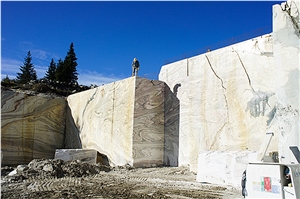
Soelker Weiss Marble

About
Item Details
- Material Type:
- Marble
- Origin:
Austria (Sölk,Liezen District,Styria) - Primary Color(s):
- Pink
- Recommended Usage:
- Kitchen and bathroom countertops, wash basins, building stone, ornamental stone, stairs, interior, exterior wall and floor applications, mosaic, waterjet pattern, wall panels, table tops, balustrades, columns, wall and pool copings, pool pavers, sculptures, fireplaces, window sills
- Additional Names:
- Soelker Pink Marble, Soelker Rose Marble, Sölker Weiss Marmor, Soelker Weiss
- Finished Surface:
- Polished,Bush Hammered,Tumbled,Brushed,Honed,Split,Machine Cut,Natural Surface,Sandblasted,Combed,Leathered,Water Jet,Filled,Chiseled,Pickling
Testing
- Water Absorption:
- 0.09 %
- Density:
- 2800 kg/m3
- Flexural Strength:
- 15 MPa
- Compressive Strength:
- 138 MPa
- Stone texture:
- a natural marble characterized by a light white to pale grey background, sometimes displaying soft beige, grey, or faint golden veins and cloudy crystalline patches that give the stone a subtle and elegant natural movement. The appearance is generally refined and uniform, with gentle tonal variation that creates a warm and classic architectural aesthetic suitable for both traditional and contemporary designs. In terms of texture and structure, Soelker Weiss Marble has a dense, compact crystalline structure with fine- to medium-grained texture, typical of Alpine metamorphic marbles, forming a strong and massive stone body. the stone continues to be extracted and processed commercially, although production is typically regional and specialized rather than large-scale global quarry output.
Description
Appearance:
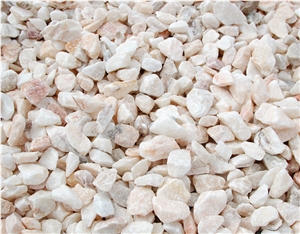
- Color: Light white to pale grey background with soft beige, grey, or faint golden veins.
- Features: Cloudy crystalline patches providing subtle natural movement.
- Texture: Fine- to medium-grained; uniform with gentle tonal variations.
- Aesthetic: Warm, classic architectural aesthetic suitable for both traditional and contemporary designs.
Physical and Mechanical Properties
- Water Absorption: 0.09%
- Density: 2800 kg/m³
- Flexural Strength: 15 MPa
- Compressive Strength: 138 MPa
- Hardness: Typically ranked around 3-4 on Mohs scale, indicative of typical marble hardness.
- Porosity: Low, contributing to its durability and suitability for high-traffic areas.
- Slip Resistance: Generally requires treatment or finishes for enhanced slip resistance when used in flooring to meet safety standards.
Chemical and Mineral Composition (approx. % by weight)
- Calcium Carbonate (CaCO₃): ~94-98%
- Silica (SiO₂): ~0.5-2%
- Iron Oxides (Fe₂O₃): Trace amounts, influencing the faint golden veins.
- Magnesium Oxide (MgO): ~0.2-1%
- Other Minerals: Including trace elements contributing to veins and coloration.
Usage
Interior Applications:
-
Flooring: Elegant and uniform for classic and modern spaces.
-
Wall Cladding: Suitable for creating luxurious feature walls.
-
Countertops: Offers a refined and clean look for kitchens and bathrooms.
-
Staircases: Adds an upscale aesthetic while maintaining functionality.
Exterior Applications: Generally limited due to typical marble weathering; installation in exterior features like sheltered alcoves may be feasible with adequate finishing and treatment.
Maintenance
- Regular Cleaning: Use pH-neutral cleaners to avoid damage.
- Sealing: Requires periodic sealing to protect against staining due to low porosity.
- Avoid Acidic Substances: Prevent contact with acids that can etch the surface.
Surface Finishes
- Polished: Offers a glossy and reflective surface; popular for countertops and wall cladding.
- Honed: Smooth and matte finish; preferred for flooring to reduce slipperiness.
- Brushed: Provides a textured surface enhancing slip resistance and tactility.
- Sandblasted: Roughened texture for specialized aesthetic or functional requirements.
Production and Quarrying
- Location: Exclusively quarried in Sölk, Liezen District, Styria, Austria.
- Scale: Production is regional and specialized; not as extensive as large-scale global operations but continues to meet niche market demands.
Soelker Weiss Marble is a premium material choice for those looking for an understated elegance with a high degree of versatility suitable for multiple applications, retaining its prestige through meticulous craftsmanship and site-specific quarrying practices.
FAQ
Yes, Austrias Soelker Weiss Marble can be used in a bathroom. Marble is a popular choice for bathroom surfaces such as floors, walls, countertops, and shower surrounds. It is known for its elegance and natural beauty, and it can add a touch of luxury to any bathroom design. However, it is important to note that marble is a porous and softer stone, so it may be more prone to staining, etching, and scratching compared to other materials like granite or quartz. Therefore, proper sealing and regular maintenance are recommended to keep the marble looking its best in a bathroom environment.
What is the average density of Austria's Soelker Weiss Marble?
The average density of Soelker Weiss Marble from Austria is approximately 2.72 grams per cubic centimeter (g/cm3).
Can Austria's Soelker Weiss Marble be used in landscaping?
Yes, Austrias Soelker Weiss Marble can definitely be used in landscaping. Marble is a durable and versatile natural stone that can enhance the beauty of any outdoor space. It can be used for various landscaping features such as pathways, driveways, patios, garden borders, retaining walls, and decorative accents. The white color and unique veining of Soelker Weiss Marble can add elegance and sophistication to the landscaping design. Additionally, marble is highly resistant to weathering, making it a suitable choice for outdoor applications.
Can Austria's Soelker Weiss Marble be used exterior applications in very rainy climates?
Austrias Soelker Weiss Marble can generally be used for exterior applications in rainy climates. Marble is a natural stone and is known for its durability and resistance to environmental elements. However, it is important to note that proper installation and maintenance are crucial for any exterior application.
In rainy climates, moisture and water can sometimes lead to issues such as staining, surface damage, or erosion over time if not properly managed. To ensure the longevity of the marble in such climates, it is recommended to use a high-quality sealer on the surface to protect it from moisture penetration. Regular sealing and proper drainage systems should be implemented to prevent water from accumulating on the surface.
Additionally, selecting a specific grade of Soelker Weiss Marble that is suitable for exterior use can further enhance its durability and resistance to weather conditions. It is advisable to consult with a professional stone supplier or installer who can provide specific recommendations based on the local climate and conditions.
Overall, with proper installation, maintenance, and the use of suitable sealers, Austrias Soelker Weiss Marble can be used in exterior applications in rainy climates.
What is the coefficient of friction of Pickled Austria's Soelker Weiss Marble tiles?
I apologize, but I couldnt find specific information about the coefficient of friction of Pickled Austrias Soelker Weiss Marble tiles. Its recommended to contact the manufacturer or supplier of the tiles for accurate information regarding their coefficient of friction.
Can Austria's Soelker Weiss Marble be used outdoors?
Yes, Austrias Soelker Weiss marble can be used outdoors. It is a durable and weather-resistant material, making it suitable for various outdoor applications such as patios, pool surrounds, walkways, and even facades. However, it is important to properly seal and maintain the marble to ensure longevity and prevent staining or damage from exposure to natural elements.
How thick is Austria's Soelker Weiss Marble slabs?
The thickness of Austrias Soelker Weiss marble slabs can vary depending on the specific supplier or manufacturer. However, standard thicknesses for marble slabs are typically around 2 centimeters (0.79 inches) or 3 centimeters (1.18 inches). It is always recommended to check with the supplier or manufacturer for exact measurements.
What grade is Austria's Soelker Weiss Marble?
There is no specific grade assigned to Austrias Soelker Weiss Marble in terms of education. Grade levels in education typically refer to students progress through a specific academic system, such as primary school, middle school, or high school. Soelker Weiss Marble is a type of marble sourced from Austria and it does not have a direct correlation to an educational grade level.
Are there color variations of Austria's Soelker Weiss Marble?
Yes, there are variations of Austrias Soelker Weiss Marble. The marble can exhibit shades of white, grey, and beige, with some stones displaying veining patterns in different intensities and colors such as light brown or gold. The specific variations of the marble can depend on factors such as the quarry location and extraction depth.
Is Austria's Soelker Weiss Marble an expensive stone?
I dont have the latest pricing information on Soelker Weiss Marble. However, in general, marbles are considered a luxury and expensive stone due to their rarity and beauty. The price of the Soelker Weiss Marble may vary depending on various factors such as availability, location, market demand, and slab size. Its best to contact a stone supplier or a local marble expert for current pricing information.