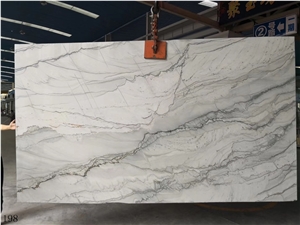
The choice between white marble and quartz for a kitchen greatly depends on personal preferences and needs. Here are some factors to consider when making a decision:
1. Appearance: White marble is known for its elegant and timeless beauty. It has distinct veining patterns that create a unique and luxurious look. Quartz, on the other hand, offers a wide range of colors and designs, including white options that can imitate the look of marble. It provides a more consistent and uniform appearance without natural veining.
2. Durability: Quartz is generally considered more durable than marble. It is a man-made stone composed of natural quartz crystals and resin. Quartz is highly resistant to stains, scratches, and heat. In contrast, marble is a softer natural stone that is more prone to chipping, staining, and etching from acidic substances.
3. Maintenance: Marble requires more maintenance compared to quartz. It is porous and can absorb liquids and stains, so it needs to be sealed periodically to protect it. Mild, non-abrasive cleaners should be used to avoid damaging the surface. Quartz, being non-porous, is easier to maintain as it does not require sealing and can be cleaned with regular household cleaners.
4. Cost: The cost of white marble is generally higher than quartz due to its natural rarity and the cost of extraction and fabrication. Quartz is often more budget-friendly. However, prices can vary based on factors such as brand, quality, and design.
Considering these factors, quartz may be considered better for kitchen countertops due to its durability, lower maintenance requirements, and wider range of white options. However, if the unique beauty of natural marble is a top priority and a homeowner is willing to invest time and effort in its maintenance, white marble can create a stunning and classic kitchen aesthetic.


 Italy (Provincia di Massa Carrara, Toscana)


 Greece


 Namibia

 China


 Turkey


 15YR