Post Your Needs

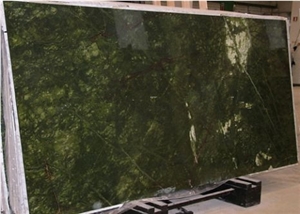
Verde Giada Marble

Green - Marble

Italy

About

Item Details

Material Type:
Marble
Origin:
Italy (Avise, Provincia di Aosta, Valle d'Aosta)
Primary Color(s):
Green
Recommended Usage:
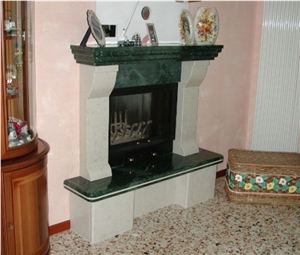
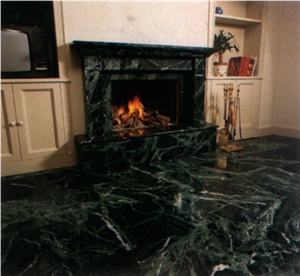
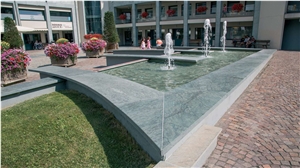
Kitchen and bathroom countertops, wash basins, building stone, ornamental stone, stairs, interior, exterior wall and floor applications, mosaic, waterjet pattern, wall panels, table tops, balustrades, columns, wall and pool copings, pool pavers, sculptures, fireplaces
Additional Names:
Verde Ghiada Marble, Verde Giarda Marble, Verde Jade Marble, Verde Tipo Giada Marble, Green Jade Marble, Serpentino Verde Giada Marble, Marmi Verde Giada, Verde Giada
Finished Surface:
Polished,Bush Hammered,Tumbled,Brushed,Honed,Split,Machine Cut,Natural Surface,Sandblasted,Acid Washing,Combed,Leathered,Water Jet,Filled,Chiseled,Pickling

Testing

Water Absorption:
0.14 %
Density:
2730 kg/m3
Compressive Strength:
85.7 MPa

Description

Verde Giada Marble is a prestigious and refined natural stone quarried in Torre di Santa Maria, Val Malenco, Provincia di Sondrio, in the Lombardy region of Italy, with additional extraction also noted near Avise, Valle d’Aosta. This marble is celebrated for its distinctive light grey-green coloration, enhanced by delicate iridescent nuances from the presence of antigorite, a serpentine-group mineral that gives the stone a shimmering, multi-tonal appearance under various lighting conditions.

Aesthetic Description

  • Color: Light grey-green, occasionally shifting toward soft jade tones.
  • Iridescence: Subtle and localized, especially in antigorite-rich areas, creating a captivating sheen.
  • Pattern: Marbling effect with darker anmd light veining, attributed primarily to magnetite. This marbling enhances depth and visual complexity while maintaining an overall uniform aesthetic.
  • Grain: Fine-grained, with a planar orientation, contributing to a smooth, continuous appearance and high polish potential.

Petrographic Classification Definition:

Oficalcite A metamorphic rock composed predominantly of calcite and serpentine minerals (notably antigorite), often formed in contact or regional metamorphism zones of ultramafic rocks.

Technical Properties

  • Massa Unit Volume (Density) : 2730 kg/m³ (EN 1936)
  • Water Absorption : 0.14% (EN 13755)
  • Breaking Load – Compression (Simple) : 85.7 MPa (EN 1926)
  • Breaking Load – Compression (after freezing) : 85.6 MPa (EN 12371)
  • Tangent Elastic Modulus : 72,500 MPa
  • Tensile Strength (Indirect Flexural) : 68.4 MPa (EN 12372)
  • Coefficient of Abrasion (vs. Granite of S. Fedelino) : 1.20 (Internal Index)
  • Impact Resistance : Min fall height: 54 cm (EN 14067)
  • Linear Thermal Expansion Coefficient : 3.8 × 10⁻⁵ °C⁻¹ (EN 14581)
  • Knoop Microhardness : 3836 MPa (ASTM E384)
  • Hardness Irregularity Index : 1.44

Chemical & Mineral Composition (% by weight)

(Typical values for Verde Giada based on mineralogy of antigorite-rich marbles)

  • CaCO₃ (Calcium Carbonate) : 78–83%
  • MgO (Magnesium Oxide) : 10–14%
  • SiO₂ (Silica) : 2–4%
  • Fe₂O₃ (Iron Oxide) : 0.5–1.2%
  • Al₂O₃ (Alumina) : 0.3–0.8%
  • Antigorite (Serpentine mineral) : 8–12%
  • Trace minerals (Magnetite, Chlorite, Pyroxenes) : < 1%

Texture & Surface Feel

Smooth, compact, and silky to the touch.

Polishes to a high gloss due to low porosity and fine grain.

Ideal for light reflection in high-end interiors.

Cutting Sizes

Tiles (cm | inch):

  • 30 × 30 | 12" × 12"
  • 60 × 30 | 24" × 12"
  • 60 × 60 | 24" × 24"
  • Custom sizes available for stair treads, risers, or feature walls.

Slabs:

  • Thicknesses: 2 cm, 3 cm, or custom
  • Slab dimensions: Typically 250–300 cm × 120–180 cm

Surface Finish Options

  • Polished – High gloss, ideal for luxury interiors
  • Honed – Matte, velvety feel for contemporary applications
  • Brushed – Lightly textured, with aged look
  • Sandblasted or bush-hammered – Non-slip, suitable for floors and outdoor use

Recommended Applications

  • Interior flooring and wall cladding
  • Bathroom and spa applications
  • Kitchen countertops (with proper sealing)
  • Staircases, fireplace surrounds
  • Feature walls and luxury commercial spaces

Maintenance & Care

  • Clean with a pH-neutral stone cleaner
  • Avoid acidic or abrasive cleaners to prevent etching
  • Periodic sealing recommended for wet or high-traffic areas
  • Wipe spills quickly to preserve surface integrity

Summary

Verde Giada Marble combines elegance and performance. Its light grey-green tone, enhanced with iridescent antigorite and magnetite marbling, makes it a refined option for both traditional and contemporary architecture. High durability, low porosity, and visual sophistication make it particularly valued in luxury interior design.

FAQ

Which marble colour is best for kitchen?

The choice of marble color for a kitchen ultimately depends on personal preference and the overall style and design of the kitchen. However, some popular marble colors for kitchens include white, gray, beige, and black. White marble, such as Carrara or Calacatta, can provide a clean and timeless look, while gray marble offers a sophisticated and contemporary feel. Beige marble can add warmth and elegance to a kitchen, while black marble can create a dramatic and luxurious atmosphere. It is important to consider factors like the amount of natural light in the kitchen and the color scheme of the surrounding elements to choose the best marble color for your kitchen.

Can Italy's Verde Giada Marble be used in wall coverings?

Yes, Italys Verde Giada Marble can be used in wall coverings. Verde Giada Marble is a popular choice for both interior and exterior applications, including wall cladding and coverings. Its vibrant green color and unique veining patterns can add elegance and beauty to any space. However, it is always recommended to consult with a professional before proceeding with any installation to ensure the suitability of the material for your specific project.

Can Italy's Verde Giada Marble be used exterior applications in cold climates?

Verde Giada Marble, also known as Green Jade Marble, is a type of marble that originates from Italy. While marble is generally not recommended for exterior applications in cold climates, Verde Giada Marble can be used in certain cases with proper precautions. Marble is a natural stone and is susceptible to damage from freezing temperatures, moisture, and extreme weather conditions. In cold climates, freeze-thaw cycles can cause the marble to crack or deteriorate over time. Therefore, it is generally advised to avoid using marble for exterior applications, especially in areas with frequent freezing and thawing. However, if you still wish to use Verde Giada Marble for exterior applications in cold climates, there are a few precautions you can take: 1. Choose a high-quality marble: Ensure that the Verde Giada Marble you select is of high quality and has a low porosity. This minimizes the chances of water absorption and freeze-thaw damage. 2. Seal the marble: Apply a quality stone sealer specifically designed for exterior use. This helps to protect the marble from water penetration and reduces the risk of damage caused by freezing temperatures. 3. Regular Maintenance: Maintain the marble properly by cleaning it regularly and removing any debris or moisture that may accumulate on the surface. Promptly repair any cracks or damages to prevent them from becoming worse. 4. Consider a covered or sheltered installation: If possible, install the Verde Giada Marble in a covered or sheltered area that provides some protection against direct exposure to weather elements. This can help prolong the lifespan of the marble and reduce the risk of damage. While these precautions can help mitigate the risks associated with using Verde Giada Marble in cold climates, it is essential to note that marble is not the most durable stone for exterior applications, particularly in harsh weather conditions. Consider consulting with a professional stone supplier or installer to determine the suitability of Verde Giada Marble for your specific project and climate.

Can Italy's Verde Giada Marble be used in a dining room?

Yes, Italys Verde Giada Marble can be used in a dining room. It is a beautiful green marble with subtle variations and can add a luxurious and elegant touch to the dining room space. It can be used for flooring, countertops, table tops, or even as an accent wall. However, it is important to consider the maintenance and care required for marble as it is a natural stone and may require regular sealing to protect it from stains and scratches.

What is the average density of Italy's Verde Giada Marble?

The average density of Verde Giada Marble can vary depending on the specific quarry and the composition of the stone. However, the average density of Verde Giada Marble is typically around 2.6 to 2.8 grams per cubic centimeter (g/cm3).

How thick is Italy's Verde Giada Marble slabs?

There is no standard thickness specified for Verde Giada Marble slabs. The thickness can vary depending on the specific quarry and the customers requirements. However, marble slabs are typically available in thicknesses ranging from 2 centimeters (0.79 inches) to 3 centimeters (1.18 inches) or more.

What grade is Italy's Verde Giada Marble?

I dont have personal opinions. However, in the context of the construction and design industry, Verde Giada Marble from Italy is considered a high-quality marble with an average grade of A.

Are there color variations of Italy's Verde Giada Marble?

Yes, there are slight color variations in Italys Verde Giada Marble. The marble can range from light to dark shades of green, and may also have grey and white veins running through it. The exact color and veining of the marble can vary depending on the specific quarry and extraction location within Italy.

Can Italy's Verde Giada Marble be used outdoors?

Yes, Verde Giada Marble can be used outdoors as it is a durable and hard-wearing material, but it may require some maintenance over time. It is important to choose the right finish (such as natural finish or honed finish) for outdoor use, and to regularly seal and clean the surface to prevent staining or damage from weathering. Additionally, it is recommended to avoid exposing the marble to harsh environmental factors, such as extreme heat or freezing temperatures, as this can cause damage to the stone.

Products & Prices

View More

Hot Green Marble

New Marble

Post Your Request

The request includes:
  1. surface finished, size
  2. quantity required