Verde Virginia Marble Overview:
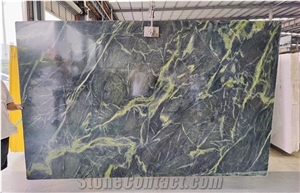
Verde Virginia Marble is a distinctive natural stone known for its intense dark jade green color accompanied by soft and fluid golden veins. Quarried in the Italian regions of Valmalenco and Valle D’Aosta, particularly in the Province of Sondrio near the Swiss border, this marble can sometimes be referred to as gneiss stone but is predominantly recognized as a type of serpentinite marble. The captivating color and veining make it highly desirable for luxurious interior designs.
Physical and Mechanical Properties:
- Water Absorption: Typically low, around 0.10% - 0.30%
- Density: Approximately 2.6 - 2.8 g/cm³
- Flexural Strength: Around 10 - 15 MPa
- Compressive Strength: Ranges from 100 to 180 MPa
- Hardness: Falls between 4 - 5 on the Mohs scale
- Porosity: Generally low, contributing to its durability
- Slip Resistance: Moderate, depends on finish (e.g., polished surfaces may be more slippery than honed)
Chemical and Mineral Compositions (% by weight):
- Silica (SiO2): 35% - 45%
- Magnesium Oxide (MgO): ≈ 30%
- Calcium Oxide (CaO): 5% - 15%
- Alumina (Al2O3): ≈ 5%
- Iron Oxide (Fe2O3): 1% - 5%
- Serpentine Minerals: Predominantly composed of minerals like antigorite and chrysotile
Usage:
- Interior Flooring: Its unique color and patterns make it ideal for luxurious flooring solutions.
- Wall Cladding: Suitable for adding sophisticated aesthetics to walls in residential and commercial spaces.
- Countertops and Vanities: A popular choice for kitchen and bathroom surfaces due to its eye-catching appearance.
- Decorative Items: Often used for creating artistic and decorative pieces and sculptures.
Maintenance:
- Cleaning: Use a mild, pH-balanced stone cleanser to prevent etching or staining.
- Sealing: Periodic sealing is recommended to protect against stains and enhance longevity.
- Avoiding Harsh Chemicals: Avoid acidic or abrasive cleaners which can damage the surface.
Cutting Sizes (cm):
Standard slabs and tiles can be customized, but common sizes include:
- Tiles: 30x30, 30x60, 60x60, 60x120
- Slabs: Typically available in large sheets of 240x120
Available Common Surface Finish Options:
- Polished: High-gloss finish that enhances the depth of color and veining but may be more slippery.
- Honed: A matte finish that provides a more subtle look and better slip resistance.
- Sandblasted: Offers a rough texture for slip resistance, suitable for exterior applications.
- Brushed/Antiqued: Provides a textured appearance, often giving a rustic or aged look.
- Leathered: A soft sheen finish that retains the natural color while providing good slip resistance.
Verde Virginia Marble, with its unique aesthetic properties and durability, makes it an excellent choice for adding elegance and luxury to varied architectural and interior design projects.


 Italy

 China

 India


 Ireland


 Iran


 Myanmar


