Post Your Needs

Aksai Red Granite

Granite

China

About

Item Details

Material Type:
Granite
Origin:
China (Aksay Kazakh Autonomous County (Akesai County), Gansu Province)
Recommended Usage:
Kitchen and bathroom countertops, monuments, building stone, ornamental stone, stairs, interior, exterior wall and floor applications, mosaic, waterjet pattern, wall panels, table tops, window sills, balustrades, columns, wall and pool copings, pool pavers, sculptures, fireplaces, pavers, cobbles, curbstone
Additional Names:
Akesai Red Granite, Akesai Hong Granite, Aksai Maple Red Granite, Aksay Red Granite, in China stone market:阿克塞红(Ākèsài Hóng)
Finished Surface:
Polished,Flamed,Bush Hammered,Tumbled,Brushed,Honed,Split,Machine Cut,Natural Surface,Sandblasted,Acid Washing,Combed,Leathered,Water Jet,Filled,Chiseled,Pickling

Testing

Water Absorption:
0.2 – 0.4 % by weight
Density:
2650 – 2720 kg/m³
Flexural Strength:
13 – 18 MPa
Compressive Strength:
150 – 180 MPa

Description

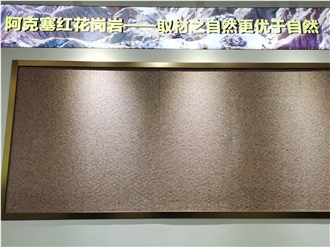
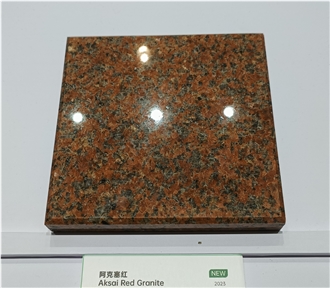
Aksai Red Granite is a deep red natural stone quarried in Aksay Kazakh Autonomous County (Akesai County), Gansu Province, China. It is admired for its rich crimson base interspersed with black, gray, and brown speckles, which together resemble the warm, fiery tones of a maple leaf in autumn. Its durability and striking aesthetic make it a popular choice for both interior and exterior applications.

Texture & Pattern

  • Base Color: Deep red
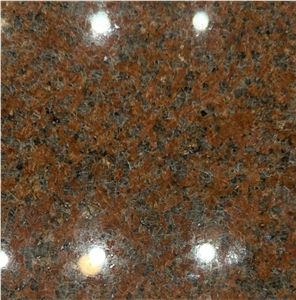
  • Speckles: Black, gray, and brown crystalline grains
  • Pattern: Dense granular structure with uniform distribution, medium-to-coarse grain texture
  • Visual Effect: Bold, vibrant, and natural — conveys strength and elegance

Physical & Mechanical Properties

(typical values for Chinese red granites)

  • Apparent Density (EN 1936): ~2,650 – 2,720 kg/m³
  • Water Absorption (EN 13755): 0.2 – 0.4 % by weight
  • Open Porosity (EN 1936): ~0.3 %
  • Compressive Strength (EN 1926): 150 – 180 MPa
  • Flexural Strength (EN 12372): 13 – 18 MPa
  • Abrasion Resistance (EN 14157): High, ~18 – 22 mm (wide wheel abrasion test)
  • Frost Resistance (EN 12371): Excellent – maintains strength after 48 cycles
  • Hardness Mohs Hardness: 6.5 – 7.0 (quartz-rich granite)
  • Scratch Resistance: Very high

Chemical Composition

(% by weight) (approximate typical granite values)

  • SiO₂ (Silica): 65 – 72 %
  • Al₂O₃ (Alumina): 14 – 16 %
  • K₂O + Na₂O (Alkalis): 4 – 6 %
  • Fe₂O₃ + FeO (Iron Oxides): 2 – 4 % (responsible for the red hue)
  • CaO + MgO (Lime & Magnesia): 1 – 2 %
  • TiO₂ + MnO + others: < 1 %

Mineral Composition (% by volume / weight)

  • Quartz: 25 – 30 %
  • Alkali Feldspar (Orthoclase, Microcline): 40 – 45 % (gives the red color)
  • Plagioclase Feldspar: 20 – 25 %
  • Biotite & Hornblende: 5 – 8 %
  • Accessory Minerals (magnetite, zircon, apatite, etc.): < 1 %

Applications & Usage

  • Interior: Flooring, wall cladding, staircases, kitchen countertops, vanity tops, decorative accents
  • Exterior: Facades, monuments, paving, curbstones, outdoor furniture, memorials
  • Specialty: Cemeteries, public buildings, luxury hotel lobbies, decorative columns

Maintenance

  • Routine: Clean with mild soap and warm water; avoid acidic cleaners
  • Sealing: Recommended every 1–2 years for countertops and high-use areas
  • Polished Surfaces: Retain shine well but may require occasional buffing
  • Outdoor Use: Naturally weather-resistant; minimal upkeep

Standard Cutting Sizes (cm)

  • Slabs: 260 × 160 × 2 / 3 cm (standard), larger on request
  • Tiles: 30 × 30 × 2 cm, 60 × 30 × 2 cm, 60 × 60 × 2 cm
  • Custom Cut-to-Size: Available for staircases, countertops, monuments, architectural elements

Surface Finish Options

  • Polished: Enhances deep red color and glossy reflective surface
  • Honed: Smooth matte finish for contemporary look
  • Leathered / Flamed: Textured non-slip surface for exterior and flooring
  • Bush-Hammered: Rugged, slip-resistant finish for outdoor paving
  • Sandblasted: Subtle rough finish with softened color tone
  • Antiqued / Tumbled: Aged appearance for rustic projects

FAQ

Do fruit juices stain the surface of Aksai Red Granite?

Aksai Red Granite, like many natural stones, can be susceptible to staining due to its porous nature. Fruit juices, which are often acidic and pigmented, can potentially stain the surface if not wiped up promptly. The acids in the juice can penetrate the stone and leave a noticeable mark, especially on lighter-colored granites. To prevent staining, its advisable to seal granite surfaces regularly, which provides a protective barrier, and to clean up spills immediately using a pH-neutral cleaner. Regular maintenance and prompt cleaning are key to keeping the granite looking its best.

Can Aksai Red Granite be used for a fireplace mantel?

Yes, Aksai Red Granite can be used for a fireplace mantel. Granite is a popular choice for fireplaces due to its durability, heat resistance, and aesthetic appeal. Aksai Red Granite, with its distinctive red and black patterns, can provide a striking and elegant appearance to a fireplace. Its heat-resistant properties make it suitable for this use, as it can endure the high temperatures associated with fireplaces without sustaining damage. However, ensure that the installation is done correctly by professionals to maintain safety standards and achieve the desired look.

Can 2cm thick Aksai Red Granite be used for commercial kitchen countertop?

Yes, 2 cm thick Aksai Red Granite can be used for a commercial kitchen countertop, but there are several factors to consider to ensure its suitability and longevity: 1. **Durability**: Granite is known for its durability and resistance to heat, which makes it a popular choice for kitchen countertops. However, in a commercial setting where the usage is high, it is crucial to ensure that the granite is well-sealed to prevent stains and damage from acidic substances. 2. **Support**: A 2 cm thick slab is generally thinner than the standard 3 cm often used for countertops. This means it might require additional support to prevent cracking, especially in areas that will bear heavy loads or where there are cut-outs for sinks or appliances. 3. **Sealing and Maintenance**: Granite requires regular sealing to protect against stains and etching, particularly in a high-use environment. Maintenance is key to keeping the countertop in pristine condition. 4. **Aesthetics and Functionality**: Aksai Red Granite has a distinctive appearance, and its suitability might also depend on the design aesthetic of the kitchen. It’s important to ensure that it aligns with the overall design and functional requirements. 5. **Cost and Installation**: Thinner slabs might be less expensive in terms of material costs, but installation might require more framing and substrate support, potentially increasing overall costs. If 2 cm granite is chosen, it would be wise to consult with a professional fabricator or installer to ensure the required support systems are in place and that the countertop will meet the demands of a commercial kitchen environment.

How can I repair the scratched surface of the Aksai Red Granite countertop?

Repairing a scratched Aksai Red Granite countertop involves several steps, depending on the severity of the scratches. Heres a general guideline to help you address this issue: 1. **Clean the Surface**: Start by thoroughly cleaning the countertop with a mild dish soap and warm water to remove any dirt or debris. Dry the surface with a soft cloth to ensure the scratches are clearly visible. 2. **Assess the Scratches**: Determine the depth of the scratches. Light, superficial scratches can often be managed with polishing, while deeper scratches might require more extensive repair. 3. **Supplies Needed**: - Stone cleaner or acetone - Diamond polishing pads (ranging from fine to coarse grit) - Polishing compound specific for granite - Electric polisher or hand-held buffer - Soft microfiber cloth - Stone sealer 4. **Light Scratches**: - Use a polishing compound designed for granite. Apply a small amount to a soft cloth and rub it into the scratches using circular motions. - Buff the area with a microfiber cloth until the scratches diminish. 5. **Medium to Deep Scratches**: - Attach a diamond polishing pad to an electric polisher. Begin with a coarse grit pad (e.g., 100 or 200) for deep scratches. - Lightly sand the scratched area in a consistent pattern. Keep the polisher moving to avoid creating dips or unevenness. - Progress to finer grit pads (up to 3000 grit) to smooth and blend the area with the rest of the countertop. 6. **Final Polishing**: - Once the scratches are gone, use a granite-specific polishing compound to bring back the original shine. - Apply a small amount to a clean, soft cloth and work it into the granite with circular motions. 7. **Seal the Granite**: - After the repair, apply a granite sealer to protect the surface from future damage. Follow the manufacturers instructions for application and curing time. 8. **Maintenance**: - Regularly clean the countertop with stone-safe products. - Place protective mats or pads under heavy pots or appliances to prevent future scratches. Remember to always test any product or method on a small, inconspicuous area to ensure it does not damage your granite. If youre not comfortable doing this yourself, or if the scratches are particularly deep, consider hiring a professional stone restoration service.

Is Aksai Red Granite with a bush hammered surface good for interior flooring?

Aksai Red Granite with a bush hammered surface can be a good choice for interior flooring, but there are some factors to consider: 1. **Aesthetic Appeal**: The rich, red coloration with natural patterns can add a striking appearance to your interior space. The bush hammered finish gives a textured look that might complement certain design themes. 2. **Slip Resistance**: The bush hammered texture increases slip resistance, making it suitable for areas that might get wet, such as kitchens or bathrooms. However, the rough surface may not be ideal for spaces where you want a smooth, polished look. 3. **Durability**: Granite is known for its durability and strength, making it a good option for high-traffic areas. 4. **Maintenance**: The textured surface might trap more dust and debris compared to polished granite, so it may require more frequent cleaning to maintain its appearance. 5. **Comfort**: Consider the texture underfoot. A bush hammered finish is rougher, which might not be as comfortable in barefoot areas compared to a honed or polished finish. Ultimately, the suitability of Aksai Red Granite with a bush hammered surface for interior flooring depends on your specific needs and aesthetic preferences. It might work well in certain areas of your home, while in others, a different finish might be more appropriate.

Is 1.2 cm thick Aksai Red Granite a suitable choice for facade?

When considering the use of 1.2 cm thick Aksai Red Granite for a facade, several factors should be taken into account: 1. **Strength and Durability:** Granite is generally known for its strength and durability, making it a suitable material for both interior and exterior applications. However, a thickness of 1.2 cm is relatively thin for facade use, which could raise concerns about its ability to withstand environmental stresses such as wind loads, impacts, and thermal expansion/contraction. 2. **Wind Load and Structural Support:** Facades are subjected to significant wind loads, and thinner slabs may require additional structural support or backing to ensure safety and stability. Its important to consult with a structural engineer to assess whether this thickness is appropriate for your specific project, including the height of the building and local wind conditions. 3. **Installation Considerations:** Thinner slabs require careful handling and installation technique to prevent breakage. Specialized anchoring systems or adhesives might be needed to securely attach the granite to the facade. 4. **Aesthetic Appearance:** Aksai Red Granite is known for its distinct appearance and can add aesthetic value to a buildings exterior. Ensure that the intended look aligns with your architectural goals. 5. **Cost and Availability:** Thinner slabs generally cost less and are lighter, which can save on material and transportation costs. However, the additional support structures required might offset these savings. 6. **Thermal Performance:** Facade materials can affect a buildings thermal performance. Granite has good thermal mass, but thinner slabs might not provide the same insulating properties as thicker ones. In summary, while Aksai Red Granite can be used for facades, the 1.2 cm thickness is on the slimmer side for exterior applications. It is essential to consult with architects and engineers to evaluate the feasibility, safety, and appropriateness of using such thin granite for your particular project.

Products & Prices

Hot Granite

New Granite

Post Your Request

The request includes:
  1. surface finished, size
  2. quantity required