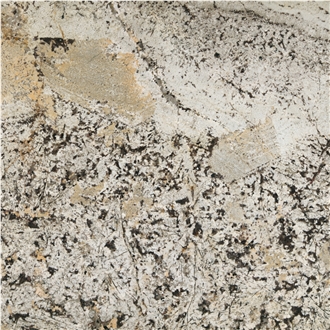
Amarelo Dakar Granite is a Brazilian natural stone with a warm beige to light yellow background, often enriched with soft golden, cream, and light brown mineral grains that create a uniform yet gently speckled appearance. The overall color tone is consistent and elegant, making it suitable for large surface applications where a calm, natural look is desired. In texture and structure, it is a medium- to coarse-grained granite composed mainly of quartz, feldspar, and mica, giving it strong durability and a compact crystalline structure. The stone typically shows an even distribution of minerals with slight natural variations, resulting in a balanced, consistent pattern that can be polished to a smooth, reflective finish or supplied in honed or leathered textures for more subtle architectural use.
Physical and Mechanical Properties of Amarelo Dakar Granite
- Water Absorption: Approximately 0.15% - 0.30%
- Density: Around 2,670 to 2,710 kg/m³
- Flexural Strength: 13 to 14 MPa
- Compressive Strength: 170 to 190 MPa
- Hardness: Mohs scale rating around 6-7
- Porosity: Low, typically between 0.2% to 0.5%
- Slip Resistance: High, especially when honed or textured
Chemical and Mineral Composition
- Quartz: 20% - 30%
- Feldspar: 60% - 70%
- Mica (Biotite and Muscovite): 5% - 10%
- Other Minerals: Trace amounts of iron oxides and accessory minerals
Detailed Usage
Indoor Usage:
- Kitchen countertops
- Bathroom vanity tops
- Floor tiles
- Wall cladding
Outdoor Usage:
- Building facades
- Paving stones
- Landscaping features
Maintenance
- Routine Cleaning: Use pH-neutral cleansers; avoid acidic or abrasive cleaning agents.
- Sealing: Regular sealing recommended every 1-2 years to maintain surface integrity and appearance.
- Avoiding Stains: Promptly clean spills and use trivets or mats under hot dishes.
Cutting Sizes
- Commonly available in slabs of:
- Length: 240 cm – 300 cm
- Width: 120 cm – 190 cm
- Thickness: Typically 2 cm or 3 cm
Available Common Surface Finish Options
- Polished: Offers a high gloss finish, enhancing color and pattern.
- Honed: Provides a smooth, matte finish with less reflection.
- Leathered: Gives a textured feel, retaining natural color while providing slip resistance.
- Brushed: A softer texture than leathered with a subtle shine.
Amarelo Dakar Granite, with its warm beige to light yellow hues and gentle mineral speckles, provides an elegant and consistent aesthetic suitable for both interior and exterior applications. Its durability and mechanical properties make it apt for high-traffic areas and structural applications. Its compelling visual properties, coupled with its practical benefits, ensure it remains a popular choice for a variety of architectural and design projects. Regular maintenance such as sealing and gentle cleaning will aid in preserving its natural beauty over time.


 Brazil


 India


 South Africa



 Australia


 China


 Cambodia