Post Your Needs

Atlantic Blue Quartzite

Quartzite

Brazil

About

Item Details

Material Type:
Quartzite
Origin:
Brazil
Recommended Usage:
Kitchen and bathroom countertops, wash basins, building stone, ornamental stone, stairs, interior, exterior wall and floor applications, mosaic, waterjet pattern, wall panels, table tops, balustrades, columns, wall and pool copings, pool pavers, fireplaces
Additional Names:
Azul Atlantico Quartzite, Atlantic Silver Quartzite, Atlantic Grey Quartzite, Atlantic Gray Quartzite
Finished Surface:
Polished,Bush Hammered,Tumbled,Brushed,Honed,Split,Machine Cut,Natural Surface,Sandblasted,Combed,Leathered,Water Jet,Filled,Chiseled,Pickling

Testing

Water Absorption:
0.3% by weight
Density:
2800 kg/m³
Flexural Strength:
16.4 MPa
Compressive Strength:
157.0 MPa

Description

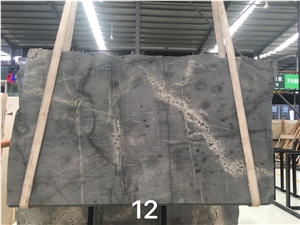
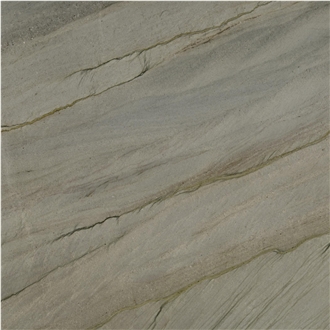
Atlantic Blue Quartzite features a sophisticated silver grey-blue background with a refined cloudy structure. The surface is elegantly crossed by sinuous, lighter-colored veins in shades of white and pale grey, creating a flowing, organic pattern. The final effect is both dramatic and refined, offering high visual impact with excellent light reflection properties.

Technical Specifications

A. Physical & Mechanical Properties:

  • Water Absorption:​ 0.3% (by weight)
  • Density:​ 2,800 kg/m³
  • Flexural Strength:​ 16.4 MPa
  • Compressive Strength:​ 157.0 MPa
  • Hardness (Mohs Scale):​ 7
  • Frost Resistance:​ Excellent for interior use; suitable for controlled exterior applications

B. Chemical & Mineral Composition (% by weight):

  • Silicon Dioxide (SiO₂):​ > 90%
  • Aluminum Oxide (Al₂O₃):​ 2-5%
  • Iron Oxides (Fe₂O₃/FeO):​ 1-3% (contributes to blue-grey tones)
  • Potassium Oxide (K₂O):​ 1-2%
  • Sodium Oxide (Na₂O):​ 0.5-1%
  • Calcium Oxide (CaO):​ 0.5-1%
  • Magnesium Oxide (MgO):​ 0.5-1%
  • Trace Minerals:​ < 1%

C. Visual & Textural Description:

  • Base Color:​ Silver grey-blue, creating a cool, sophisticated foundation
  • Veining Pattern:​ Sinuous, flowing veins in lighter shades of grey, white, and pale blue
  • Texture:​ Fine-grained crystalline structure with a refined cloudy appearance
  • Pattern Intensity:​ Medium to high contrast, offering dramatic visual impact
  • Luminosity:​ Excellent light reflection, enhancing depth and movement

Available Formats & Processing

A. Standard Cutting Sizes:

  • Slabs:​ 240×120 cm, 260×160 cm, 280×180 cm Thickness Options:​ 2 cm, 3 cm, 4 cm (custom thickness available)
  • Tiles:​ 30×30 cm, 30×60 cm, 60×60 cm, 60×120 cm
  • Custom Dimensions:​ Vanity tops, wall panels, countertops, and architectural features

B. Surface Finish Options:

  • Polished:​ High-gloss, mirror-like finish that maximizes color depth and veining contrast
  • Honed:​ Smooth, matte (satin) finish that provides a contemporary, understated look
  • Leathered/Brushed:​ Enhanced natural texture with low sheen, rustic appearance

Applications, Usage & Maintenance

A. Primary Applications:

  • Flooring:​ Interior and exterior flooring for residential and commercial spaces
  • Wall Cladding:​ Feature walls, accent walls, and full-height applications
  • Countertops:​ Kitchen islands, bathroom vanities, bar tops
  • Staircases:​ Treads, risers, and feature stairwells
  • Exterior Cladding:​ Building facades, outdoor kitchens, pool surrounds
  • Decorative Elements:​ Fireplace surrounds, tabletops, and custom furniture

B. Usage & Care Instructions:

  • Sealing:​ Recommended for all applications, especially polished surfaces and high-traffic areas
  • Daily Cleaning:​ Wipe with soft, damp cloth and pH-neutral stone cleaner
  • Protection:​ Use coasters under glasses and trivets under hot dishes
  • Avoid:​ Acidic cleaners (vinegar, citrus), harsh chemicals (bleach, ammonia), abrasive pads
  • Maintenance:​ Periodic re-sealing (annually or as needed based on usage) 

FAQ

Is honed finish Atlantic Blue Quartzite paving slippery when wet?

Honed finish Atlantic Blue Quartzite, like other honed stones, typically has a smoother surface than textured finishes. While the honed finish does reduce some of the natural slickness compared to polished stone, it can still become slippery when wet, especially if used in outdoor paving applications. The degree of slipperiness would depend on several factors, including the level of foot traffic, the angle of the surface, and any additional treatments applied to enhance slip resistance. For outdoor use, it might be helpful to consider sealers or treatments designed to improve traction or opt for additional anti-slip measures if slipperiness is a concern.

Does Atlantic Blue Quartzite paving need sealing?

Atlantic Blue Quartzite paving generally benefits from sealing, although it is not always strictly necessary. Sealing quartzite helps protect it from staining, weathering, and other forms of wear and tear, while also enhancing its natural color and pattern. Since quartzite is a dense and durable natural stone, it is less porous than other stones, which means it doesnt absorb liquids as readily. However, sealing can still be beneficial in maintaining its appearance and extending its lifespan, particularly in areas exposed to heavy use, harsh weather conditions, or potential staining agents like oils and greases. If you choose to seal your quartzite paving, make sure to use a high-quality penetrating sealer appropriate for natural stone, and follow the manufacturers instructions for the best results. Regular maintenance and resealing as needed will help keep your paving looking its best.

Can 5 cm thick Atlantic Blue Quartzite be used for driveway?

Using 5 cm thick Atlantic Blue Quartzite for a driveway is generally feasible, but there are several factors to consider to ensure its suitability and longevity. Quartzite is a durable and hard natural stone that can typically withstand the weight of vehicles, but here are a few considerations: 1. **Thickness and Strength**: At 5 cm, the quartzite should be thick enough to bear substantial weight, but the sub-base is crucial. A well-prepared and compacted base will help distribute weight and prevent the stone from cracking. 2. **Surface Finish**: The finish of the quartzite could impact its functionality as a driveway. A honed or textured finish might provide more grip, while a polished finish might be slick, especially when wet. 3. **Freeze-Thaw Cycles**: If you live in an area with freeze-thaw cycles, consider if the stone is susceptible to cracking under such conditions. Quartzite generally performs well in harsh climates, but proper installation is key. 4. **Maintenance**: Consider any maintenance the quartzite might require, such as sealing to prevent staining or damage from de-icing chemicals. 5. **Cost**: Quartzite can be a more expensive option compared to other driveway materials. Ensure it fits within your budget for not only the material itself but also for quality installation. 6. **Aesthetics**: Ensure the stone suits the aesthetic of your property, as quartzite can provide a beautiful, natural look. Consult with a professional contractor to assess local conditions, proper installation techniques, and specific requirements for using Atlantic Blue Quartzite on your driveway.

How thick should Atlantic Blue Quartzite pool terrace pavers be?

The thickness of Atlantic Blue Quartzite pool terrace pavers can vary based on several factors, including their intended use, the type of substrate, and local building codes. However, a general guideline for outdoor pavers like those used on a pool terrace is as follows: 1. **Residential Use**: For standard residential use, pavers are typically 1.25 to 2 inches (approximately 3 to 5 centimeters) thick. This thickness provides sufficient strength and durability for normal foot traffic around a pool area. 2. **Commercial Use**: If the pool terrace will be subjected to heavier use, such as in a commercial setting, or if the pavers will support heavier loads (like moving furniture or equipment), a thicker paver of 2 to 3 inches (approximately 5 to 7.5 centimeters) might be more appropriate. 3. **Substrate Considerations**: The type of substrate (e.g., concrete, sand, gravel) can also influence the necessary thickness. A stable, well-prepared base may allow for slightly thinner pavers, while areas with less stable bases might require thicker pavers to prevent cracking or shifting. 4. **Local Codes and Standards**: Always check local building codes and industry standards, which can dictate minimum thicknesses for safety and compliance reasons. In conclusion, for most residential pool terrace applications, a thickness of 1.25 to 2 inches should suffice, but it is essential to consider the specific conditions of your project and consult with professionals as needed.

How far apart should 18 inch Atlantic Blue Quartzite garden stepping stones be?

When laying garden stepping stones, a typical guideline is to space them according to the natural stride of an adult, which is usually about 24 to 30 inches apart from the center of one stone to the center of the next. Since you have 18-inch stepping stones, you would start measuring from the center of one stone and place the next stones center approximately 24 to 30 inches away. However, for more precise and comfortable placement, it can be useful to test the spacing by walking naturally and adjusting the placement of the stones to fit your stride. This approach ensures that the stepping stones are comfortable for walking and visually appealing within your garden or landscape design.

Products & Prices

View More

Hot Quartzite

New Quartzite

Post Your Request

The request includes:
  1. surface finished, size
  2. quantity required