Post Your Needs

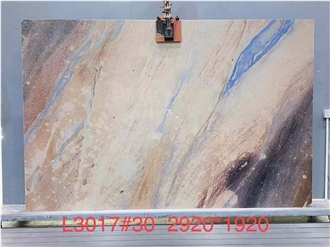
Aurora Rainbow Quartzite

Quartzite

Brazil

About

Item Details

Material Type:
Quartzite
Origin:
Brazil
Recommended Usage:
kitchen and bathroom countertop, wash basins, building stone, ornamental stone, stairs, interior wall and floor applications, mosaic, water-jet pattern, wall panels, table tops, balustrades, columns, fireplaces, luxury furniture
Additional Names:
Azul Arcobaleno Quartzite, Aurora Blue Quartzite, Aurora Rainbow Quartzite
Finished Surface:
Polished,Bush Hammered,Tumbled,Brushed,Honed,Split,Machine Cut,Natural Surface,Sandblasted,Combed,Leathered,Water Jet,Chiseled,Pickling

Testing

Water Absorption:
0.1 – 0.3%
Density:
2650 – 2700 kg/m³
Flexural Strength:
12 – 16 MPa
Compressive Strength:
140 – 160 MPa

Description

Aurora Rainbow Quartzite is an exotic Brazilian quartzite defined by a soft creamy beige to ivory background enriched with striking fluid veining in blue to lavender hues, complemented by subtle brown and pinkish-brown accent streaks. The veining pattern is highly organic yet visually balanced, often appearing symmetrical or harmoniously flowing across the slab due to the natural deposition and possible selection cutting of the blocks. This creates a distinctive “aurora-like” visual effect, where cool and warm tones intertwine in elegant motion, making each slab highly decorative and unique.

Texture & Pattern: Medium to fine crystalline quartzite texture with a compact, interlocking grain structure; surface shows a smooth, glassy crystalline reflection when polished. The pattern is directional and wave-like, with continuous flowing veins and soft cloudy transitions between color zones.

Mineralogical Composition (% by weight):

  • Quartz (SiO₂): 85–95%
  • Feldspar: 2–6%
  • Mica and trace minerals (including iron oxides responsible for color variation): 1–5%

Chemical Composition (% by weight):

  • SiO₂: 85–95%
  • Al₂O₃: 1–4%
  • Fe₂O₃: 0.5–2% (contributing to brown/pink tones)
  • Other oxides (K₂O, Na₂O, CaO traces): <2%

Physical & Technical Properties:

  • Apparent Density: 2.65 – 2.70 g/cm³
  • Water Absorption: 0.1 – 0.3%
  • Compressive Strength: 140 – 160 MPa
  • Flexural Strength: 12 – 16 MPa
  • Mohs Hardness: 7
  • Abrasion Resistance: High

Surface Finish Options: Polished (high gloss, enhances veining contrast), honed (matte, softer appearance), leathered (textured, natural feel), brushed, and occasionally flamed for exterior use.

Applications: Luxury countertops, kitchen islands, bathroom vanities, feature walls, flooring, reception desks, hotel lobbies, staircases, and high-end residential or commercial interiors.

Maintenance: Requires periodic sealing to enhance stain resistance despite low porosity; clean with pH-neutral stone cleaners; avoid strong acids and abrasive chemicals to preserve polish and color integrity.

FAQ

If lemonade spills on a Aurora Rainbow Quartzite kitchen countertop, will it damage the surface?

Aurora Rainbow Quartzite is a natural stone that is generally more durable and resistant to etching and staining compared to some other natural stones like marble. However, it is not completely impervious to damage. Lemonade contains citric acid, which can potentially etch or dull the surface of quartzite if left unattended. To prevent any damage, you should wipe up spills immediately with a soft cloth or paper towel. Following the cleanup, use a mild soap with water to clean the area, then dry it thoroughly. Additionally, sealing your quartzite countertops regularly can help protect against stains and etching. If you are concerned about potential damage, consider consulting with the manufacturer or a stone care professional for specific care instructions for your quartzite countertop.

Can I use bleach when cleaning a Aurora Rainbow Quartzite kitchen countertop?

Its not recommended to use bleach on Aurora Rainbow Quartzite or any other natural stone countertops. Quartzite is a durable material, but harsh chemicals like bleach can potentially harm the stones sealant, cause discoloration, or deteriorate its surface over time. Instead, use a mild dish soap mixed with warm water and a soft cloth or sponge for routine cleaning. Be sure to wipe up any spills quickly to prevent staining, and use trivets or cutting boards to protect the surface from heat and scratches. Always follow the manufacturers or fabricators care instructions for the best results.

If I cut meat directly on my Aurora Rainbow Quartzite kitchen countertop, will it damage the surface?

Cutting meat directly on your Aurora Rainbow Quartzite kitchen countertop is not recommended, as it could potentially damage the surface. Quartzite is a natural stone known for its durability and resistance to heat and scratches; however, its not immune to damage. Using a knife directly on the surface can result in scratches, dull areas, or even chips in the stone. Additionally, meat juices can seep into any microfissures or be absorbed into the stone if its not properly sealed, potentially leading to staining or bacterial growth. To protect your countertop and ensure proper hygiene, its best to use a cutting board. This will prevent damage to the countertop and make cleaning up much easier.

Is 20 mm thick Aurora Rainbow Quartzite durable enough for use as outdoor terrace pavers?

Aurora Rainbow Quartzite is generally known for its durability and resistance to weathering, which can make it a suitable choice for outdoor applications, including terrace pavers. Quartzite is a metamorphic rock formed from sandstone and is known for its strength and density. However, when considering it for use as outdoor terrace pavers, there are several factors to keep in mind: 1. **Thickness**: A thickness of 20 mm (approximately 0.8 inches) could be sufficient for outdoor use, especially if the substrate is well-prepared and provides even support. However, for areas that may experience heavier loads or high foot traffic, you might want to consider thicker options for added durability. 2. **Surface Finish**: Make sure that the surface finish is appropriate for outdoor use. A honed or textured finish may provide better slip resistance compared to a polished surface. 3. **Climate Conditions**: Evaluate the freeze-thaw conditions in your area. While quartzite is generally resistant to freezing temperatures, the installation method and proper sealing are important to prevent water infiltration and potential damage from freezing and thawing cycles. 4. **Sealing and Maintenance**: Depending on the specific characteristics of the stone and its porosity, sealing might be necessary to protect against staining and moisture absorption. 5. **Support and Installation**: Proper installation is crucial. Ensure that the base is stable, well-drained, and compacted to prevent shifting or cracking over time. Before proceeding, it is a good idea to consult with a professional stonemason or supplier who can provide specific recommendations based on your location, intended use, and the particular characteristics of the Aurora Rainbow Quartzite you are considering.

Does polished surface finish Aurora Rainbow Quartzite scratch easily?

Aurora Rainbow Quartzite is a natural stone that is known for its durability and resistance to scratching. In general, quartzite is harder than many other natural stones, including granite, due to its high quartz content. A polished surface finish on quartzite can help to minimize the appearance of scratches; however, no stone is completely scratch-proof. Under normal use, Aurora Rainbow Quartzite should not scratch easily, but it is still advisable to use cutting boards and trivets to protect the surface from potential damage. Regular maintenance and mindful usage will help preserve the polished finish.

Can 12 mm thick Aurora Rainbow Quartzite be used as a kitchen cutting board?

Using 12 mm thick Aurora Rainbow Quartzite as a kitchen cutting board is not ideal for a few reasons: 1. **Durability**: While quartzite is generally durable and hard, it can still scratch or chip under the pressure of constant cutting. Knives can create grooves or marks over time, potentially damaging the surface. 2. **Knife Damage**: Quartzite is a very hard material, which can dull knives quickly. Cutting directly on the quartzite surface can result in frequent resharpening and potential damage to your knives. 3. **Hygiene**: Natural stone surfaces can be porous unless properly sealed, which means they might harbor bacteria from food residues. Regular maintenance and sealing are required to ensure it remains hygienic for food preparation. 4. **Cost**: Quartzite is generally an expensive material, and using it as a cutting board may not be cost-effective compared to other materials like wood or plastic, which are more suitable for cutting purposes. 5. **Weight**: At 12 mm thick, quartzite would be quite heavy and cumbersome, making it less practical to move around as a portable cutting board. For these reasons, it is better to use a cutting board specifically designed for kitchen use, made from materials like wood, bamboo, or high-quality plastic. These materials are more knife-friendly, hygienic, and practical for everyday use.

Products & Prices

Hot Quartzite

New Quartzite

Post Your Request

The request includes:
  1. surface finished, size
  2. quantity required