Post Your Needs

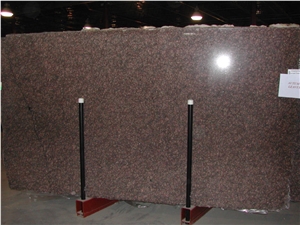
Autumn Red Granite

Granite

India

About

Item Details

Material Type:
Granite
Origin:
India (near Khajuraho, Chhatarpur district, Madhya Pradesh)
Recommended Usage:
Kitchen and bathroom countertops, monuments, building stone, ornamental stone, stairs, interior, exterior wall and floor applications, mosaic, waterjet pattern, wall panels, table tops, window sills, balustrades, columns, wall and pool copings, pool pavers, sculptures, fireplaces, pavers, cobbles, curbstone
Additional Names:
Supreme Red Granite, Chhattarpur Red Granite, Gem Red Granite
Finished Surface:
Polished,Flamed,Bush Hammered,Tumbled,Brushed,Honed,Split,Machine Cut,Sandblasted,Acid Washing,Combed,Leathered,Water Jet,Filled,Chiseled,Pickling

Testing

Water Absorption:
0.04–0.2 %
Density:
2640–2700 kg/m³
Flexural Strength:
15–25 MPa
Compressive Strength:
190–220 MPa

Description

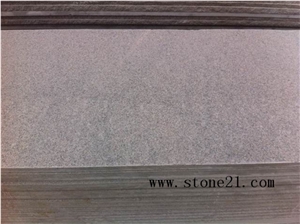
Autumn Red Granite is a shimmering deep-red granite quarried near Khajuraho in the Chhatarpur district, Madhya Pradesh, India. The stone features a rich, vibrant red background with a coarse-grain texture of red feldspar interspersed with white and blue quartz, creating a striking, dynamic appearance with subtle natural sparkle. The pattern is uniform yet lively, with the coarse grains giving depth and a slightly glittering effect when polished, making it suitable for both classical and contemporary architectural applications.

Mineral Composition (% by weight):

  • Feldspar 50–60% (red color),
  • Quartz 25–35% (strength and hardness),
  • Mica/Biotite 5–10% (dark flecks),
  • Accessory minerals 2–5%

Chemical Composition (% by weight):

  • SiO₂ 70–75%,
  • Al₂O₃ 10–15%,
  • K₂O 3–5%,
  • Na₂O 2–4%,
  • Fe₂O₃ / FeO 1–4%,
  • CaO / MgO 1–3%

Physical Properties & Test Results:

  • Water Absorption: ~0.04–0.2% (very low porosity)
  • Density: ~2,640–2,700 kg/m³ (dense, stable rock)
  • Compressive Strength: ~190–220 MPa (very high load resistance)
  • Flexural Strength: ~15–25 MPa (suitable for cladding, countertops, stairs)
  • Hardness (Mohs): 6–7 (excellent scratch/abrasion resistance typical of granite)

Usage:

Ideal for kitchen countertops, vanity tops, flooring, wall cladding, stair treads, monuments, façades, pool coping, paving, and landscaping due to its combination of beauty and durability.

Maintenance:

Recommended sealing for stain resistance. Clean with pH-neutral cleaners or mild soap and water. Avoid harsh acids or abrasive chemicals. Periodic resealing and gentle polishing help maintain its polished or honed appearance over time.

FAQ

Is vinegar ok to use on Autumn Red Granite countertop?

Using vinegar on Autumn Red Granite countertops, or any granite surface, is not recommended. Vinegar is acidic and can potentially cause harm to natural stone surfaces, including granite, by dulling the finish and weakening the sealant over time. Instead, its best to use a pH-neutral cleaner specifically designed for granite or a simple solution of mild dish soap with warm water. Always dry the surface thoroughly after cleaning to maintain the countertops appearance and longevity.

Does salty water permanently stain Autumn Red Granite kitchen countertop?

Autumn Red Granite is generally resistant to staining due to its dense and durable nature. However, saltwater can potentially cause issues if it is left standing on the surface for an extended period. The salt itself may not stain the granite, but the water can potentially seep into the stone and leave a mark, especially if the countertop is not properly sealed. To prevent any potential damage from saltwater: 1. **Wipe Up Spills Immediately**: As with any countertop material, its a good practice to clean spills right away. 2. **Seal the Granite**: Granite countertops should be sealed regularly to enhance their stain resistance. If your countertop isnt properly sealed or if the seal has worn off, its more prone to absorb water and other substances. 3. **Regular Cleaning**: Use a mild dish soap and water solution to clean the countertop regularly. Avoid harsh cleaners that could degrade the sealant over time. If you notice any dull spots or potential stains, consider contacting a professional for advice on buffing and resealing the surface.

Is 18 mm thick Autumn Red Granite good for kitchen countertops?

Choosing the right material for kitchen countertops depends on several factors, including durability, aesthetics, and cost. Autumn Red Granite can be a good choice for kitchen countertops, but here are a few considerations specific to a thickness of 18 mm: 1. **Durability**: Granite is a highly durable natural stone, resistant to scratches and heat, making it suitable for kitchen use. However, 18 mm is on the thinner side for a kitchen countertop. Standard thickness for granite countertops is typically about 30 mm (1.18 inches). Thinner slabs may require additional support or a substrate to prevent cracking or breaking under heavy use. 2. **Aesthetics**: Autumn Red Granite offers a unique and warm color palette, enhancing the visual appeal with its rich tones. It can match various kitchen designs, but ensure it complements your cabinetry and overall kitchen style. 3. **Support and Installation**: Due to its thinner profile, 18 mm granite might require a plywood substrate underneath for added support. Edges might also need reinforcement or a laminated edge to create the appearance of a thicker slab. 4. **Cost**: Thinner slabs can sometimes be more cost-effective than thicker ones, but installation costs could increase due to additional support requirements. 5. **Weight**: While lighter than thicker alternatives, 18 mm granite is still heavy and will need adequately reinforced cabinets to support it. If you love the look of Autumn Red Granite and are prepared to handle the additional considerations of a thinner slab, it can be a beautiful and durable choice for your kitchen countertops. Be sure to consult with a professional installer to ensure that the granite is installed securely and safely.

Can Autumn Red Granite kitchen countertop be scratched with a knife?

Autumn Red Granite, like most granites, is a very hard and durable material. Granite typically ranks around 6 to 7 on the Mohs scale of mineral hardness, which means it is quite resistant to scratching. However, while it is harder than a typical stainless-steel knife blade, its not completely scratch-proof. Cutting directly on granite countertops or applying significant pressure with a knife could potentially cause minor scratches or dull the knife blade over time. To prevent any damage and maintain the integrity of both your countertop and knives, its advisable to use a cutting board rather than cutting directly on the granite surface.

How to remove scratches from Autumn Red Granite floor tiles?

Removing scratches from Autumn Red Granite floor tiles can be a delicate process, as granite is a natural stone and requires careful treatment to maintain its appearance and integrity. Here’s a guide to help you minimize or remove the scratches: 1. **Assess the Damage**: Start by evaluating the depth and extent of the scratches. Light surface scratches can often be treated at home, but deeper gouges may require professional assistance. 2. **Clean the Area**: Thoroughly clean the scratched area with a pH-neutral cleaner specifically designed for granite. Avoid using acidic or abrasive cleaners, as these can further damage the surface. Rinse the area with water and dry with a soft cloth. 3. **Use Polishing Powder**: For light surface scratches, you can use a granite polishing powder. Follow the instructions on the product, typically involving mixing the powder with a small amount of water to form a paste. Apply the paste to the scratched area and gently buff it with a soft cloth or pad in a circular motion. 4. **Granite Polishing Cream**: If the polishing powder isn’t sufficient, you can try using a granite polishing cream. Again, follow the product instructions and buff the area with a soft cloth or pad. 5. **Steel Wool or Buffing Pad**: For slightly deeper scratches, use fine-grade steel wool (such as grade #0000) or a handheld buffing pad. Gently rub the scratched area in a circular motion. Be careful not to apply too much pressure, as this can create new scratches. 6. **Seal the Granite**: Once the scratches are minimized, consider applying a granite sealer to protect the surface from future damage. Follow the sealer’s instructions for application and curing times. 7. **Professional Help**: If the scratches are deep or the above methods do not work, it’s best to consult a professional stone restoration specialist. They have the tools and expertise to address more significant damage. 8. **Prevent Future Scratches**: To keep your granite floor tiles in good condition, use mats or rugs in high-traffic areas, and avoid dragging furniture or heavy objects across the floor. Regularly clean and seal the granite to maintain its appearance. Always test any product or method in an inconspicuous area first to ensure it doesn’t damage the stone.

Can 5 cm thick Autumn Red Granite be used for driveway?

Yes, 5 cm thick Autumn Red Granite can generally be used for a driveway. Granite is a very strong and durable material, making it suitable for high-traffic areas such as driveways. The thickness of 5 cm (about 2 inches) is typically adequate to handle the weight of vehicles. However, its important to ensure proper installation, which includes preparing a stable and well-compacted base to distribute the weight evenly and prevent shifting or cracking over time. Consulting with a professional who specializes in driveway installations would ensure that the granite is installed correctly and is suitable for your specific needs and conditions.

Products & Prices

Hot Granite

New Granite

Post Your Request

The request includes:
  1. surface finished, size
  2. quantity required