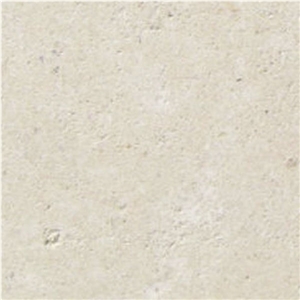
Blanco Tajo Limestone is a highly sought-after natural stone known for its fine-grained, compact structure and predominantly white to light beige coloration. Quarried in Cáceres, Spain, this limestone boasts a smooth, uniform appearance that provides spaces with a light, elegant aesthetic suitable for both contemporary and traditional design schemes. Its homogeneous look lends itself well to large surfaces like walls and facades, where visual uniformity is desirable. Below is a detailed description of Blanco Tajo Limestone, including its physical and mechanical properties, chemical and mineral compositions, usage, maintenance, available finishes, and cutting sizes.
Physical and Mechanical Properties
- Water Absorption: 6.2%
- Density: 2290 Kg/m³
- Flexural Strength: 7.8 MPa
- Compressive Strength: 36.0 MPa
- Hardness: Usually measured on the Mohs scale; evaluation is necessary to determine specific hardness.
- Porosity: Specific value not listed; higher water absorption indicates a relatively high porosity relative to other stone types.
- Slip Resistance: Variable based on finish; requires assessment for specific applications like flooring.
Chemical and Mineral Compositions
- Calcium Carbonate (CaCO3): Predominantly high, as with most limestones.
- Quartz (SiO2): Present in smaller quantities.
- Clay Minerals: Trace amounts depending on quarry specifics.
- Iron Oxides and Other Minerals: May account for subtle tonal variations; present in minor proportions.
Usage
- Interior Applications: Ideal for flooring, wall cladding, and decorative elements due to its elegant and neutral appearance.
- Exterior Applications: Suitable for facades and outdoor paving, providing a uniform aesthetic with potential for natural weathering effects.
- Commercial Spaces: Its durability and sophisticated look make it an excellent choice for high-traffic areas.
- Residential Spaces: Works well in kitchens, bathrooms, and living spaces for both functional and decorative uses.
Maintenance
- Cleaning: Use pH-neutral cleaners; avoid acidic or abrasive substances that could harm the surface.
- Sealing: Recommended to reduce porosity and prevent stains, especially in high-use areas.
- Regular Maintenance: Includes periodic resealing and cleaning to maintain appearance and durability.
Cutting Sizes and Finish Options
- Cutting Sizes: Available in a range of custom dimensions; common sizes include tiles of various standard dimensions (e.g., 30x30 cm, 60x30 cm) and slabs.
- Surface Finish Options:
- Polished: Offers a high-gloss finish that enhances color and veining.
- Honed: Provides a smooth, matte surface with reduced reflection.
- Brushed: A textured finish that creates a rustic look.
- Sandblasted: Adds slip resistance, ideal for exterior paving.
By understanding these characteristics, designers and builders can optimize the use of Blanco Tajo Limestone to suit their specific architectural and aesthetic requirements. Its timeless elegance, coupled with its inherent physical properties, makes it a versatile choice for various applications.
Test Result
PETROGRAPHIC DESCRIPTION (UNE-EN 12407:2007)
Light beige limestone, homogeneous and compact with a fine grain size. Notable presence of ooids. Classified as ooidsparite.
TECHNICAL TEST RESULTS
- Apparent Density (UNE-EN 1936:2007): 2290 kg/m³
- Open Porosity (UNE-EN 1936:2007): 13.4 %
- Flexural Strength (UNE-EN 12372:2007): 7.8 MPa
- Compressive Strength (UNE-EN 1926:2007): 36 MPa
- Water Absorption at Atmospheric Pressure (UNE-EN 13755:2008): 6.2 %
- Abrasion Resistance (UNE-EN 1341:2002): 25.5 mm
- Frost Resistance: Flexural Strength After 12 Cycles (UNE-EN 12371:2011): 6.7 MPa
- Frost Resistance: Flexural Strength After 48 Cycles (UNE-EN 12371:2011): 6.7 MPa
- Thermal Shock Resistance: Mass Variation (UNE-EN 14066:2003): -0.06 %
- Breaking Load at Dowel Hole (Technological Test) (UNE-EN 13364:2002): N/A
- Breaking Load at Dowel Hole (Identification Test) (UNE-EN 13364:2002): 900 N
- Slip Resistance (UNE-EN 14231:2004): 39 (dry) / 30 (wet)
- USRV Capillarity (UNE-EN 1925:1999): 46.8 g/m²·s⁰.⁵


 Spain

 Turkey

 United Kingdom

 United States


 Israel

 Norway

 Croatia

 Bulgaria

 China

 France
