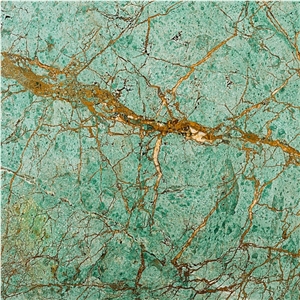
Cape Green Granite

About
Item Details
- Material Type:
- Granite
- Origin:
South Africa (Kliprand, West Coast District Municipality, Western Cape) - Primary Color(s):
- Green
- Recommended Usage:
- Kitchen and bathroom countertops, monuments, building stone, ornamental stone, stairs, interior, exterior wall and floor applications, mosaic, waterjet pattern, wall panels, table tops, window sills, balustrades, columns, wall and pool copings, pool pavers, sculptures, fireplaces, pavers, cobbles, curbstone
- Additional Names:
- Verde Fountaine Granite, Verde Fontaine Granite, Verde Fountain Granite, Verde Bitterfontein Granite, Bitterfontain SA Granite, Bitterfontein, Bitterfontein Green Granite, Fontain Green Granite, Fontain Verde Granite, Fontaine Green Granite, Fontaine Verde Granite, Fountaine Green Granite, Granit Verde Fontain, Green Fountain Granite, Marlin Verde Granite, Turmalin Granite, Verde Fontain, Verde Fontein, Cape Vert Granit, Cape Green Granite, Cape Green
- Finished Surface:
- Polished,Flamed,Bush Hammered,Tumbled,Brushed,Honed,Split,Machine Cut,Natural Surface,Sandblasted,Acid Washing,Combed,Leathered,Water Jet,Filled,Chiseled,Pickling
Testing
- Water Absorption:
- 0.12 - 0.14 By weight %
- Density:
- 2730 kg/m3
- Flexural Strength:
- 17.0 - 18.5 MPa
- Compressive Strength:
- 192.0 - 195.0 MPa
- Stone texture:
- a dark green, coarse-grained granite; Precambrian-era stone, with its color attributed to the mineral chlorite
Description
Cape Green Granite is a striking natural stone known for its distinctive dark green color, which is primarily attributed to the presence of the mineral chlorite. This granite is coarse-grained and is quarried specifically in Kliprand, located within the West Coast District Municipality of the Western Cape in South Africa. Originating from the Precambrian era, it carries significant geological history.
Physical and Mechanical Properties:
-
Water Absorption:0.12 - 0.14% by weight
-
Density:2730 kg/m³
-
Flexural Strength:17.0 - 18.5 MPa
-
Compressive Strength:192.0 - 195.0 MPa
-
Hardness:Cape Green Granite is expected to have a high hardness level, typical of granite, often rated around 6-7 on the Mohs scale.
-
Porosity:Generally low porosity, contributing to its durability and low water absorption rate.
-
Slip Resistance:The slip resistance of Cape Green Granite will depend on the surface finish. Polished surfaces will be less slip-resistant compared to honed or rough finishes.
Chemical and Mineral Compositions:
While specific percentages might vary, granite often consists primarily of the following minerals:
-
Quartz:Approximately 20-40%
-
Feldspar:Around 40-60%, predominantly potassium feldspar
-
Chlorite and other dark minerals:Around 5-15%, these contribute to the characteristic dark green color.
-
Mica (Biotite or Muscovite):Roughly 5-10%
Usage:
Cape Green Granite is versatile and can be used in a variety of applications:
Interior Applications:
-
Countertops
-
Flooring
-
Wall cladding
Exterior Applications:
-
Facades
-
Outdoor sculptures
-
Paving stones
Maintenance:
-
Routine Cleaning:Use a mild soap or detergent with water for regular cleaning.
-
Sealant Application:Periodic sealing recommended to enhance stain resistance and maintain the appearance.
-
Avoid acidic cleaners:To prevent etching and ensure longevity.
Cutting Sizes:
Available in a variety of custom sizes, typically:
-
Slabs:Commonly available in 2 cm and 3 cm thicknesses.
-
Tiles:Standard tile sizes might include 30x30 cm, 30x60 cm, and 60x60 cm.
Surface Finish Options:
-
Polished:Creates a glossy surface, highlighting the stone’s colors and patterns.
-
Honed:Offers a smooth, matte finish.
-
Bush-hammered:Provides a rough, textured surface for enhanced slip resistance.
-
Sandblasted:Yields a slightly rough finish with a subtle texture.
-
Flamed:Provides a rough texture typically used for outdoor applications to enhance slip resistance.
Cape Green Granite, with its unique aesthetic qualities and durable properties, is an excellent choice for both residential and commercial projects.