Geological and Industrial Identity:
Elk Brook Bluestone is geologically categorized as a hard sandstone, more specifically a feldspathic greywacke. In the stone industry, it's commonly referred to as bluestone due to its distinctive bluish-grey color. This stone is renowned for its durability and aesthetic appeal.
Origin:
It is quarried primarily from the Catskill Mountains region of New York and northeastern Pennsylvania. The formation of Elk Brook Bluestone dates back to millions of years ago, originating from sediments deposited in the Catskill Delta.
Applications:
- Patios
- Walkways
- Building stone
Physical and Mechanical Properties:
- Water Absorption: 1.1% by weight
- Density: 2690 - 2720 kg/m³
- Flexural Strength: 17.7 - 21.7 MPa
- Compressive Strength: 137.2 - 210.0 MPa
- Hardness: Generally high, contributing to its durability (exact measurements often specified through Mohs scale in detailed specifications)
- Porosity: Low, contributing to its strength and low water absorption
- Slip Resistance: Good, making it suitable for outdoor and wet areas
Chemical and Mineral Compositions:
- Quartz: ~65% by weight
- Feldspar: ~15% by weight
- Clay minerals: ~10% by weight
- Iron oxides and other minerals: ~5% by weight
- Organic material and others: ~5% by weight
Usage and Maintenance:
- Usage: Elk Brook Bluestone is ideal for both residential and commercial projects, including landscaping, interior flooring, and exterior cladding.
- Maintenance: Routine cleaning with water and mild detergents; sealing recommended to enhance longevity and appearance; avoid harsh chemicals
Cutting Sizes and Surface Finish Options:
- Cutting Sizes: Customizable, though typical dimensions can be:
- Tiles and slabs commonly cut in sizes such as 30x30 cm, 30x60 cm, 60x60 cm, and custom large formats.
- Surface Finish Options:
- Natural cleft: showcases the stone’s grain in a rustic finish
- Thermal (flamed): provides a rough texture with a uniform finish
- Honed: smooth and matte finish
- Polished: rarely used due to the natural rustic appearance preferred
- Sandblasted: for a textured surface
Visual Characteristics:
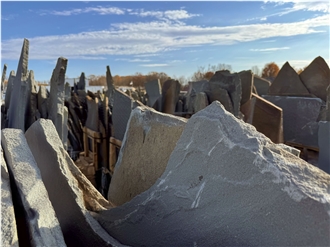
- Primarily grey with blue hues, though color can vary with hints of green, brown, and lilac based on mineral composition.
Elk Brook Bluestone is valued both for its practical qualities and its visual appeal, making it a favored material in various architectural and landscaping applications.


 United States


 Viet Nam


 Australia

 New Zealand


 China


 Italy

